Yosemite Trails
Valley floor walks for acclimatization, the Mist Trail for waterfalls, and the high routes to Clouds Rest and Half Dome for the full Sierra experience.
Valley Floor Loop
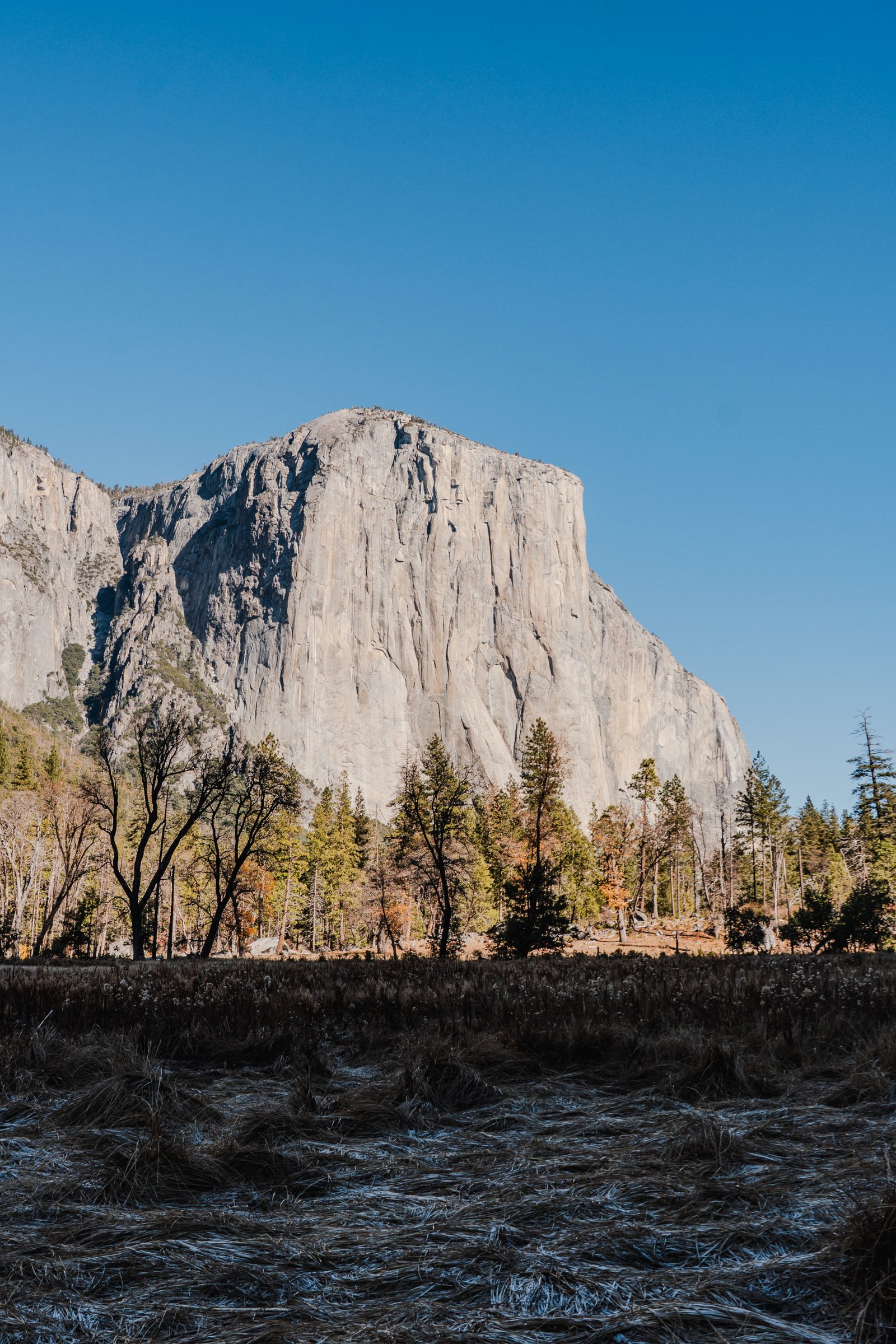
The valley floor route follows the Merced River under El Capitan, past Cathedral Rocks, and around to Mirror Lake. The granite walls dwarf everything below them. El Capitan at 900m sheer vertical is the largest granite monolith on Earth.
You can watch free climbers on the wall for 45 minutes easily, and binoculars make the tiny figures on the headwall visible. Best walked in early morning or evening when the meadows are not heat-hazy.
Mist Trail to Vernal Fall
The Mist Trail to Vernal Fall (317m) is one of the most famous short hikes in the American West. From Happy Isles, the trail follows the Merced River for 1km on a paved path, then climbs 500 granite steps cut directly beside the Vernal Fall cascade.
At spring snowmelt (May to June), the volume of water passing the steps soaks the trail and everyone on it within 50 metres. A waterproof jacket is not optional here. The view from Vernal Fall Bridge below the waterfall looking up through the spray is the signature Yosemite scene.
Mist Trail to Nevada Fall
Nevada Fall (181m) sits above Vernal Fall, reached by continuing up the Mist Trail from the top of Vernal. The total elevation gain from Happy Isles is 600m. The John Muir Trail descends from Nevada Fall in a long granite switchback, making a loop possible: up the Mist Trail (direct, steeper, wetter), down the John Muir Trail (smoother, broader, better views of Liberty Cap).
The Little Yosemite Valley above Nevada Fall is a popular overnight camping area with permit-controlled campsites.
Clouds Rest
Clouds Rest at 2,695m is the highest summit directly above Yosemite Valley accessible as a day hike, and the view from the summit ridge looking south over Half Dome, the valley, and the Clark Range is the single best panoramic viewpoint in the park.
The trail starts from Tenaya Lake (a Tioga Road trailhead) and requires the Tioga Road to be open, which limits it to late May through October. The summit ridge is exposed with steep drop-offs on both sides; a narrow point requires short hands-on scrambling in one place.
Tuolumne Meadows Walk
Tuolumne Meadows, 1,200m above Yosemite Valley along the Tioga Road, is a wide subalpine meadow at 2,621m with granite domes, clear streams, and no valley crowds. The meadow itself is flat and open, with the Tuolumne River winding through.
Day hikes from the meadows include Cathedral Lakes (out-and-back to alpine lakes below Cathedral Peak), Elizabeth Lake (easy walk to a lake below Unicorn Peak), and the Lembert Dome scramble. Marmots are common here. Black bears are active at dusk.
Half Dome via Cables
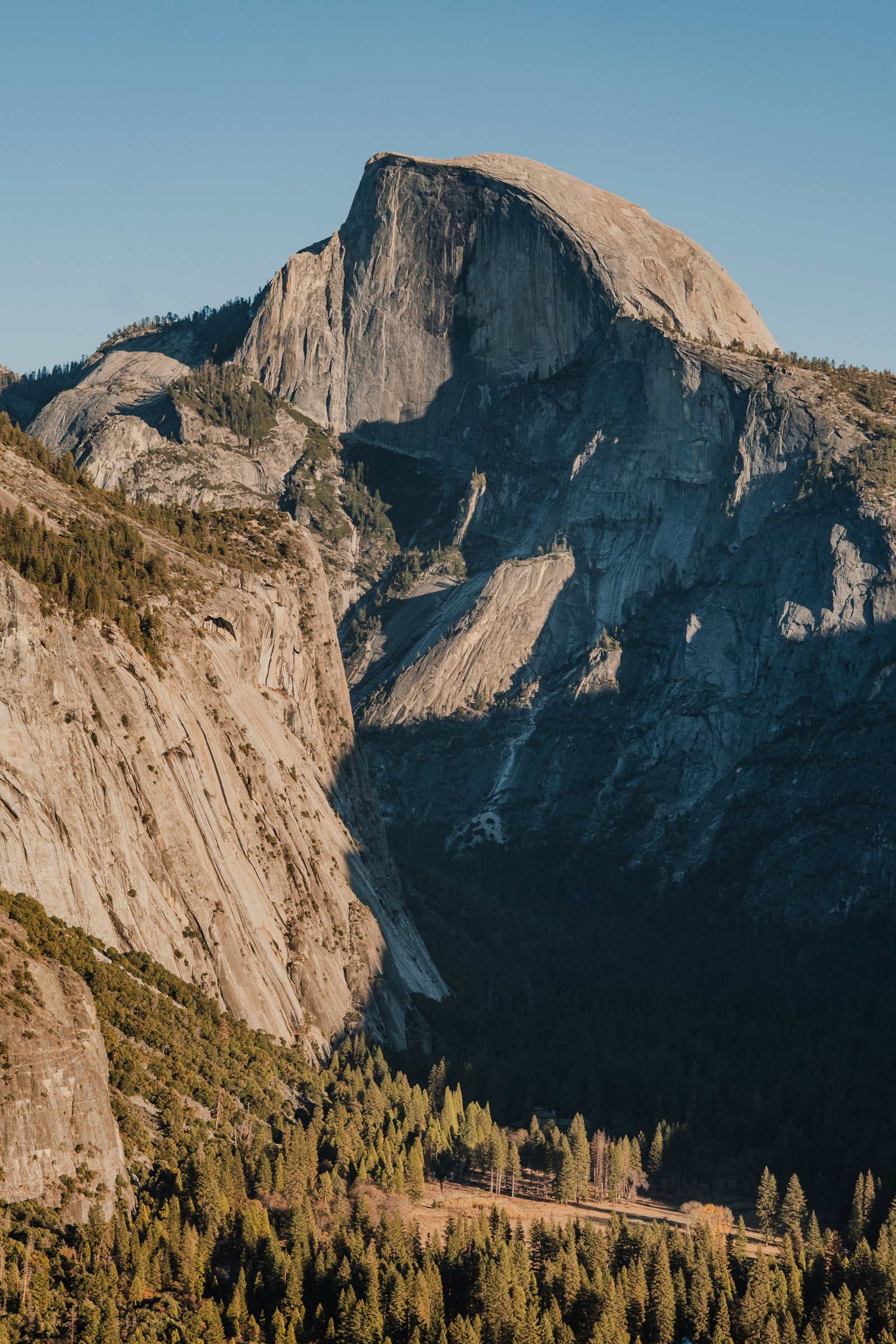
The Half Dome trail climbs 1,524m from Happy Isles to the summit at 2,693m, finishing on the infamous cable route: two steel cables bolted into the 45-degree granite face of the dome for the final 130m. A permit lottery is required to access the cables on any given day; the lottery runs March through April for the hiking season (late May through October).
Day hike permits are $10 per person. The summit view of Yosemite Valley directly below is 1,444m straight down on the northwest face. Lightning strikes are a real risk on the open summit; check weather and descend immediately if thunderstorms build.
Yosemite in Photos
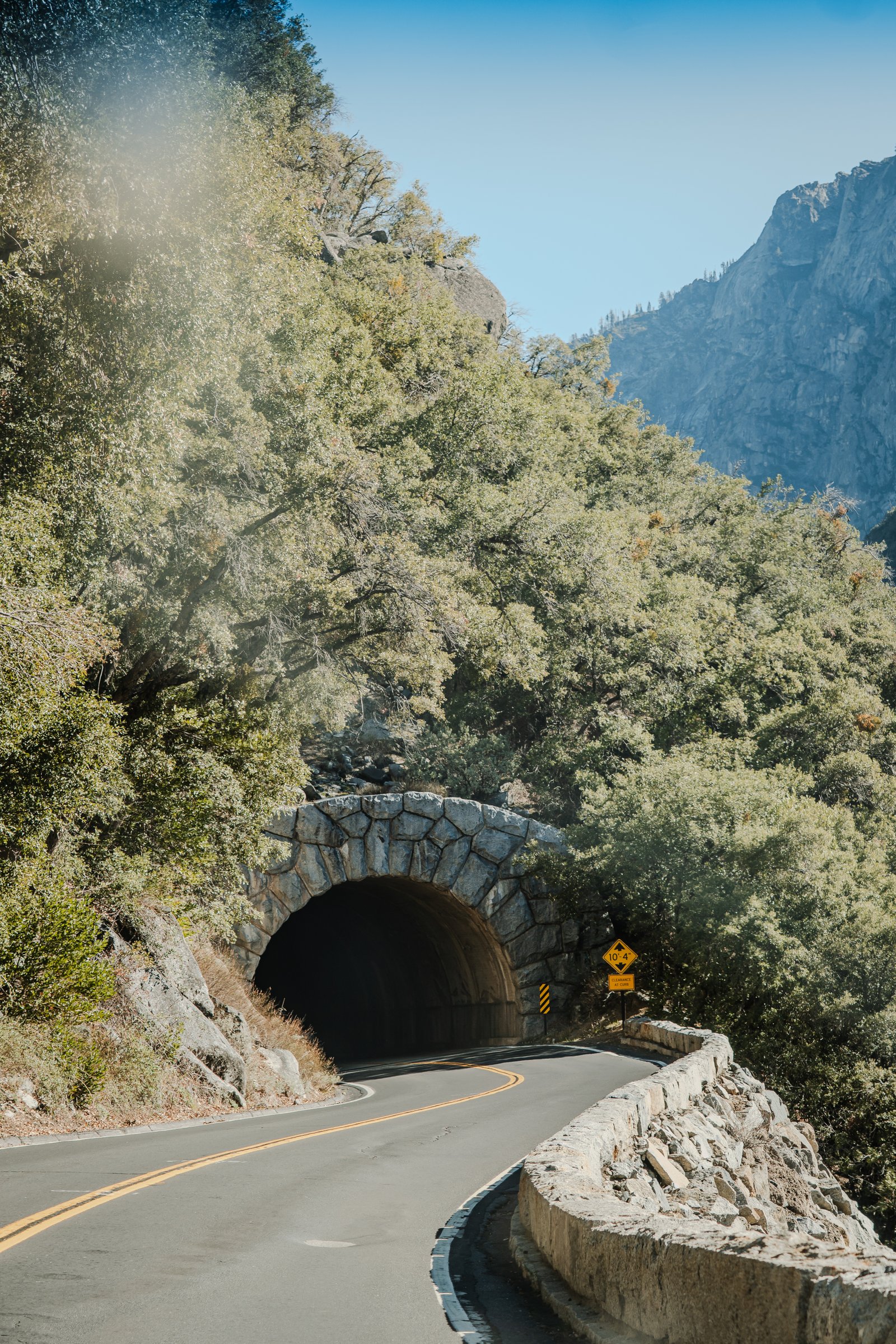
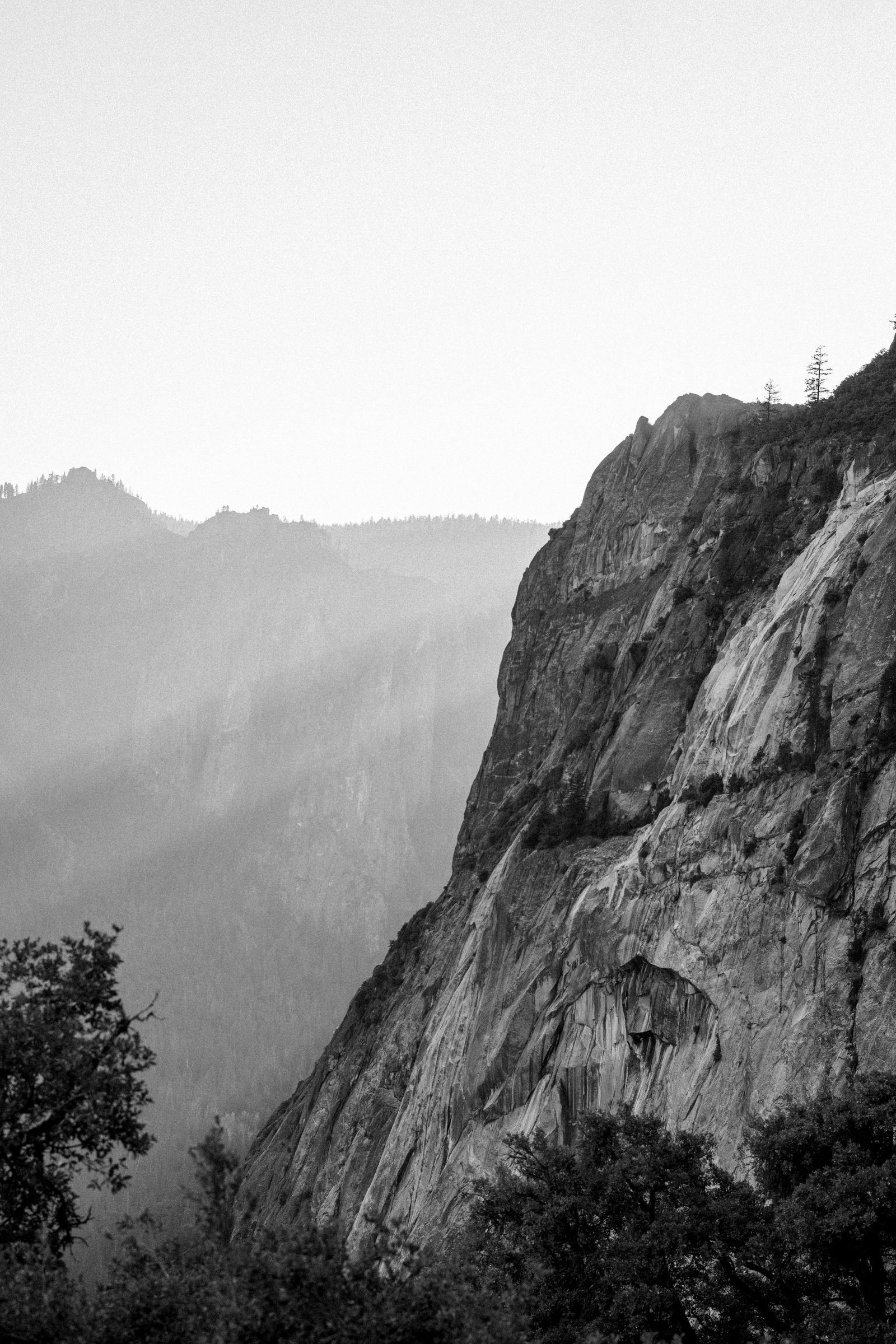
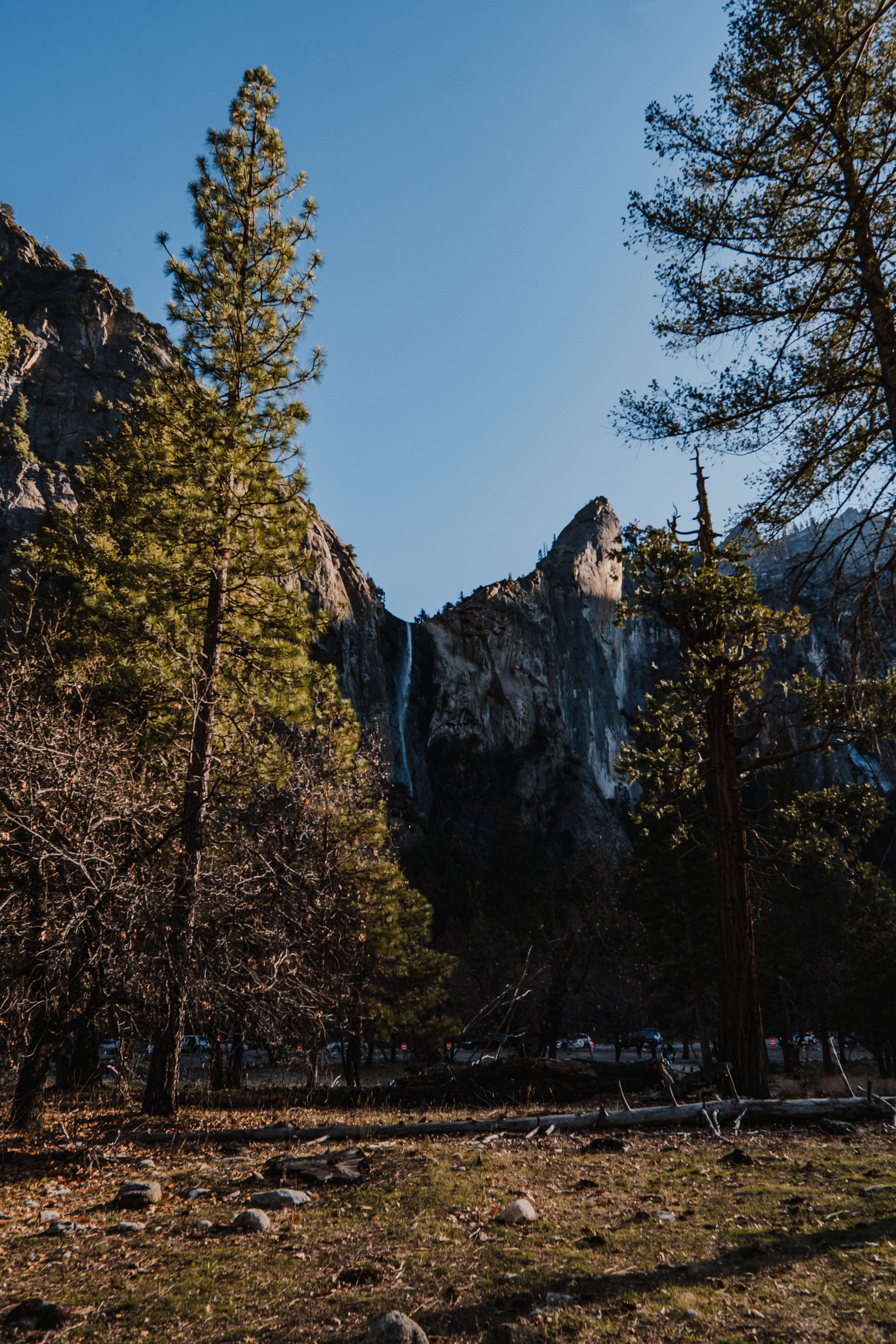
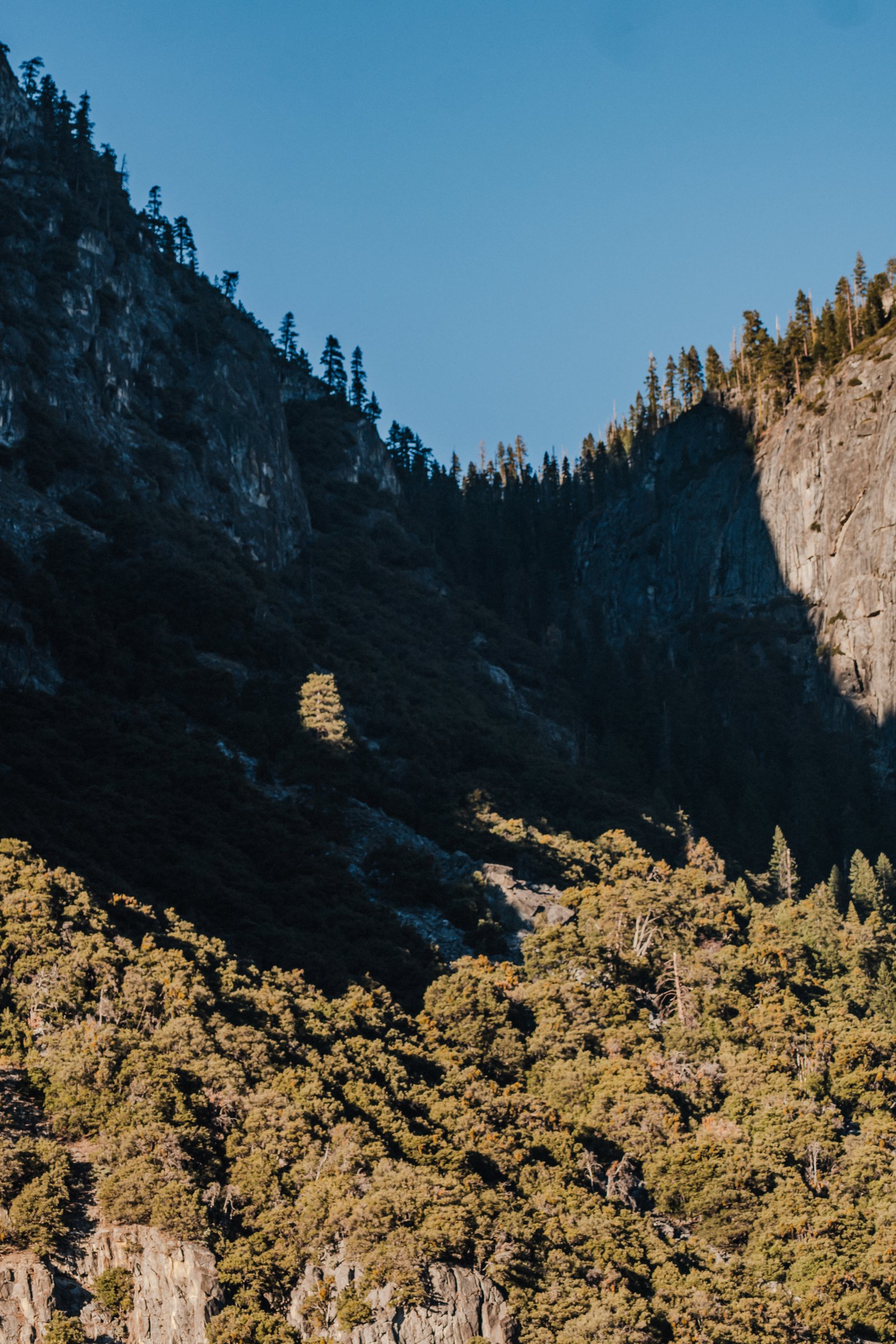
The valley in January frost and October colour. El Capitan from Cook's Meadow at both ends of the year, the falls at last light, and Half Dome from Glacier Point.
Guided Experiences in Yosemite
Yosemite is accessible to independent hikers, but guided rock climbing, photography tours, and winter snowshoe excursions give access to parts of the park that are hard to find on your own.
Guided Half Dome day hike
Permit-included guided hike to Half Dome with a certified Yosemite guide. The cables section (July–October) is managed by permit: guides handle the logistics. Full-day 16-hour experience.
Book guided Half Dome →Rock climbing intro: El Capitan base
Half-day introduction to Yosemite crack climbing with a certified AMGA guide. Learn the basics on Yosemite granite at the base of El Capitan. Gear provided. No prior experience needed.
Book climbing lesson →Valley photography tour at sunrise
Small-group sunrise photography tour through Yosemite Valley with a professional landscape photographer. Tunnel View, Valley View, and Cook's Meadow at first light. Transport from Yosemite Village.
Book photo tour →Links go to GetYourGuide for real-time availability. Check guide certifications and cancellation policy before booking.
Yosemite Valley is 11km long and 1.5km wide, and it contains a disproportionate amount of North American geological drama. The challenge is moving past the valley floor and getting into the high country where the crowds thin and the landscape becomes the thing, not the photograph of the landscape.
The Permit System
From late May through the end of September, Yosemite Valley requires advance reservations to drive in between 6am and 4pm. The day-use reservation system runs through recreation.gov and releases reservations in rolling windows.
If you cannot get a reservation, arrive before 6am or after 4pm, or take the YARTS bus from Merced, Fresno, or Mammoth Lakes. The park entry fee is $35 per vehicle, valid for 7 days. Half Dome cable permits are separate ($10 per person) and require the March lottery or a daily walk-up lottery at 7pm the evening before.
Waterfalls and snowmelt timing
Yosemite's waterfalls are snowmelt-fed and peak from April through June, typically reaching maximum volume in May. By August, Yosemite Falls (one of the tallest in North America at 739m total) is often barely a trickle. The Mist Trail waterfalls (Vernal and Nevada) carry more water into summer due to their position on the Merced River drainage. If waterfall photography is the goal, plan for May to early June.
When to go
May to June: highest waterfalls, wildflowers in the valley, Tioga Road may still be closed (opens late May to early June depending on snowpack). July to August: busy, hot in the valley, Tioga Road and Tuolumne Meadows open, Half Dome cables active.
September: the best month overall, cooler temperatures, Tioga Road still open, crowds significantly reduced after Labor Day. October: autumn colour in the valley, cold nights, some facilities close.
How to get there
Fly to San Francisco (SFO) or Sacramento (SMF), then drive 3.5 to 4 hours to Yosemite Valley via CA-120 or CA-140. From Los Angeles (LAX) it is a 6-hour drive. The Fresno (FAT) airport is the closest at ~1.5h.
YARTS regional buses run from Merced (Amtrak connection from San Francisco, then ~2h bus) and from Fresno directly into Yosemite Valley. A practical option in summer when valley parking is difficult and day-use reservations are required.
$35 per vehicle, valid 7 days. From May through September, a day-use reservation ($2) is required to enter the valley: book on recreation.gov before your trip. Half Dome cables require a separate permit (lottery). Valley shuttle is free once inside.
Where to sleep
Valley campgrounds
Upper Pines, Lower Pines, and North Pines are the classic valley campsites, steps from the trailheads. Reserve up to 5 months ahead via recreation.gov. They sell out in minutes for peak summer dates.
Yosemite Valley Lodge
Well-located inside the park near Yosemite Falls and the Valley Loop Trail. Standard rooms with valley views. Managed by Aramark. Reserve well ahead for summer and fall.
The Ahwahnee · Yosemite Valley
A 1927 National Historic Landmark with views of Half Dome and Yosemite Falls from the dining room. The most storied address in any US national park. Reserve 12 months ahead.
Common Questions
The preseason lottery runs in March for the full hiking season (late May to October). Apply at recreation.gov with a group of up to 6 people. Results are announced in mid-March. Each successful application wins permits for one specific day.
If you miss the preseason lottery, daily walk-up permits are available through a separate lottery that opens at 7pm the evening before the hiking date. The daily quota is 300 people; competition for walk-up permits is high on weekends. Weekday applications have better odds.
Tioga Road (Highway 120 through the high country) opens when snowpack clears, usually late May to mid-June depending on the winter snowfall. In heavy snow years it can open as late as late June. The road closes again in November or with the first significant autumn snowfall. Check nps.gov/yose for current conditions. Tuolumne Meadows, Clouds Rest, and Cathedral Lakes are only accessible when Tioga Road is open.
YARTS buses run from Merced (daily, year-round, from Merced Amtrak station), Mammoth Lakes (seasonal), and Sonora/Fresno (seasonal). The YARTS fare covers park entry. Inside the valley, free shuttle buses run every 10 minutes to all trailheads, accommodation, and visitor facilities. The valley shuttle is the recommended transport during day-use reservation hours.
Very dangerous. The exposed granite summit and the metal cable route are lightning attractors. Multiple people have been struck and killed on the Half Dome cables during afternoon thunderstorms.
The standard safety protocol is to be off the cables and below the sub-dome by noon. Start at 5am from Happy Isles. Check the NOAA weather forecast the night before. If there is any chance of afternoon thunderstorms, turn around. Do not attempt to wait out a storm on the summit.
The day-use reservation is only required between 6am and 4pm. Arrive before 6am (no reservation needed), park in the valley, and your vehicle can stay for the day. Alternatively, park at El Portal (just outside the park boundary) and take the YARTS bus in, which bypasses the reservation entirely. The El Portal day use area is free; bus fare covers park entry.