Ways to Experience Iguazu
The Argentine side offers walk-up access to the falls' top, sides, and near-total immersion. The Brazilian side offers the single widest panorama. Both are worth doing.
Circuito Superior (Upper Circuit)
A paved walkway along the clifftop above the falls, looking directly down into the white water from above. You walk along the rim of the horseshoe looking into the cataracts below, which gives a very different perspective from the spray-level view of the Inferior Circuit. The coati (ring-tailed relatives of the raccoon) congregate on this circuit and will steal food without hesitation.
Circuito Inferior (Lower Circuit)
The lower trail descends via staircases to walkways at river level, passing directly under several individual waterfalls and across the river to San Martin Island. The spray zone is intense: you will get soaked within 100m of the larger falls if you walk under them. The view from the river-level walkways looking up at the curtain of water above is the most visceral perspective the Argentine side offers.
Garganta del Diablo Walkway
A separate elevated metal walkway extends 1.1km over the river to a platform at the lip of the Garganta del Diablo (Devil's Throat), the largest single waterfall in the system. Standing at the platform, you look directly into the 82m drop as 1756 cubic metres of water per second disappear into the mist below. The noise is total. The spray soaks the platform. Great frigate birds and swifts nest in the mist zone.
Boat Under the Falls
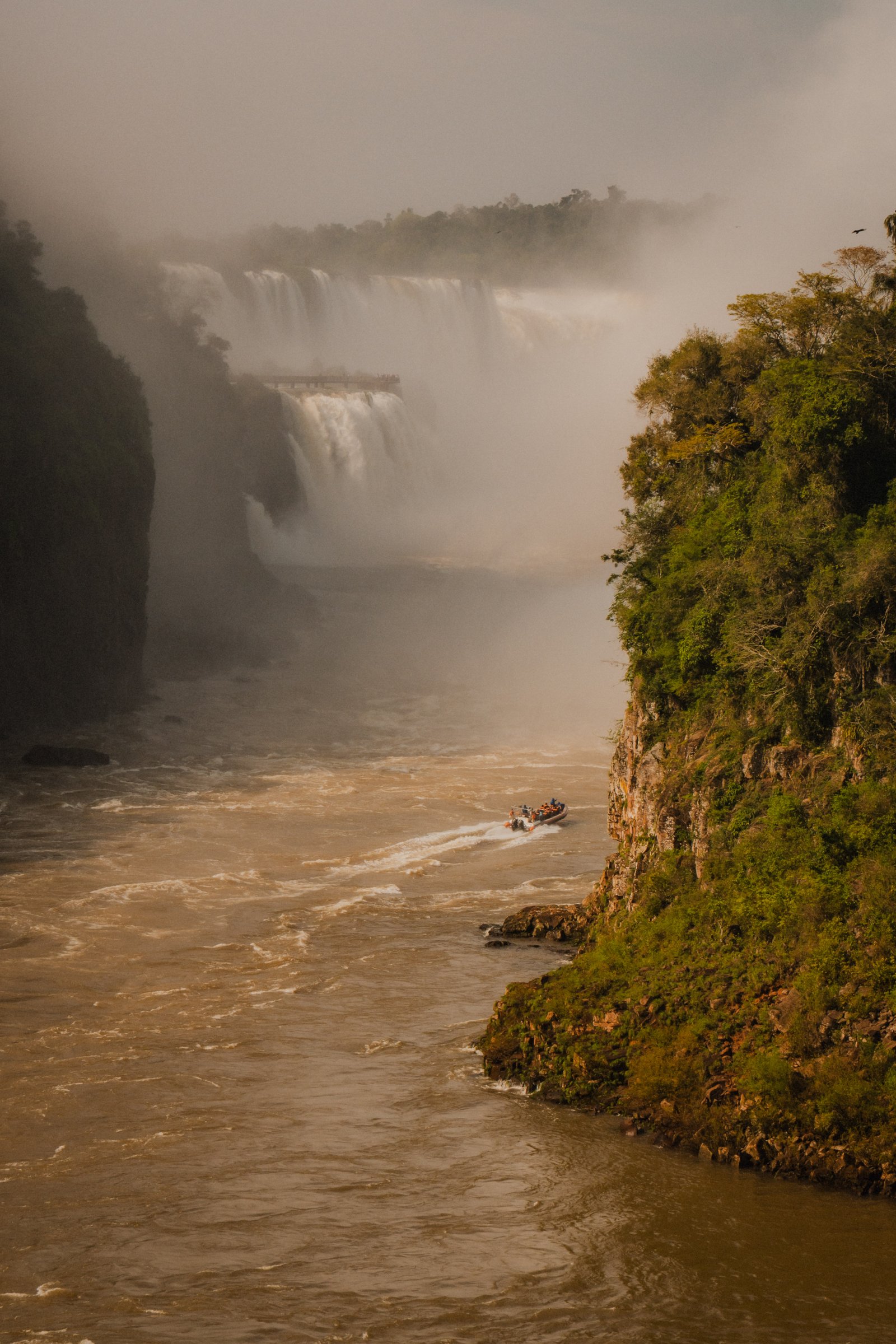
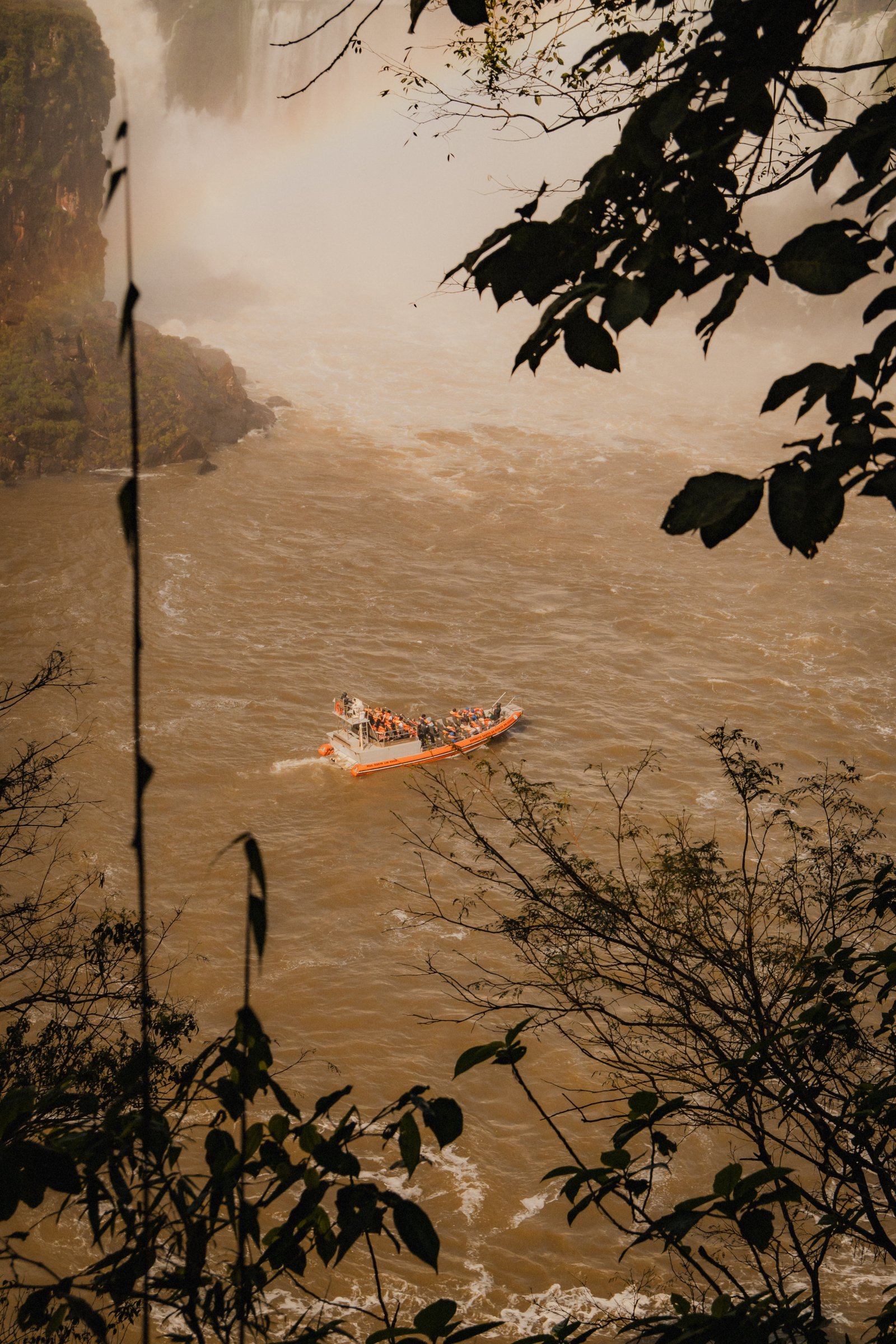
Inflatable motorboats operate from the Argentine park's Inferior Circuit, taking passengers directly under the San Martin and Dos Hermanas falls. You sit in a waterproof-suited boat and the driver holds position under the full force of the waterfall for about 30 seconds before retreating. It is the most physically intense way to experience the falls and makes a memorable contrast to the dry walkway perspectives.
Brazil Side Panorama
The Brazilian side of Iguazu (Parque Nacional do Iguaçu, accessed from Foz do Iguaçu) offers the single best panoramic view of the entire falls system in one image. Where the Argentine side puts you inside the falls, the Brazilian side shows you the full 2.7km arc from across the river.
The walkway ends at a balcony extending over the Garganta from the Brazilian perspective. This view is the one you have seen in every photograph of Iguazu.
Iguazú in Photos
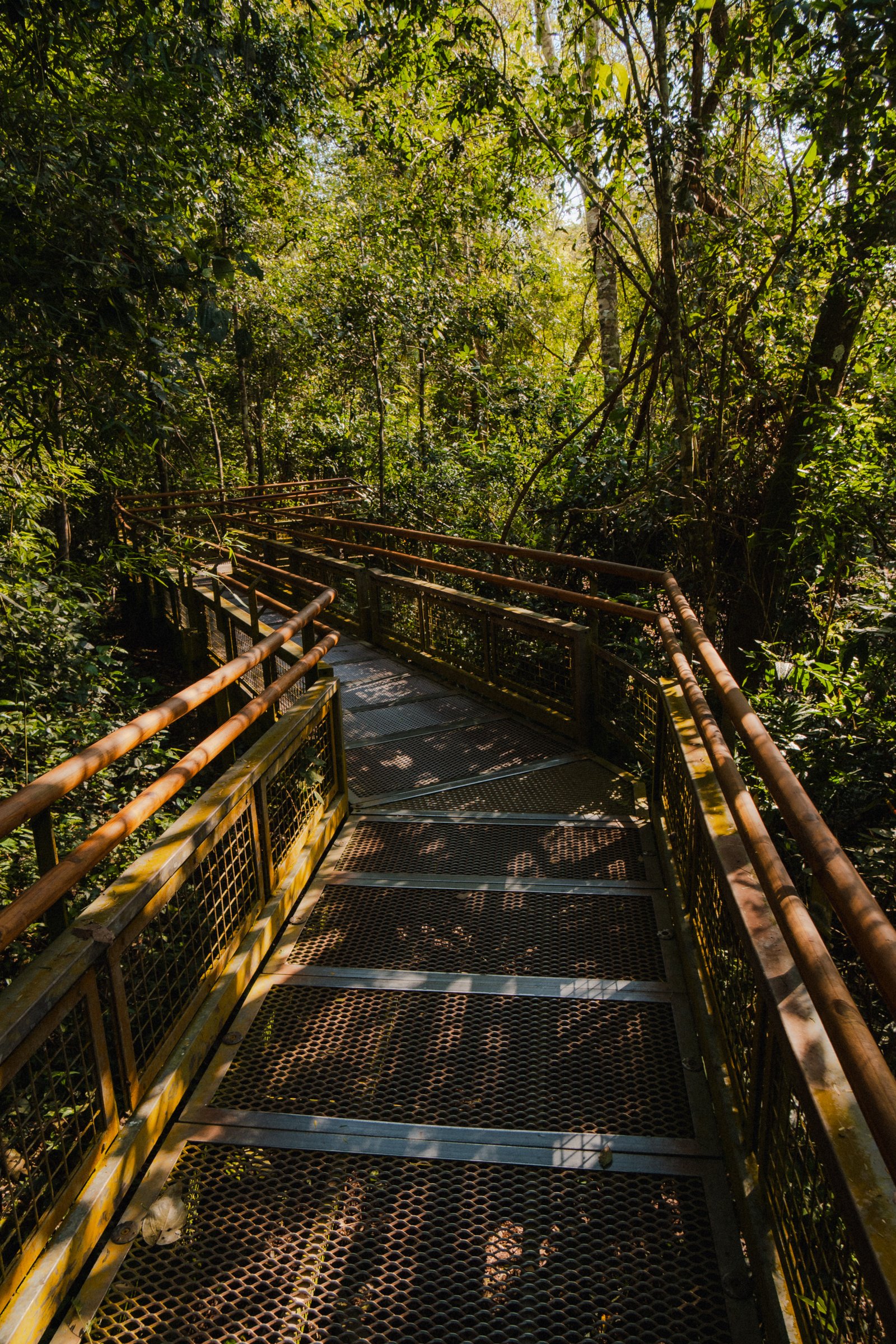
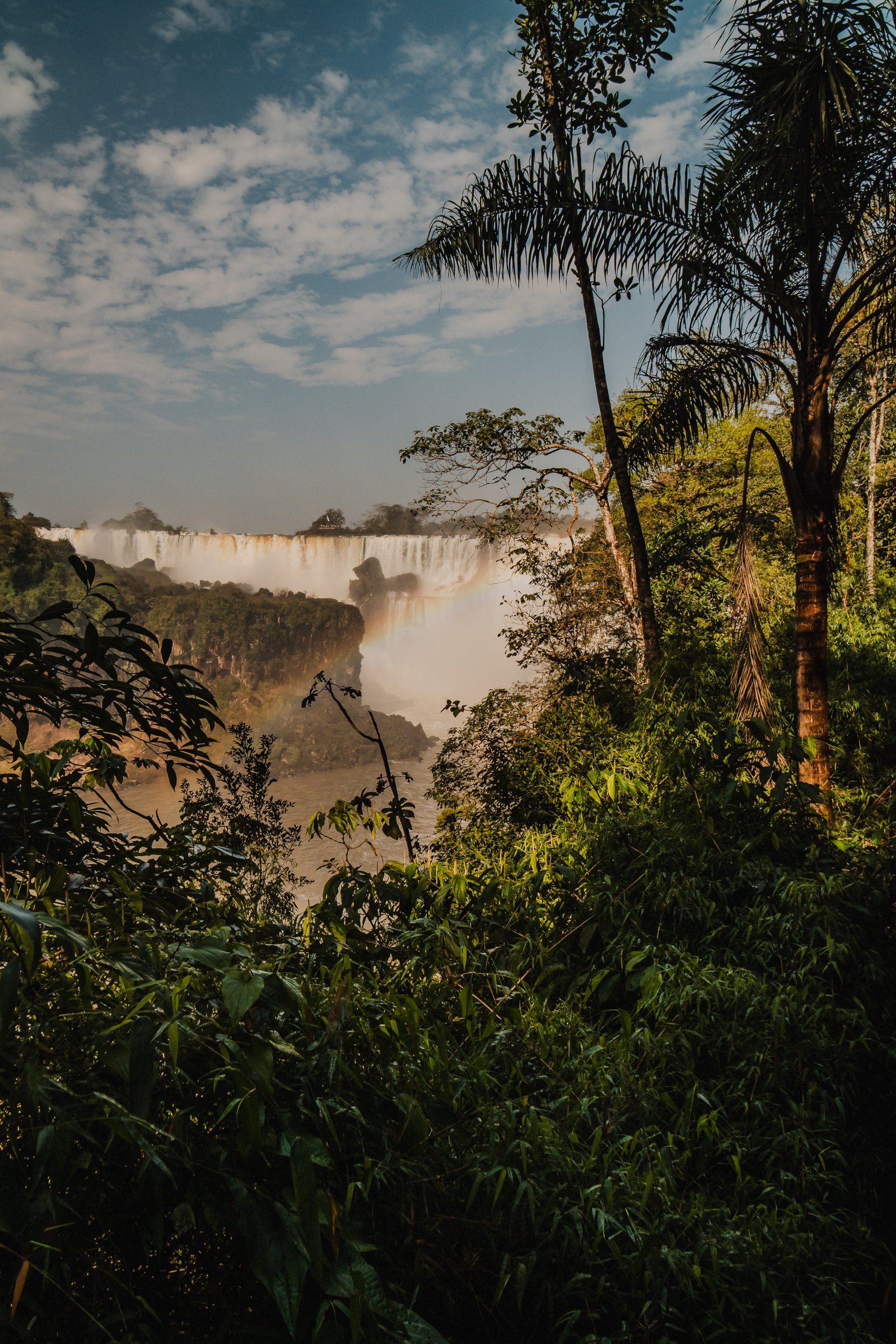
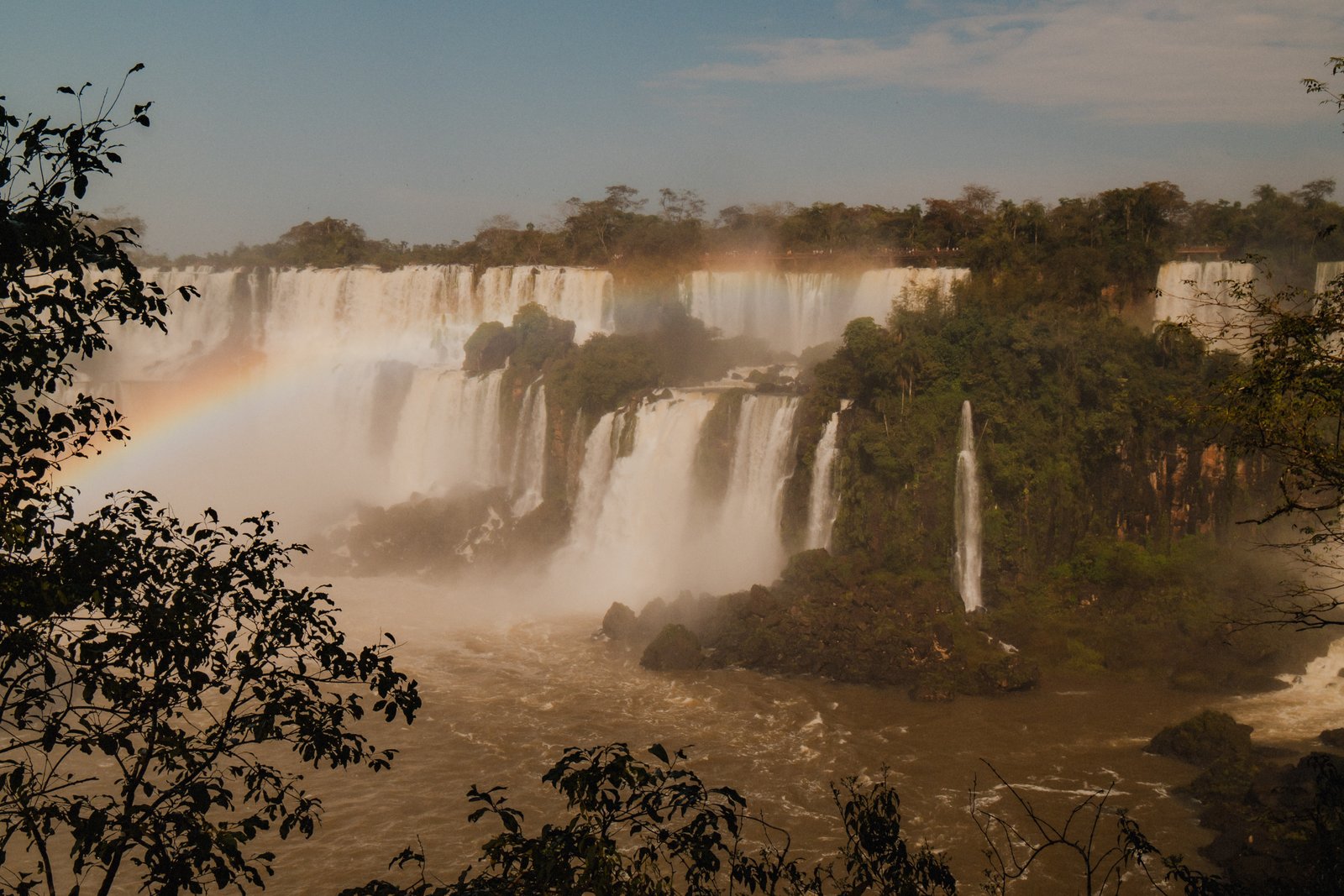
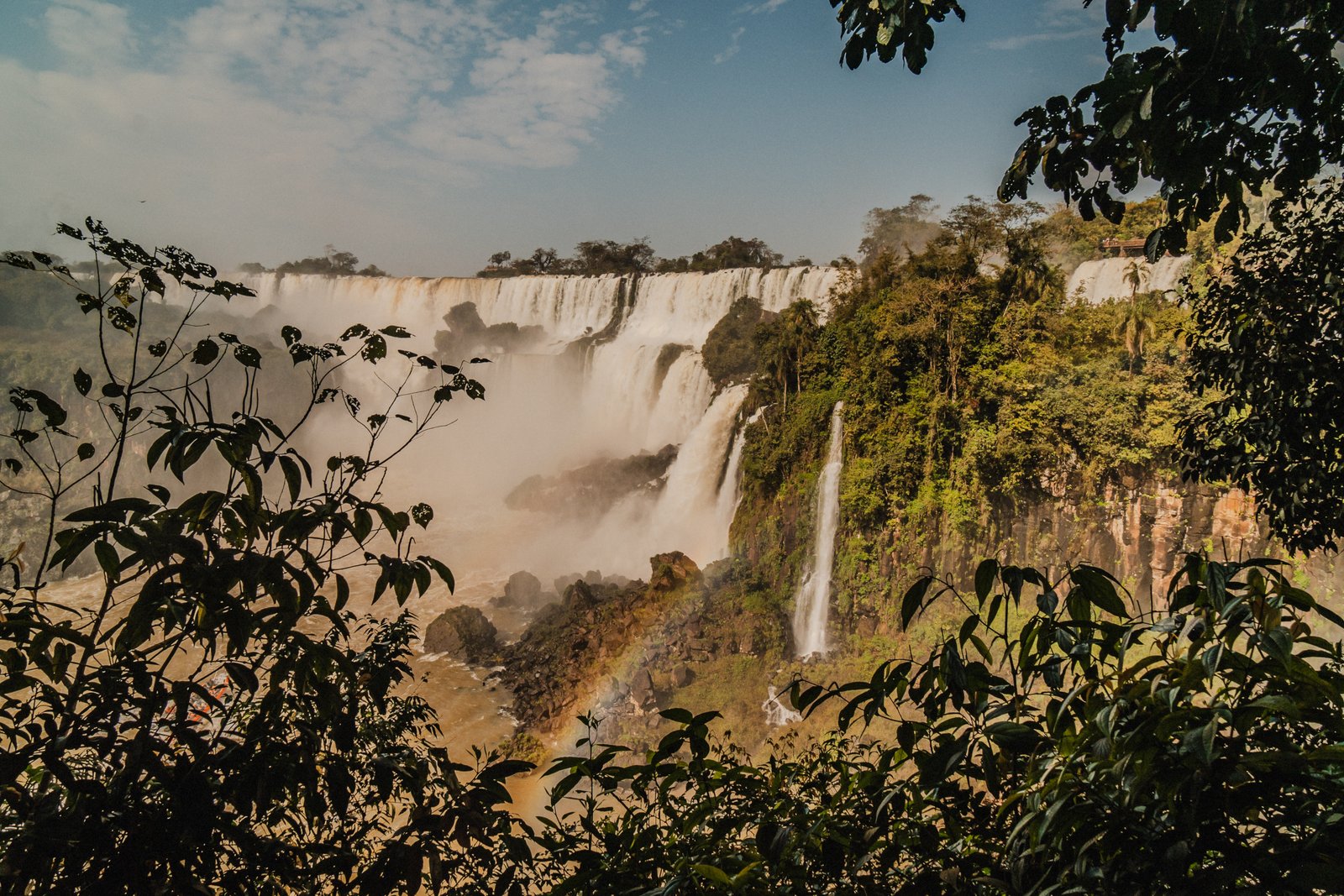
Photographs from both sides of the falls. Argentina and Brazil, April 2024.
Guided Experiences at Iguazu Falls
Iguazu is one of the few places where a boat ride is a better vantage point than the walkways. Helicopter flights, rainforest walks, and the boat under the falls all offer angles the catwalks can't.
Boat ride under the falls
Jet boat ride directly into the spray zone of the lower falls from the Argentine side. Gets you completely wet: intended. Life jackets and poncho provided. 10-minute ride, multiple daily departures.
Book boat ride →Helicopter flight over the falls
10-minute helicopter flight over the Devil's Throat and the full falls panorama from above. Operates from the Brazilian side. The only way to see the entire 2.7km arc of falls at once.
Book helicopter →Brazil and Argentina full-day
Guided full-day crossing both sides of the falls with border transfer included. Morning on the Argentine walkways, afternoon at the Brazilian panoramic viewpoint. Best light each side at different times of day.
Book full-day tour →Links go to GetYourGuide for real-time availability. Check dates and guide certifications before booking.
You hear Iguazu before you see it. A low roar builds as you walk along the paths above the Iguazu River, and then the first fall appears through a gap in the subtropical forest, and then another, and another, until you are standing above 275 cascades stretched across nearly 3 kilometres of cliff edge and the word "waterfall" stops being adequate.
Understanding the Falls
The Iguazu Falls sit on the border between Argentina and Brazil on the Iguazu River, a tributary of the Paraná. The falls divide the river into upper and lower sections, with the Argentine side containing the largest single fall, the Garganta del Diablo.
At peak flow (typically March through April after the wet season), up to 12,000 cubic metres per second pass over the falls. At low flow (August to September), the volume drops to around 1500 cubic metres per second and the falls break into more distinct individual cascades.
You smell the spray before you hear the falls. Then you hear them. Then they fill the whole sky.
Both countries maintain national parks around the falls: Iguazú National Park (Argentina) and Parque Nacional do Iguaçu (Brazil). The Argentine park is larger and allows much closer access to the individual falls through its walkway system. Both parks charge separate entry fees and a Brazilian visa may be required for your nationality to cross the border.
When Are the Falls at Their Best?
The falls vary dramatically with water volume. After the rainy season (November to March), the volume peaks and the Garganta del Diablo becomes a wall of white noise with no discernible structure.
In the dry season (August to October), lower volume reveals the individual falls more clearly and colours are brighter due to reduced spray. Both have merit: the spectacle at peak flow is overwhelming, the clarity at low flow is photogenic. Argentine park entry costs around $20 USD; boat tours add $35 USD.
The Atlantic Forest
Both parks protect fragments of the Atlantic Forest, one of the world's most biodiverse and most threatened biomes. The forest around Iguazu holds toucans, coatis, capuchin monkeys, caimans in the river margins, and occasional jaguar tracks in the more remote sections.
The jungle walk offered from the Argentine park's La Central station (about $15 USD including guide) is a good supplement to the falls circuits and gives genuine jungle context to the landscape.
When to go
Iguazu is open year-round and genuinely good at any time. Peak volume months (March to May) offer the most dramatic spectacle but the Garganta del Diablo walkway may close during flood episodes.
Dry season months (August to September) bring lower water, clearer light, and fewer visitors. July (Argentine winter holidays) is crowded. The parks are busiest in July and during Semana Santa (Easter week); visit on weekdays to avoid the worst congestion.
How to get there
Fly direct Buenos Aires (AEP/EZE) to Iguazú (IGR): 2 hours, multiple daily departures via Aerolíneas Argentinas and LATAM. The airport is 20km from Puerto Iguazú town and 15km from the Argentine park entrance. Taxis and remises wait outside.
Argentine park: local buses run from Puerto Iguazú to the park gate (~$3 USD, 30 min). Brazilian side: day trip via international bridge from Puerto Iguazú by taxi or organized transfer (~$15 USD round trip). A Brazil visa may be required depending on nationality.
Argentine park: ~$20–25 USD per person. Brazilian park: ~$20 USD. The two parks are run independently and require separate entry. Most visitors do the Argentine side first (2 to 3 hours minimum) and the Brazilian side as a half-day trip.
Where to sleep
Hostel · Puerto Iguazú
Puerto Iguazú has a good hostel strip on Avenida Brasil. Peter Pan Hostel and Hostel Inn are well-positioned and within 5 minutes of the bus to the park. Dorms from $15.
Hotel · park-adjacent
Hotels along Avenida Tres Fronteras or in the park buffer zone cut 15 minutes off the daily commute to the falls. Sheraton Iguazú is the standard mid-range option with falls views.
Belmond Das Cataratas · Brazil
The only hotel located inside the Brazilian national park, directly on the falls circuit. Guests access the Garganta do Diabo at dawn before day visitors arrive. One of the most unique positions of any hotel in South America.
Common Questions
Two days is the standard: one full day on the Argentine side doing both circuits and the Garganta walkway, and a second half-day visiting the Brazilian side for the panoramic view. If you plan to do the boat tour and the jungle walk on the Argentine side, allow a full two days on the Argentine park alone. Three days total gives you the best coverage without fatigue.
Technically yes, but it is exhausting and you shortchange both sides. The Argentine park alone takes 5 to 7 hours to cover properly. If you are time-limited, prioritise the Argentine side for the up-close experience and do a quick 2-hour Brazilian side visit for the panorama. The border crossing takes 30 to 45 minutes each way by taxi.
It depends on your nationality. Citizens of EU countries, the UK, USA, Canada, Australia, and many South American nations currently do not require a visa for Brazil. However, visa requirements change; check the current Brazilian consulate policy for your nationality before assuming you can cross freely.
The border crossing is at Ponte Internacional Tancredo Neves, 2km from Puerto Iguazu. You need your passport even for a day visit to the Brazilian side.
Not always. When the Iguazu River rises significantly above normal flow during the rainy season (often February to April), the walkway platform floods and closes for safety. The closure can last days or weeks. Check the park's official website or social media channels before your visit if you are traveling in the high-water period. The Upper and Lower Circuits usually remain open even when the Garganta walkway is closed.
If you can only do one side: Argentine, without question. It gives you more time inside the falls, closer perspectives, the boat experience, and the Garganta from the Argentine platform. The Brazilian side has the single best panoramic photograph but the Argentine side has the better overall experience. Most first-time visitors agree the Argentine side alone justifies the entire trip.