Etna Trails
Walking the Valle del Bove lava field, climbing to the observatory at 2,900m, and the guided summit crater approach.
Valle del Bove Lava Field Walk
The Valle del Bove is a vast depression on Etna's eastern flank, 8km wide and 5km deep, formed by the collapse of an older volcanic edifice approximately 64,000 years ago. The floor of the Valle is covered in successive lava flows dating from the past 200 years; the colour gradation from black (most recent) to grey to reddish (oldest) maps the eruption history across the landscape.
A marked trail from the Zafferana Etnea road (accessible from the SP92 on the eastern slope) descends into the upper Valle, crossing lava formations including pahoehoe (rope lava) and aa (rough clinker lava) with the active craters visible above. A guide is recommended for the lower Valle sections; the upper rim trail is accessible independently with care.
Torre del Filosofo to Observatory (2,900m)
From the Rifugio Sapienza (1,923m, the main tourist base on Etna's south slope) a cable car and 4x4 shuttle ascend to 2,500m and 2,900m respectively; an independent trail from the Rifugio climbs on foot to the same areas via the tourist circuit. The trail passes the site of the Torre del Filosofo (a Roman observatory demolished by eruptions) and reaches the former Observatory at 2,900m, now an INGV monitoring station.
At 2,900m you are above the vegetation line; the view encompasses the entire south coast of Sicily, Malta on clear days, and the summit craters smoking directly above. This is the highest point accessible without a guide; above 2,900m the authorised summit zone begins and requires the guided approach.
Guided Summit Crater Tour (3,357m)
The summit crater zone above 2,900m is open only with a licensed guide, and access is regularly restricted or closed based on eruption activity. When open, the guided tour covers the 460m from the observatory to the summit crater rim at 3,357m: a steep ascent on volcanic ash and lava rubble, with the Bocca Nuova and Voragine craters smoking below the summit.
The experience at the crater rim is among the most visceral in European outdoor experiences: sulphur dioxide gas rolling from the crater, the visible incandescence of the lava inside, and the completely barren black landscape of the highest point. The guide monitors gas levels and crater activity continuously; they will abort the approach if conditions change. The summit elevation is itself variable year to year as eruptions build or demolish the crater rim.
Mount Etna in Photos
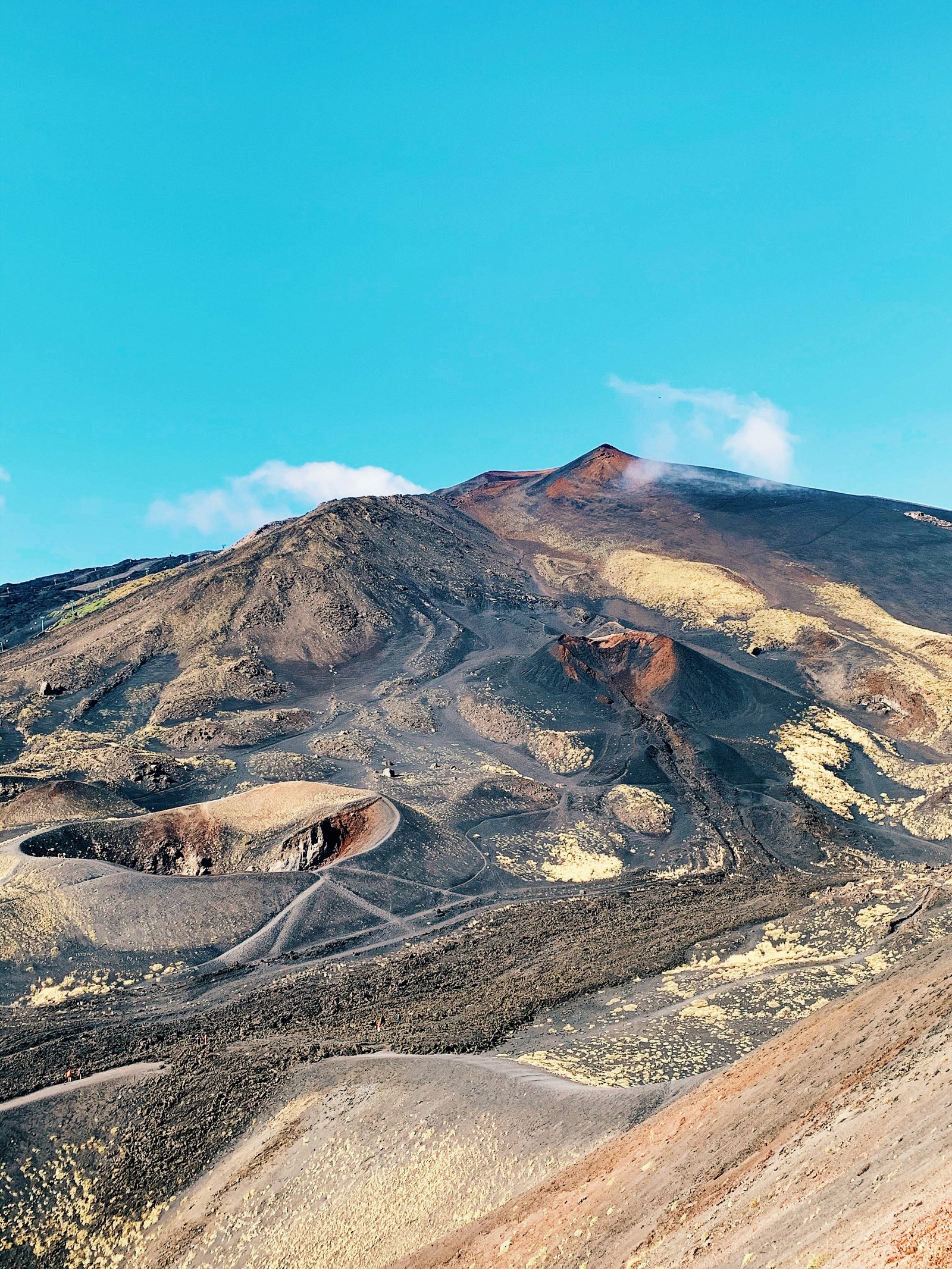
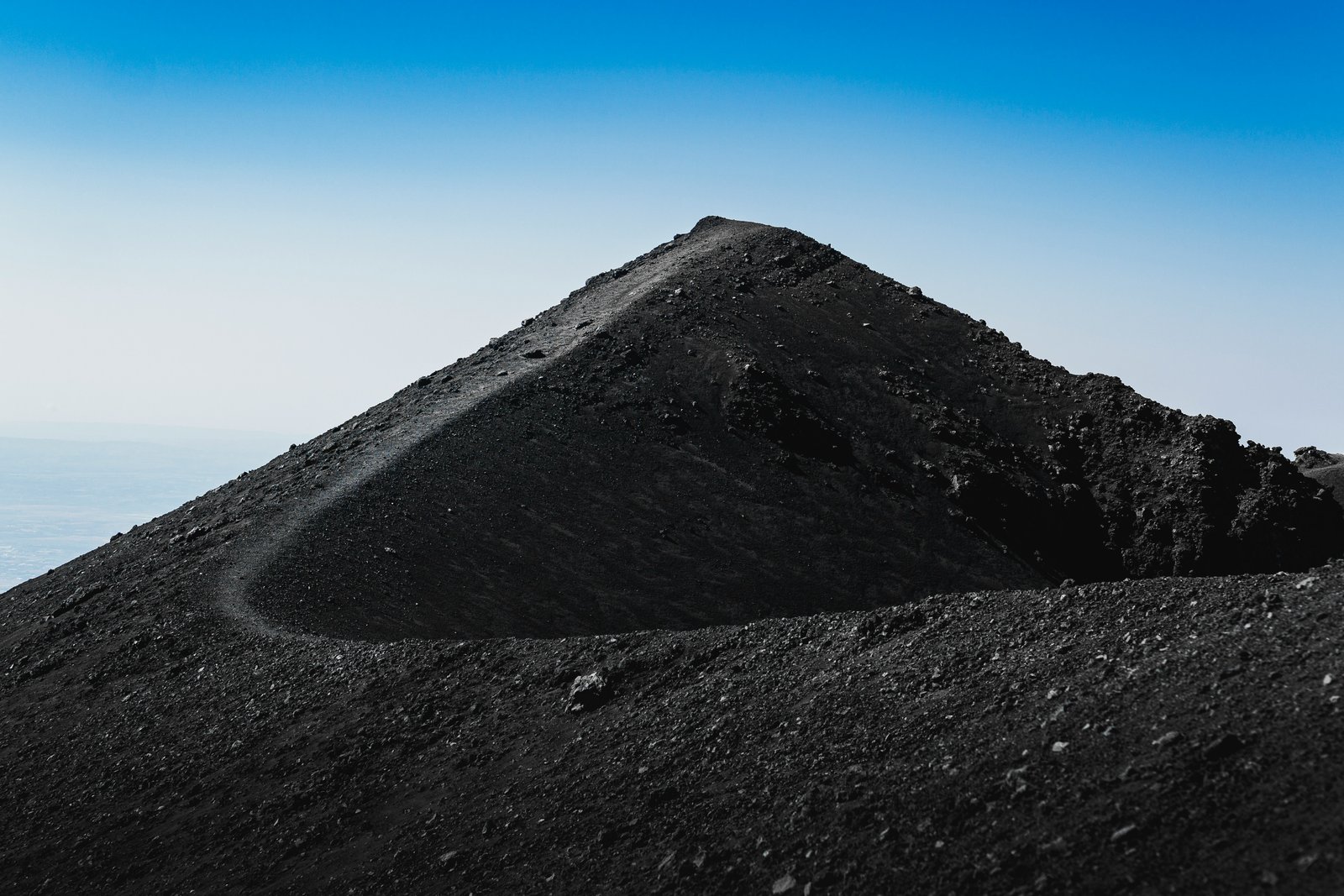
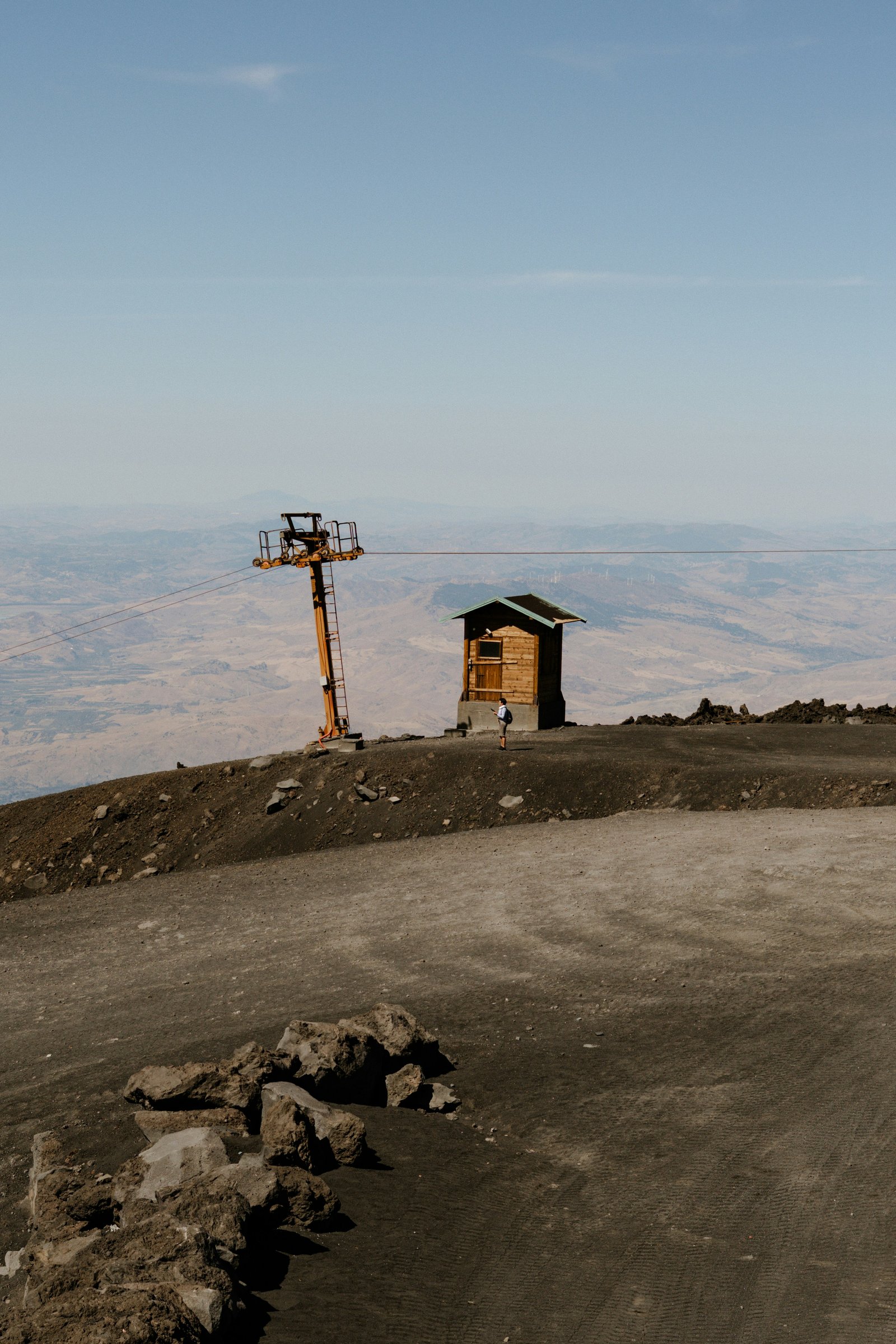
Smoking summit craters glowing at night, the vast Valle del Bove cut by successive lava flows, and hikers crossing ash slopes below the active cone.
Best time, daylight and what to pack
Guided Experiences on Etna
Etna (3,357m) is Europe's highest and most active volcano. The summit zone is restricted and requires a licensed guide. Combined wine, lava, and tasting tours are also popular on the lower flanks where the volcanic soil produces Nerello Mascalese grapes.
Guided summit crater walk
Guided ascent to Etna's summit craters with a licensed AIGAE guide. Cable car to 2,500m then trekking to the active craters at 3,357m. Hard hats and gas masks provided. Active venting near the summit makes this unpredictable: go/no-go on the day.
Book summit trek →Jeep tour on the lava fields
Half-day 4WD jeep tour across the 2002 lava flows on Etna's northern flank. Access to craters and lava tunnels not reachable on foot. Stops at the 1983 eruption site and the Silvestri craters.
Book jeep tour →Etna wine and lava tasting
Half-day guided wine tasting on the south-eastern flank of Etna, where volcanic soil produces some of Sicily's best Nerello Mascalese reds. Visits to two cantinas with barrel ageing in lava stone cellars.
Book wine tour →Links go to GetYourGuide for real-time availability. Check guide certifications and cancellation policy before booking.
Etna is not a single mountain in the normal sense. It is an accumulation of 500,000 years of eruption events on top of each other, and the current edifice is the most recent of several historical volcanic structures. The four summit craters (Voragine, Bocca Nuova, Northeast Crater, Southeast Crater) are all active simultaneously in differing degrees; the Southeast Crater has been the most active in recent years and has grown by over 100m in height since 2011 through successive eruption deposits. Walking on Etna is walking on a geological structure in continuous active construction.
Etna from Catania
Catania is the best base for Etna. The city was largely rebuilt in baroque style after the 1693 earthquake, using the black Etna lava as the primary building material; the combination of black lava stone and baroque architecture is specific to Catania and creates a distinctive and beautiful city.
The Catania food market (La Pescheria, fish market) is one of the finest in southern Italy and the city's restaurant scene uses the hyper-fertile volcanic soil produce of the Etna slopes (Etna red wines, pistachios from Bronte, blood oranges from the coastal plain). The Circumetnea narrow-gauge railway circles Etna's base (approximately 3 hours for the full circuit) and is worth doing for the perspective on the mountain's scale.
The wine dimension
Etna DOC wine is among the most critically acclaimed emerging wine regions in Italy. The northeast slope of Etna (Etna Nord) produces Nerello Mascalese red wines from extremely old vines (some over 100 years) on volcanic soils at 700 to 1,200m elevation. The high altitude, volcanic soil, and temperature variation between day and night produce wines of unusual complexity and acidity.
Producers including Benanti, Cornelissen, Passopisaro, and Terre Nere have brought international attention to the appellation since the early 2000s. A half-day wine tour to the northeast slope (Randazzo and Linguaglossa area) combines with hiking on the same side of the mountain; the vineyards are among the most beautiful in Italy, with ancient alberello (bush-trained) vines on black lava terraces.
When to go
Spring (March to June) and autumn (September to October) are the best seasons for Etna hiking: the summit is typically snow-free, the temperature on the summit approach is manageable (10 to 20C at 2,900m), and the Sicilian heat below does not make the ascent arduous. Summer (July to August) is viable but the heat at lower levels combined with volcanic gas at the summit makes it more challenging.
Winter (December to March) brings snow to the upper mountain; snowshoeing and winter summit approaches are possible with appropriate equipment and licensed guides. The summit craters are accessible year-round if eruption activity permits; check INGV real-time monitoring before any summit attempt regardless of season.
Where to stay near Mount Etna
Compare real prices and cancellation terms before you commit. Book early for peak season.
Common Questions
Etna erupts in some form almost continuously but the character and danger of the eruptions varies enormously. Strombolian activity (regular ejections of lava blobs from the crater) is visually spectacular and does not threaten the approach trails; lava flows during these phases tend to move slowly (walking pace) and in predictable directions.
Paroxysmal eruptions (intense explosive phases lasting hours) are dangerous within several kilometres of the summit and the INGV closes the summit zone immediately when these are forecast. The key is to check the INGV real-time alert level before departure and to go only with licensed guides who have direct radio communication with INGV monitoring teams.
If the alert level is elevated, postpone. The lower slope trails (Valle del Bove, below 2,500m) are accessible even during significant summit activity as lava typically flows east away from the main tourist approach.
Etna is the only European volcano offering a guided summit approach to an actively erupting crater with reliably open access. Vesuvius (Naples) has a crater walk but is not currently erupting; Stromboli (Aeolian Islands) offers spectacular Strombolian eruptions from a 918m summit but at shorter access distance from the crater; the Azores' Pico is the largest Atlantic island volcano but not currently erupting at the summit.
Etna uniquely combines high elevation (3,357m), continuous activity, the full range of volcanic landform types, and a well-developed guide infrastructure. For anyone with a serious interest in volcanology or volcanic landscapes, Etna is the primary European destination.