What to Do at Colca
From a 2-hour condor viewpoint visit to a 2-day full canyon descent. The depth of the canyon makes the trek back up the defining physical challenge.
Cruz del Cóndor (Condor Viewpoint)
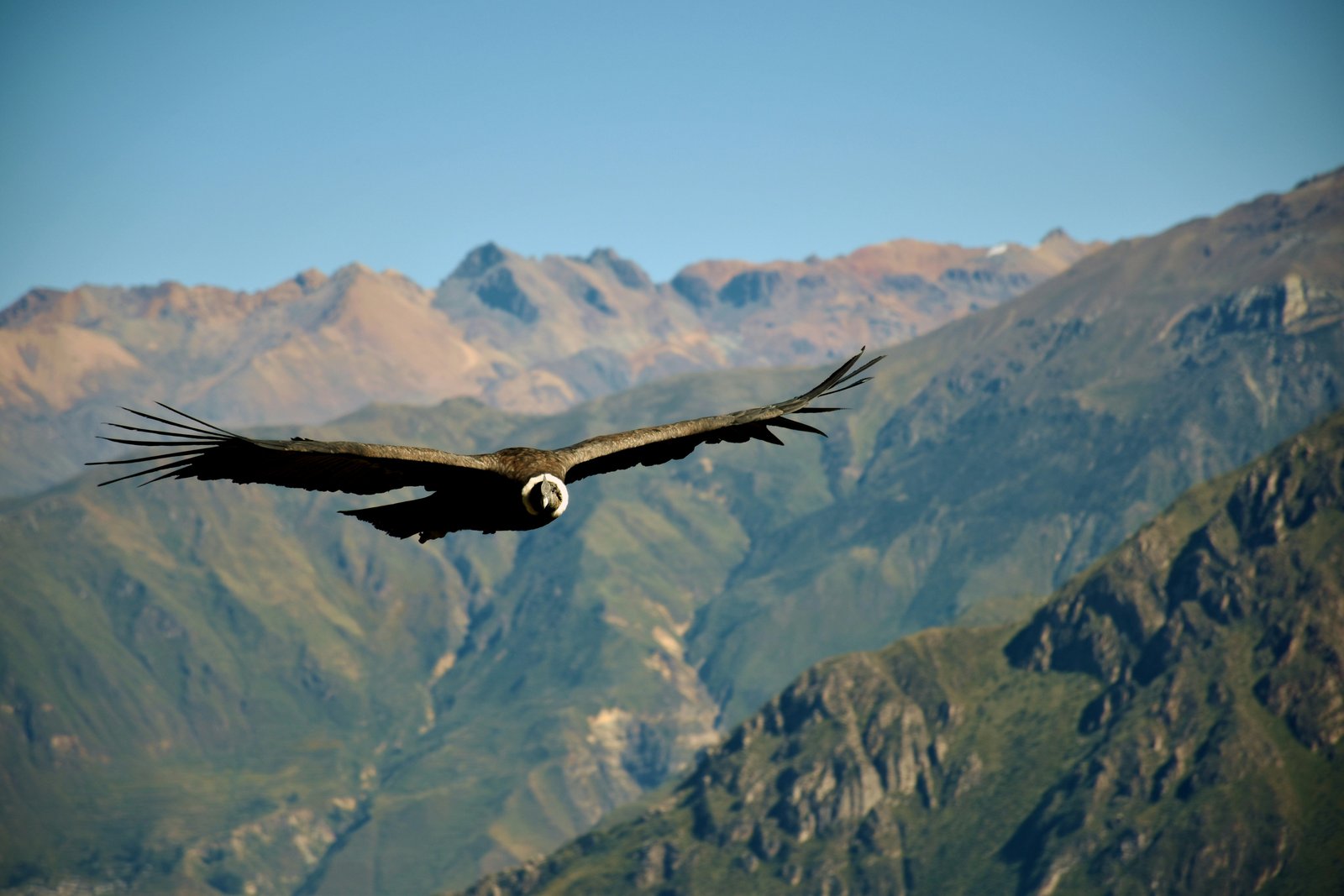
Cruz del Cóndor is a roadside mirador on the canyon rim at 3,287m, 15km west of the village of Cabanaconde. It is the most reliable place in South America to see Andean condors in flight. Condors use the thermal updrafts rising from the canyon floor between approximately 8am and 10am to gain altitude without flapping.
At Cruz del Cóndor, they pass the rim at eye level or below: wingspans of 3 to 3.2 metres at 5 to 10 metres distance are typical. On good mornings, 8 to 12 birds circle simultaneously in the space directly in front of the viewpoint. Condors are present year-round but sightings are more consistent from April to October. All bus tours from Arequipa include a stop here.
Canyon Trek (2 days)
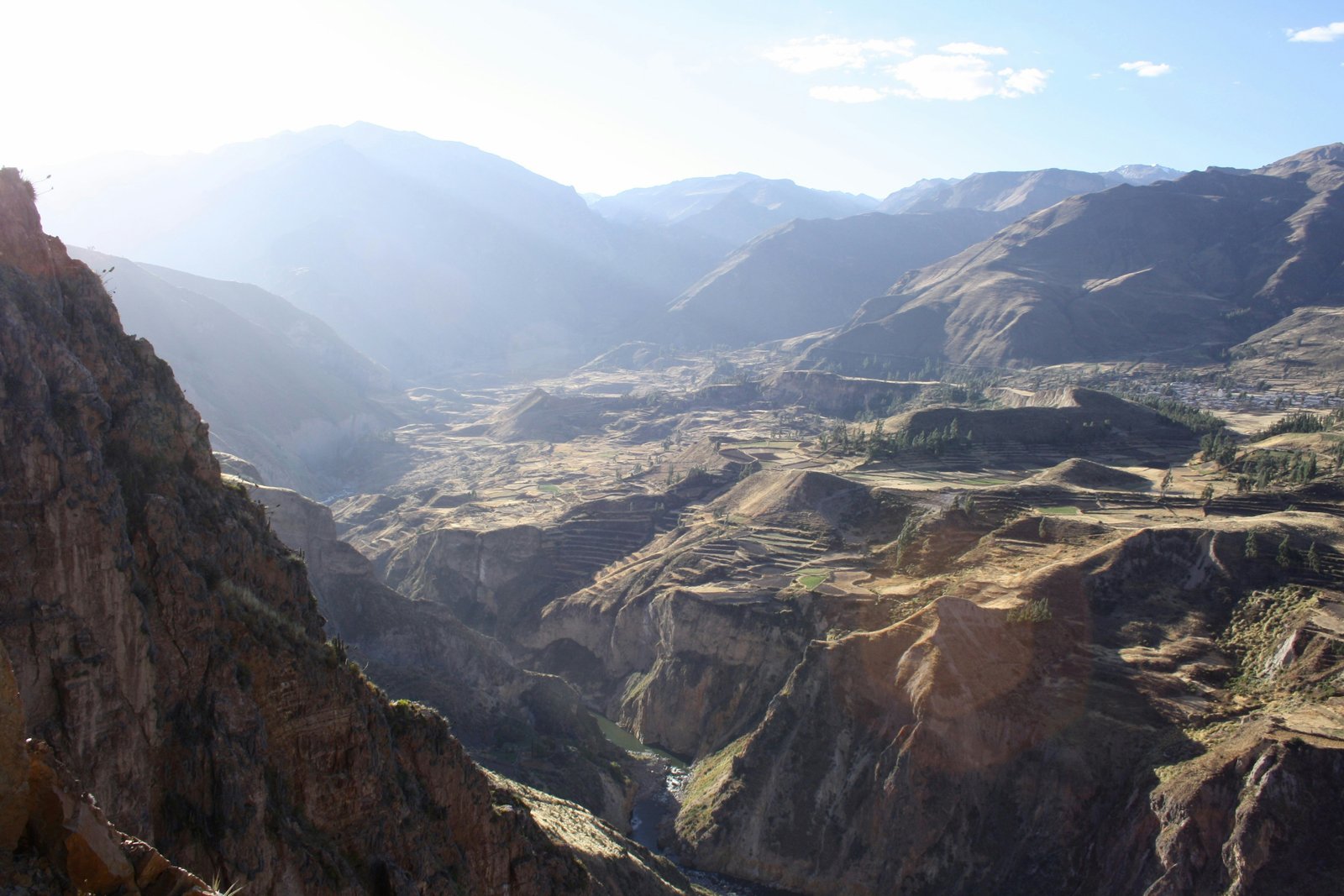
The standard canyon trek descends from Cabanaconde (3,287m) to the oasis at Sangalle (2,200m) on day 1: a 1,000m descent on a switchback trail through terraced fields and canyon walls. Sangalle is a cluster of small lodges with pools and hammocks at the canyon floor, incongruously lush against the surrounding rock.
Day 2 is the return ascent: 1,000m of climbing in the heat of the canyon, typically starting at 4 to 5am to beat the midday sun. The ascent takes 3 to 4 hours and is the hardest physical effort of the trip: steep, exposed, and hot. At the top, buses depart Cabanaconde for Chivay and Arequipa through the afternoon.
Colca Villages Route
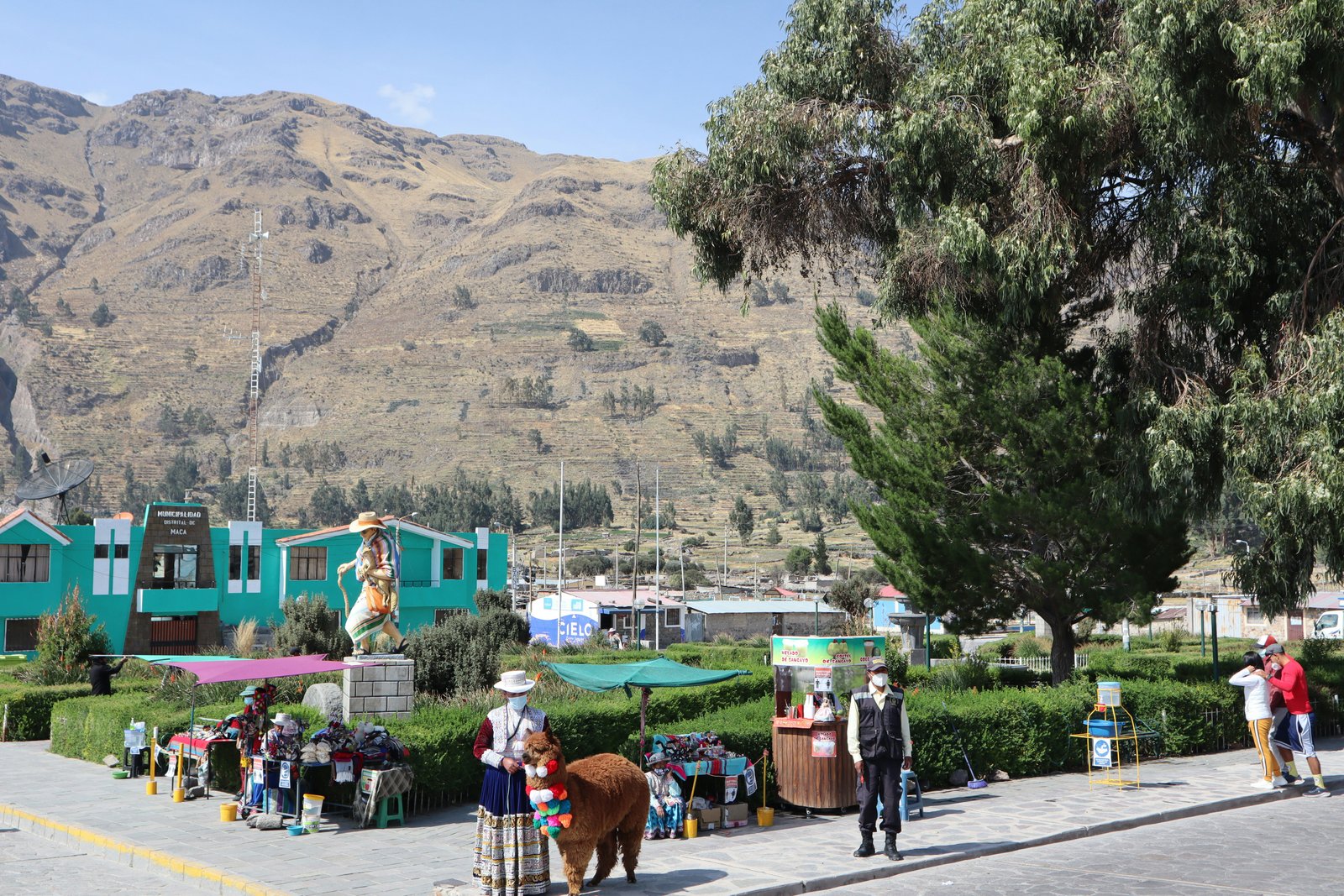
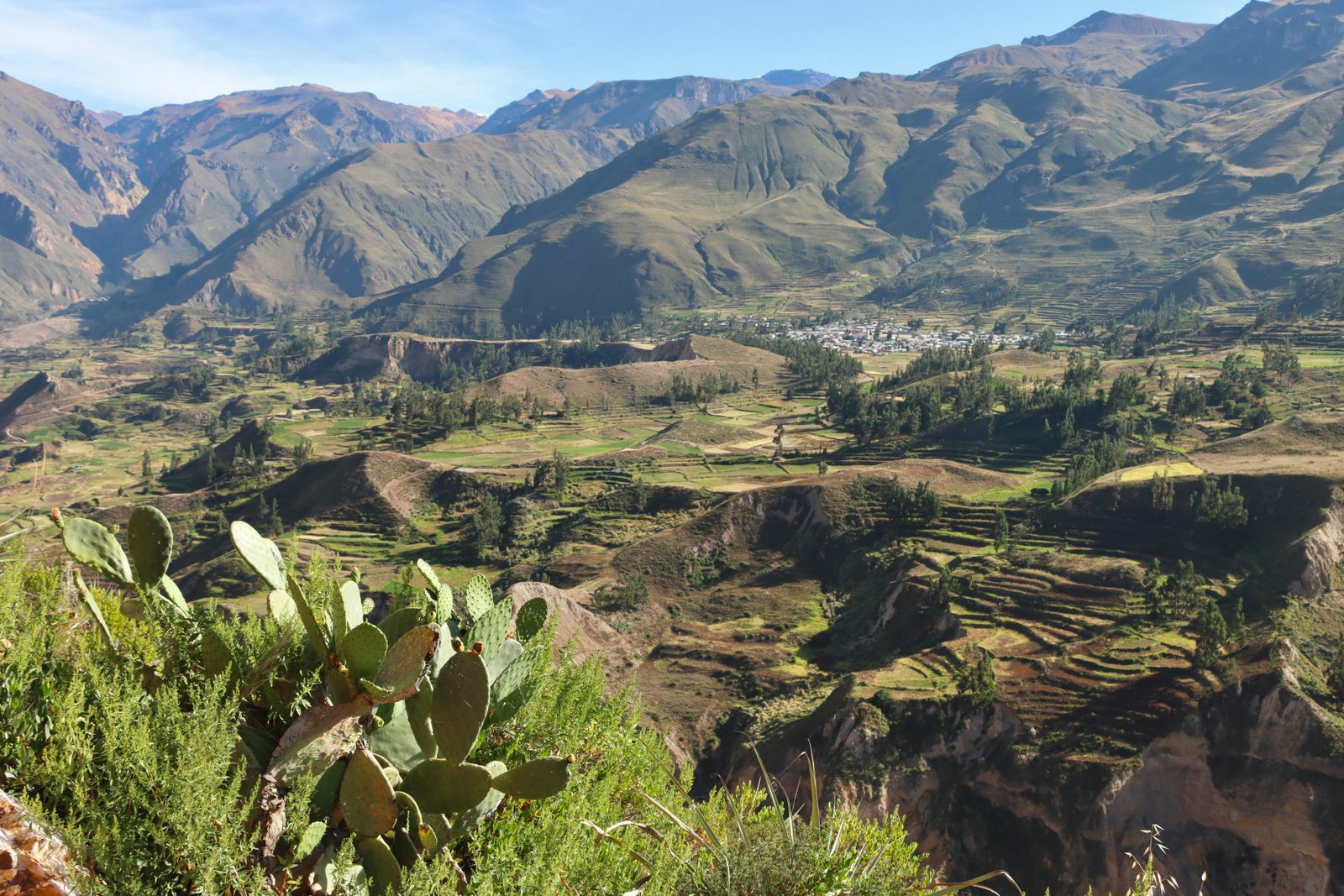
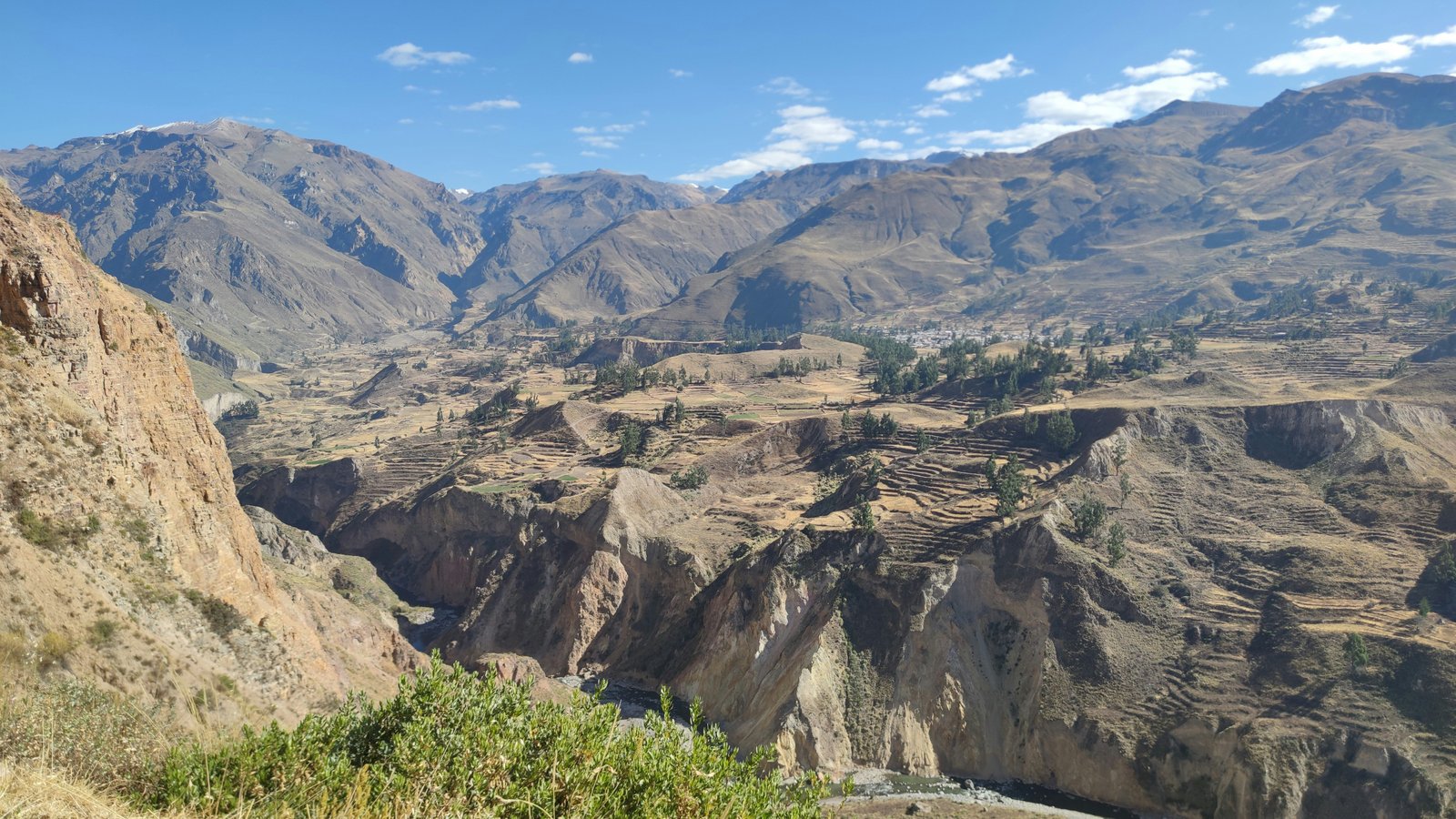
The road along the canyon rim connects a string of traditional Collagua and Cabana villages: Yanque, Coporaque, Achoma, Maca, Cabanaconde: each with a colonial church and terraced fields descending into the canyon. The terraces are pre-Inca in origin, still actively farmed, and cut in concentric steps down gradients that would be unworkable with modern machinery.
The villages are quiet and unhurried. Most organised tours from Arequipa pass through Chivay and drive the rim road to Cruz del Cóndor in a day; staying 2 nights in Chivay and walking sections of the rim between villages gives a more complete picture of what the canyon is.
Colca Canyon in Photos
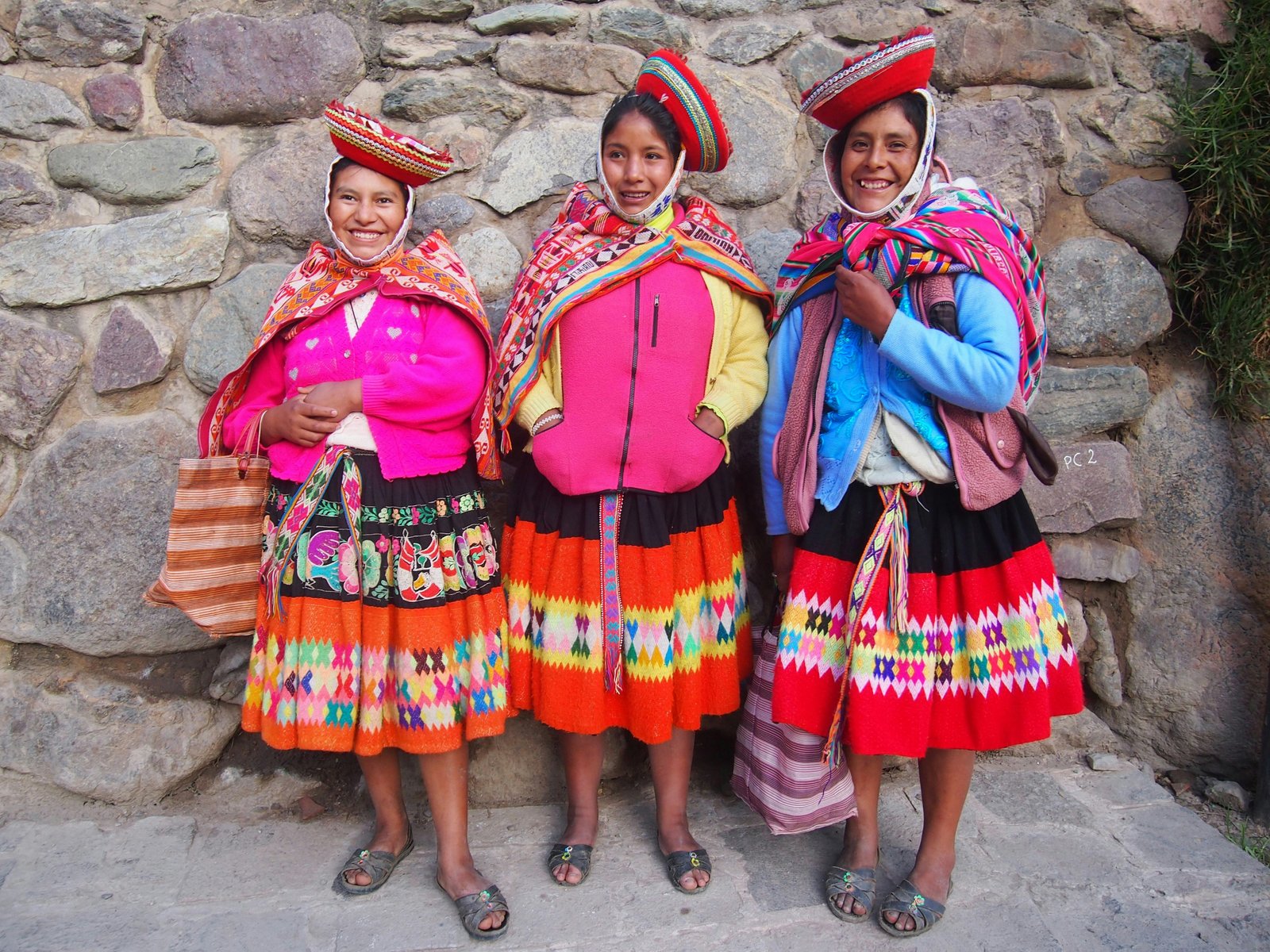
The canyon floor at sunrise before the tour buses arrive, condors riding the thermals from Cruz del Cóndor, and the villages that have been farming these terraces since before the Incas.
Guided Experiences in Colca Canyon
The Colca Canyon area offers more than the trek down to the oasis. Condor watching at Cruz del Condor, village cultural tours, and guided rafting on the Colca River are all available from Chivay or Arequipa.
2-day canyon trek
Guided 2-day trek from Cabanaconde to Sangalle oasis and back, with overnight in a simple lodge at the canyon floor. Guide handles route and canyon-floor navigation. Meals included.
Book canyon trek →Condor watching at Cruz del Condor
Early morning guided tour to Cruz del Condor viewpoint where Andean condors rise on thermal updrafts from the canyon between 8am and 11am. Best views October to March. Transport from Chivay included.
Book condor tour →Villages and terraces cultural tour
Full-day guided tour of Yanque, Achoma, and Maca villages in the upper Colca Valley. Visit pre-Inca agricultural terraces, colonial churches, and meet local weavers from the Cabana and Collagua cultures.
Book cultural tour →Links go to GetYourGuide for real-time availability. Check dates and guide certifications before booking.
Colca Canyon is 3,400 metres deep at its lowest point: nearly twice the depth of the Grand Canyon. The canyon was largely unknown outside Peru until the 1980s when a Polish-American kayaking expedition descended the Colca River and documented the depth. What makes it more than a geological record is the combination of scale, wildlife, and living culture: condors that have been nesting in the cliff faces for generations, terraced agriculture that predates the Inca empire, and canyon-floor villages that are genuinely remote from the Arequipa tourism circuit.
How to get there
Fly Lima (LIM) to Arequipa (AQP): 1.5 hours, multiple daily flights via LATAM and Sky. The route crosses the Andes at altitude; Arequipa itself sits at 2,335m, giving a gentle start to acclimatization before the canyon.
Daily bus from Arequipa Terminal Terrestre to Chivay: 3.5 hours, $5–8 USD. The road crosses Patapampa pass at 4,910m: the highest road point in Peru accessible by regular bus: where vicunas graze roadside. Organized 2-day tours from Arequipa cost $30–60 USD depending on accommodation level.
Cruz del Cóndor is 55km west of Chivay along the canyon rim, about 1 hour by bus or tour vehicle. The condor flight window is 8 to 10am: time your arrival accordingly. Most tours depart Chivay at 6am to reach the viewpoint by 7:30 to 8am.
The Andean condor
The Andean condor (Vultur gryphus) is the largest flying bird in the world by combined wingspan and weight. Adults have a wingspan of 3 to 3.2 metres and weigh 8 to 15kg. They are carrion feeders and can travel 200km per day in search of food, using thermal updrafts to stay airborne without flapping for hours at a time.
The Colca Canyon population is one of the most accessible wild condor populations in South America: the cliff geometry funnels thermals directly past Cruz del Cóndor, making the sightings predictable. Condors do not breed until they are 6 to 7 years old and raise one chick every two years, which makes the population inherently slow to recover from disturbance.
The condor doesn't flap. It tips one wing and the thermal does the rest.
When to go
April through August is the dry season and the best window for trekking and condor sightings. The wet season (February and March) makes the canyon trail slippery and sometimes impassable after heavy rain, and condor sightings at Cruz del Cóndor are less consistent. The canyon is technically accessible year-round for the Cruz del Cóndor viewpoint, but the 2-day trek is best reserved for dry season months.
Where to sleep
Hostal · Chivay
Chivay is the main hub town with the best range of budget accommodation. Several family-run guesthouses in Yanque village (10km west) offer even more canyon atmosphere for $15–25 per night with meals.
Lodge · Yanque or Cabanaconde
Staying in Yanque rather than Chivay gives better canyon views and a quieter village setting. Las Casitas del Colca and similar valley lodges offer comfort without the resort price.
Colca Lodge · Yanque
The Colca Lodge sits directly above the river in a thermal hot spring area. Open-air pools fed by volcanic springs with canyon views. The definitive luxury stay in the valley.
Common Questions
It depends on how depth is measured and which section. At its deepest point near the village of Cabanaconde, the canyon walls drop 3,400m from rim to river. The Cotahuasi Canyon, 200km northwest of Colca and also in the Arequipa region, is measured at 3,535m: making it technically deeper.
Both are significantly deeper than the Grand Canyon at 1,800m. In practice, the distinction matters less than the fact that Colca is genuinely enormous, visually dramatic, and the condor sightings are something the Grand Canyon does not offer.
Nothing in wildlife viewing is guaranteed, but Colca Canyon has the highest sighting reliability of any condor site in South America. The combination of consistent thermals, a permanent nesting colony in the canyon walls, and the geometry of the Cruz del Cóndor viewpoint makes sightings the norm rather than the exception.
Most visitors who arrive between 8 and 10am on a clear morning see condors within 20 minutes. Overcast days reduce thermal activity and make sightings less likely. Rainy mornings are the worst: come back the next day if weather is poor.
Yes. Take the daily bus from Arequipa's Terminal Terrestre to Chivay ($5 to $8 USD, 3.5 hours), stay a night in Chivay or one of the canyon villages, and take local transport to Cabanaconde for the trek.
The canyon is not technically complex and does not require a guide. Independent travel gives you more flexibility on timing and pace. Organised tours are cheaper per person for groups and more convenient if you are short on time, but the canyon experience itself is the same.
The standard circuit is: fly into Arequipa (2 days in the city, including the Santa Catalina Monastery and the MACA museum), 2-day Colca Canyon trip, return to Arequipa, overnight bus to Puno on Lake Titicaca (5 hours), then continue to Cusco (another 6 hours or short flight).
This circuit covers the southern highlands in 7 to 10 days and is one of the most efficient ways to see the range of landscape and culture between the Pacific coast and the Andean highland.
Arequipa is at 2,335m. The road to Colca crosses the Patapampa pass at 4,910m: the highest point on the route and a place where many people feel altitude sickness even from a bus. Chivay is at 3,635m and Cabanaconde at 3,287m. The canyon floor at Sangalle is at 2,200m.
The altitude range is significant: you go from 4,900m on the rim road to 2,200m at the canyon floor and back up again. Spending at least one night in Arequipa before taking the bus helps. The descent into the canyon actually provides relief from altitude; the ascent back to the rim is where altitude and heat combine into the main physical challenge.