Into the Hoodoos
Bryce rewards the hikers who descend below the rim. Up top, the views are extraordinary. But walking among the spires at eye level — with orange rock towers rising on every side — is something no photograph fully prepares you for.
Navajo Loop + Queen’s Garden Combo
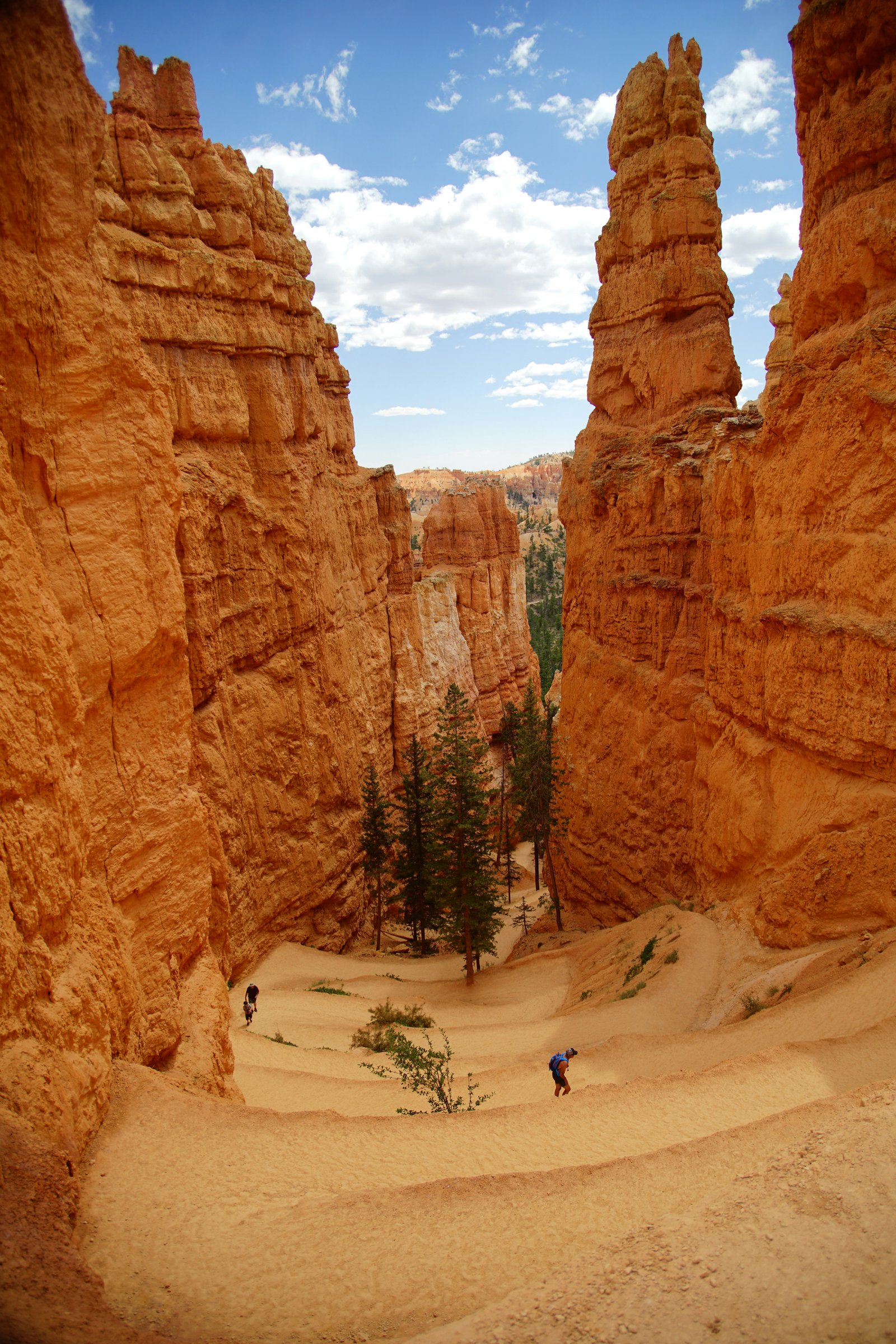
The definitive Bryce experience. Descend through Wall Street — a narrow slot between 60-metre canyon walls — on the Navajo Loop, then wind through a labyrinth of hoodoos on Queen’s Garden before climbing back to the rim. This combination hits the greatest density of iconic formations in the fewest kilometres.
Tip: Do the loop clockwise: descend Navajo (steeper) and ascend Queen’s Garden (gentler switchbacks). Start from Sunset Point for this direction.
Fairyland Loop
The Fairyland Loop is Bryce’s best full-day hike and its most underused. Starting from Fairyland Point (not on the main park road shuttle), it descends into formations the crowds never see, passes the Tower Bridge arch, and returns along a high ridge. You will likely have long stretches entirely to yourself.
Tip: No shuttle serves Fairyland Point — drive there directly, which keeps this trail quieter than anything near Sunrise or Sunset Point.
Rim Trail
The paved rim path connects Bryce Canyon’s main viewpoints between Fairyland Point and Bryce Point. It rolls gently with only modest elevation change and offers overhead views into the amphitheatre at every step. The 1.5 km section between Sunrise and Sunset Point is the most heavily used and most accessible, with stunning colour at both ends of the day.
Tip: Arrive at Bryce Point for sunrise and walk north toward Sunset Point as the light shifts — you will be walking with the best light the entire way.
Bryce Canyon National Park in Photos
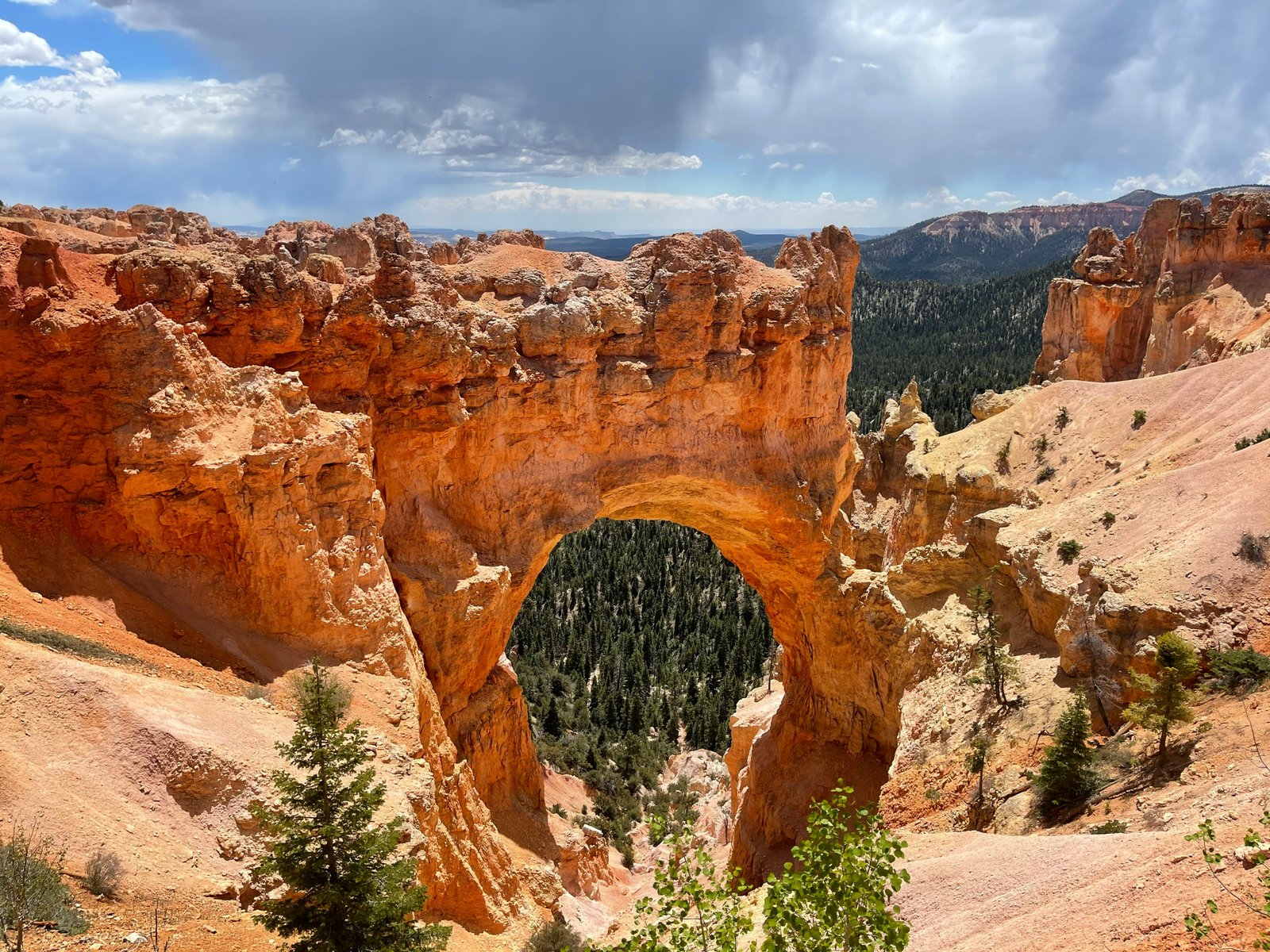
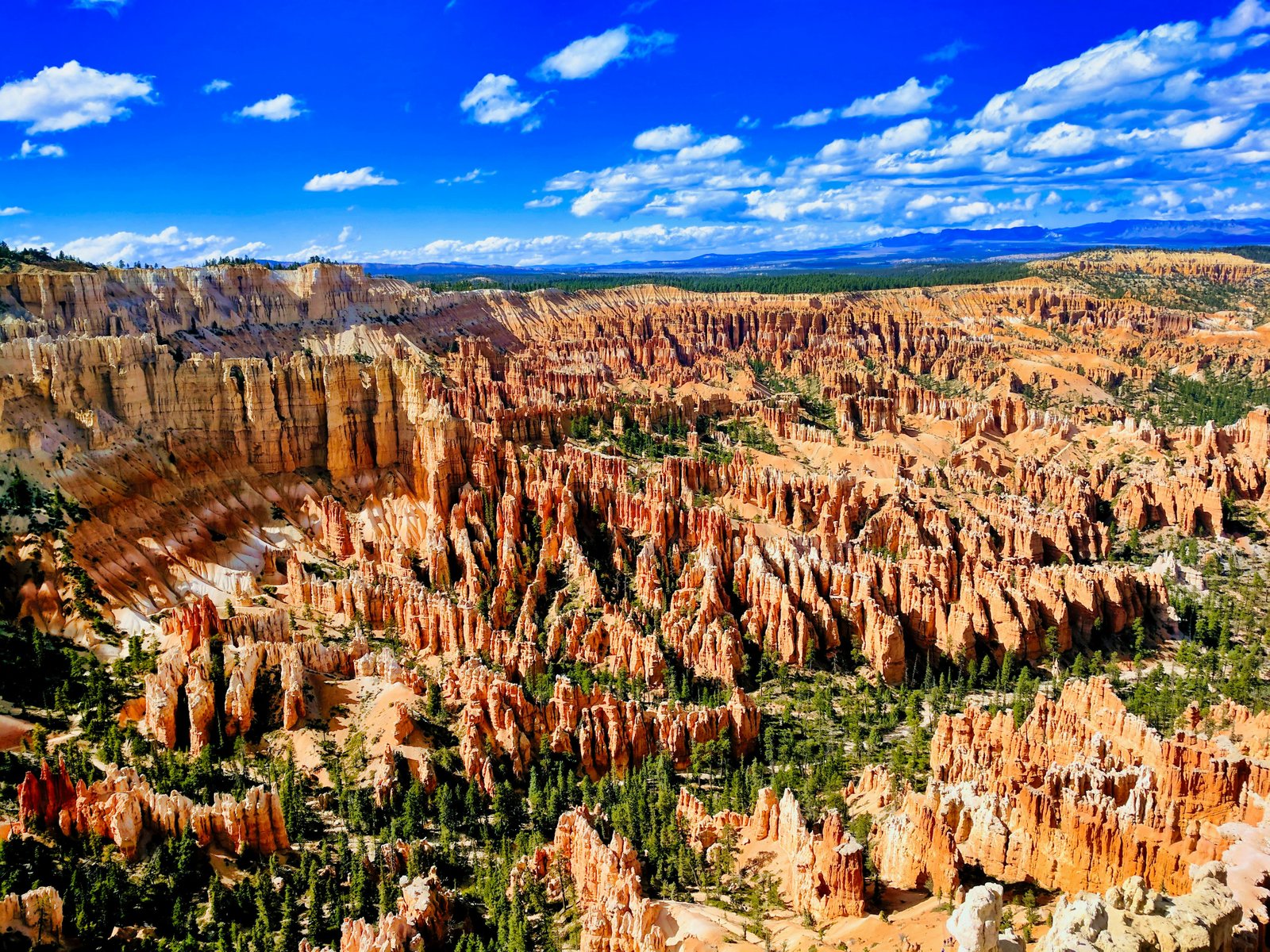
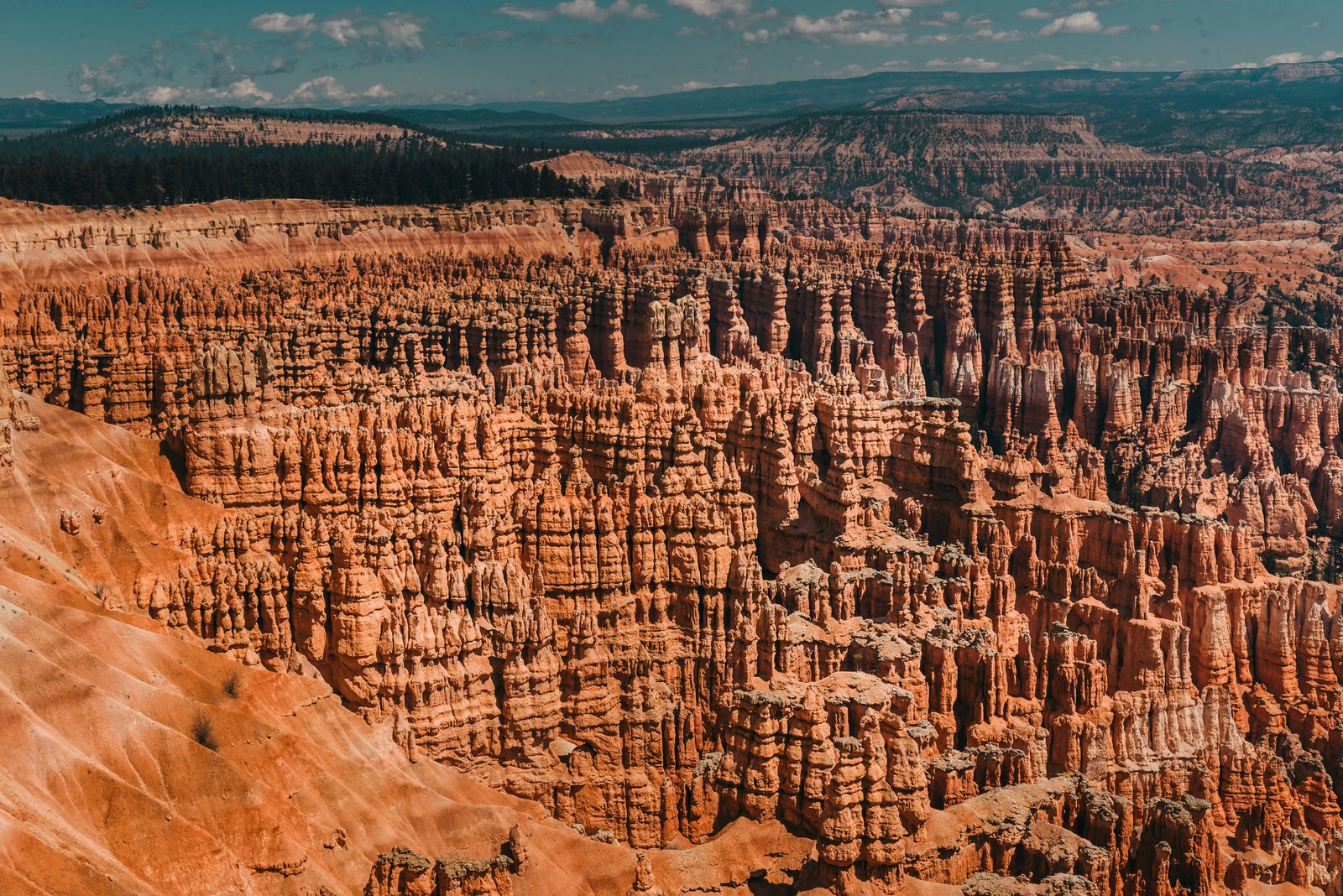
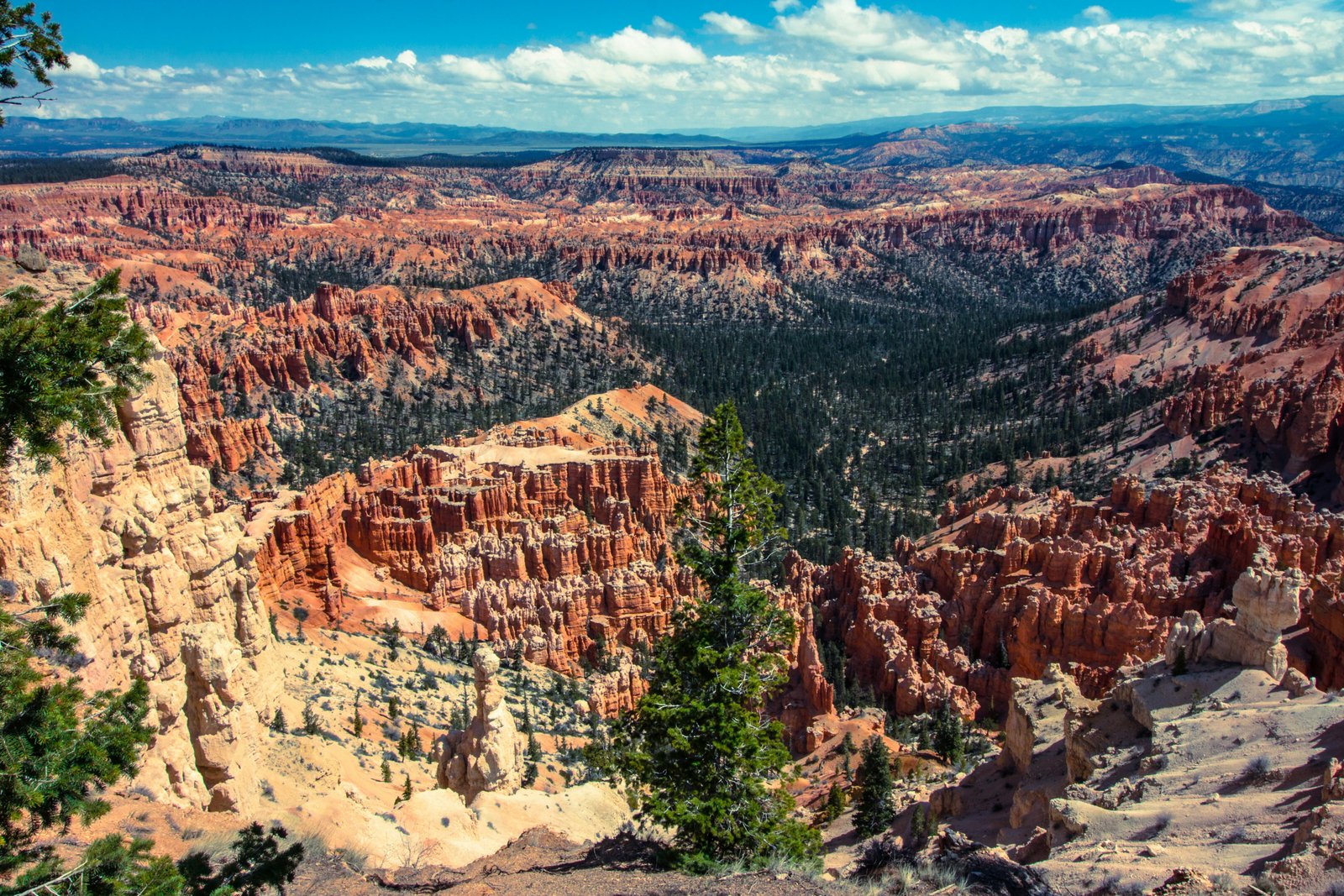
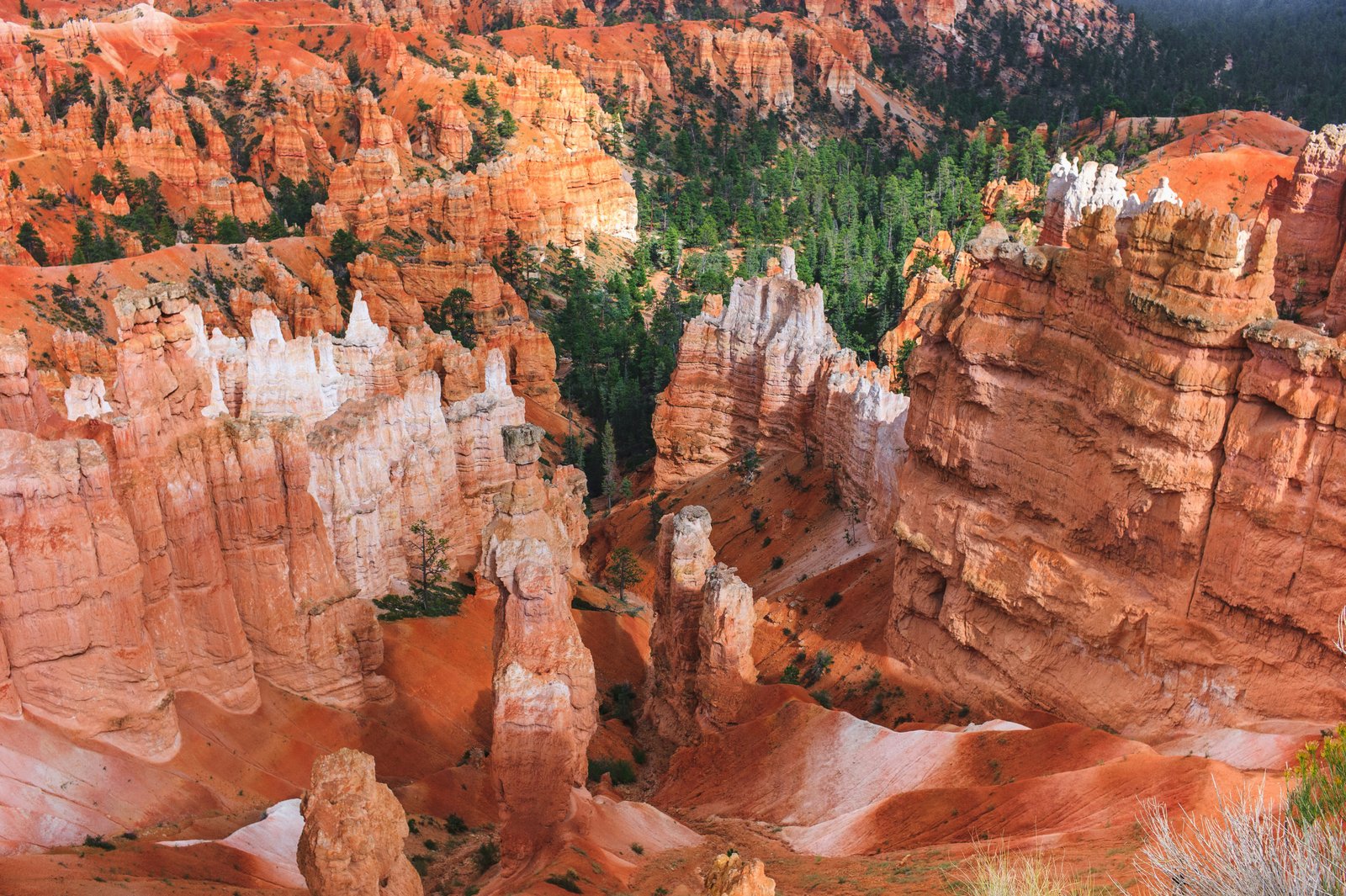
Thousands of orange hoodoos across the amphitheatre, Thor's Hammer dusted in snow, and a natural bridge framing the forest beyond.
Best time, daylight and what to pack
Guided Experiences in Bryce Canyon
Bryce is compact enough to explore in a day but rewarding enough for two. Guided astronomy tours, moonlit hoodoo walks, and horseback rides into the amphitheater are offered by local outfitters.
Guided hoodoo geology walk
Half-day guided interpretive hike through the Navajo Loop and Queen's Garden with a park interpreter. Learn the geology behind the hoodoo formations and the difference between fins, hoodoos, and windows.
Book geology walk →Dark sky astronomy tour
Night astronomy program at Bryce Canyon, one of the darkest sky areas in the American Southwest. Telescope viewing with a ranger-guided program. Summer evenings at Bryce Canyon Lodge.
Book astronomy →Horseback ride into the amphitheater
Guided 2-hour horseback ride from the rim down into the Bryce Amphitheater among the hoodoos. Canyon Trail Rides has been running these since 1916. No prior horse experience needed.
Book horseback →Links go to GetYourGuide for real-time availability. Check guide certifications and cancellation policy before booking.
Bryce Canyon is technically not a canyon at all — it is a series of amphitheatres eroded into the edge of the Paunsaugunt Plateau. What fills those amphitheatres are hoodoos: tall, thin spires of rock that look like they were sculpted by hand, coloured in bands of orange, red, white, and purple.
What Is a Hoodoo and How Do They Form
A hoodoo forms when a relatively hard cap of rock protects the softer layer beneath it from erosion. Bryce sits at an elevation where temperatures cross the freezing point more than 200 times per year. Water seeps into cracks in the rock, freezes, expands, and breaks the stone apart.
Over millions of years, this frost-wedging process carves the plateau into columns. The cap rock on top of each spire erodes more slowly, protecting whatever is directly below it, while the surrounding rock is stripped away. The result is the dense, otherworldly forests of spires you see today. They are still changing — Bryce loses an average of 60 cm of rock from its rim every 65 years, meaning new hoodoos are constantly being born.
Altitude: Bryce Is Colder Than You Expect
Sitting between 2,400 and 2,700 metres above sea level, Bryce Canyon is significantly colder than Zion or the Grand Canyon. Even in July, morning temperatures at the rim can drop below 5°C. Snow is possible at any month of the year, and winter snowfall can be heavy.
The altitude also means the air is thinner — if you are arriving from sea level, take the first hour of any hike at a relaxed pace and drink more water than you think you need. The upside of the elevation is that summer daytime highs rarely exceed 27°C, making it one of the more comfortable parks to hike in warm months.
Stargazing at Bryce
Bryce Canyon holds an International Dark Sky Association Gold Tier designation, placing it among the best stargazing locations in the entire United States. The combination of high elevation, low humidity, minimal light pollution from surrounding towns, and consistently clear nights creates conditions where the Milky Way core is visible to the naked eye for much of the year.
The park hosts an annual astronomy festival in June, and ranger-led stargazing programs run on clear summer and autumn evenings. Bring a headlamp with a red-light mode to preserve your night vision and walk the rim after midnight for an experience that will reframe how you think about the night sky.
When to Go
May through October is the primary hiking season, with the park at its most accessible and the trails in the best condition. Do not write off winter visits — hoodoos dusted in snow are genuinely stunning and the park is dramatically quieter.
Snowshoe rentals are available at the Visitor Center and the park offers ranger-guided snowshoe walks. If you time a winter visit around a full moon, the snow-lit hoodoos under moonlight are something most people never see.
How to get there
Fly to Las Vegas (LAS) or Salt Lake City (SLC), both approximately 4 hours by car. No public transport runs to Bryce Canyon: a rental car from either city is the standard approach.
Most visitors combine Bryce with Zion National Park (90km south on US-89, 1.5h drive), making a classic 2-park loop from Las Vegas. The drive through the Grand Staircase-Escalante between the two parks is itself one of the great scenic drives in the American West.
$35 per vehicle, valid 7 days. The park sits at 2,400 to 2,700m elevation: expect cold nights year-round and genuine snow from October through April. Rim Road viewpoints are accessible even in winter; the hoodoos in snow are spectacular.
Where to sleep
North Campground · inside the park
Steps from the Rim Trail and the main viewpoints. Open year-round, reservations via recreation.gov from May through October. The campground sits at 2,400m: bring a warm sleeping bag even in summer.
Ruby's Inn · Bryce Canyon City
Large full-service resort just outside the park entrance with multiple restaurants, a general store, and year-round horse rides. The most practical mid-range base for the park.
The Lodge at Bryce Canyon
Historic 1920s property inside the park, surrounded by ponderosa pines and steps from the rim. Rustic Western cabins and lodge rooms. The only accommodation within the park boundary.
Common Questions
Yes — this is the classic Utah national park road trip and the logistics work well. Bryce is about 1.5 hours from Zion and roughly 2.5 hours from the Grand Canyon’s South Rim via the scenic highway 89 through Kanab.
Most people do Zion first, then Bryce, then optionally loop south to the Grand Canyon. Allow at least one full day at each park to do justice to the trails — two days at Zion if you want both Angels Landing and the Narrows.
Bryce Point offers the widest panorama of the amphitheatre and is outstanding at sunrise. Inspiration Point gives a higher elevated view that puts the scale of the hoodoo field in perspective.
Sunset Point is the top of the Navajo Loop descent and has the most classic postcard view of the amphitheatre. Fairyland Point, at the north end of the park, is less visited but rewards patience with a quieter and equally dramatic perspective.
Absolutely. The hoodoos at Bryce glow a deep crimson orange for roughly 20 minutes after the first light hits them, and the colour shifts through the entire warm spectrum as the sun climbs.
Descending into the amphitheatre just before sunrise and watching that colour appear from below — looking up at the spires lit from above while you stand in cool shadow — is one of the more memorable experiences in any of the American national parks. Bring a headlamp and layers.
Very different. The Grand Canyon is defined by sheer scale — it overwhelms with depth and distance. Bryce is intimate and intricate. You walk among the formations rather than looking down at them from a distant rim.
The hoodoos create a maze-like environment where the experience is one of immersion rather than vastness. Bryce is also significantly colder, higher in elevation, and far easier to hike due to shorter trail distances. Many visitors who have been to both say Bryce surprised them more — it is less famous but in some ways more rewarding to actually walk through.
Winter at Bryce is genuinely spectacular. Snow settles on top of each hoodoo cap and fills the spaces between the orange spires with white, creating a colour contrast that summer simply cannot match.
The park is far quieter, prices for accommodation drop significantly, and the cold air is crisp and clear. Rim trails are maintained and accessible; canyon trails may require microspikes or snowshoes after heavy snowfall. The Visitor Center rents snowshoes and the park runs guided snowshoe walks on winter weekends.