Yellowstone Experiences
Thermal boardwalks, canyon lookouts, geyser timing, and the Lamar Valley for wildlife. The park is enormous; plan around one region per day.
Grand Prismatic Spring Walk
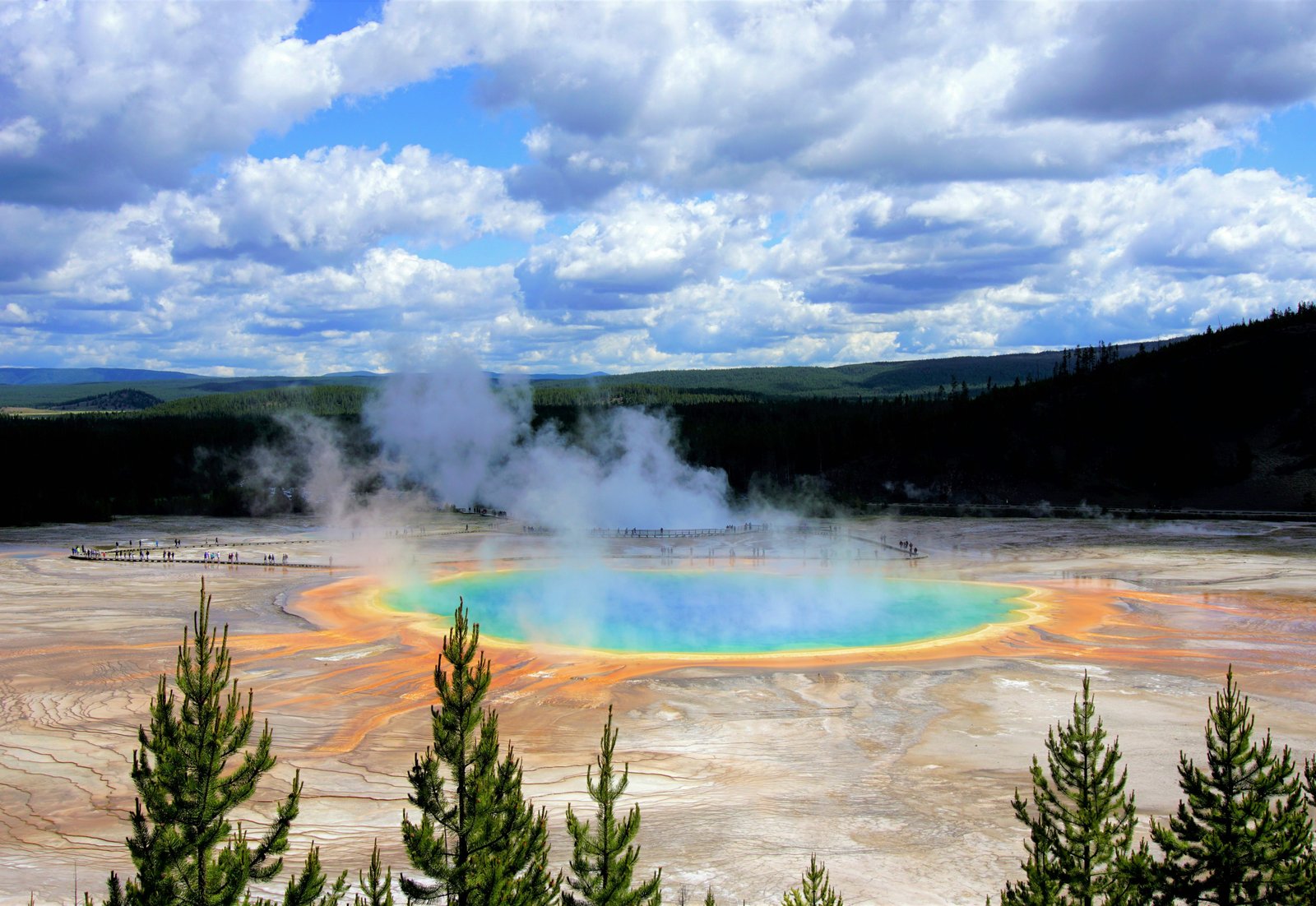
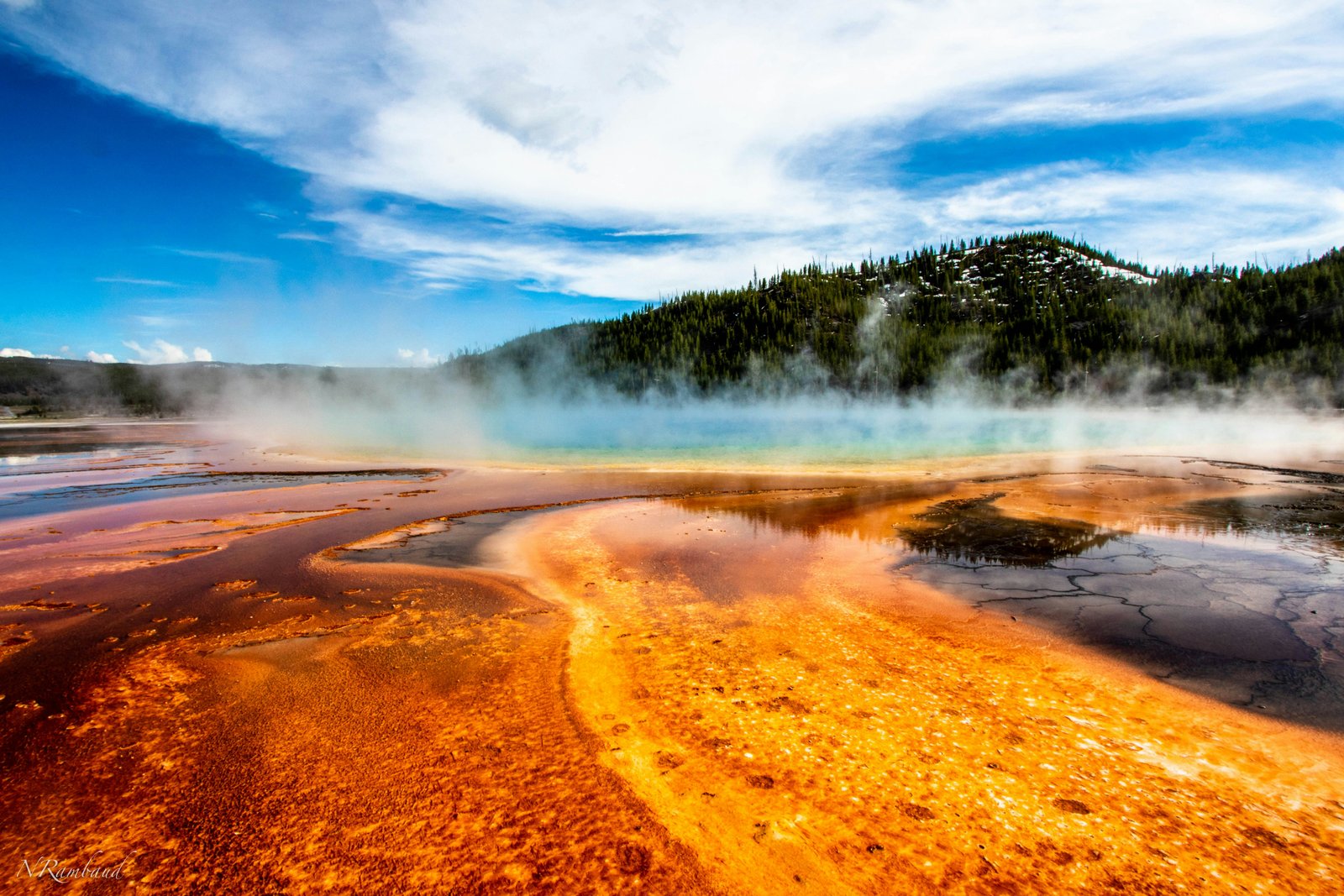
The Grand Prismatic Spring (112m diameter, 49m deep) is the largest hot spring in the United States and the third largest in the world. Its striking colour rings, from deep blue at the centre to orange and brown at the edges, come from thermophilic bacteria living in progressively cooler zones from the superheated centre outward.
The boardwalk loops around the spring at close range; steam makes photography difficult in morning light. The best overview is from the Grand Prismatic Overlook Trail, a 1.1km path from a separate carpark that looks down on the spring from the hill to the south.
Old Faithful and Upper Geyser Basin
Old Faithful erupts every 60 to 90 minutes, shooting water 37 to 56m into the air for 1.5 to 5 minutes. The interval depends on the previous eruption duration; rangers post predicted times at the visitor centre.
The upper geyser basin contains the highest concentration of geysers on Earth, including Grand Geyser (tallest predictable geyser, erupts every 7 to 15 hours), Castle Geyser, and Riverside Geyser. Walking the full upper basin boardwalk past all the geysers takes 2 to 3 hours and reveals a landscape that looks like nothing else on the planet.
Lamar Valley Wildlife Drive
The Lamar Valley in the northeast of the park is the most reliable place in the continental US to watch wolves in the wild. Wolves were reintroduced to Yellowstone in 1995 and several packs now inhabit the Lamar area. At dawn and dusk, the packs are often visible from the road's pull-outs, sometimes at distances of 500m to 3km.
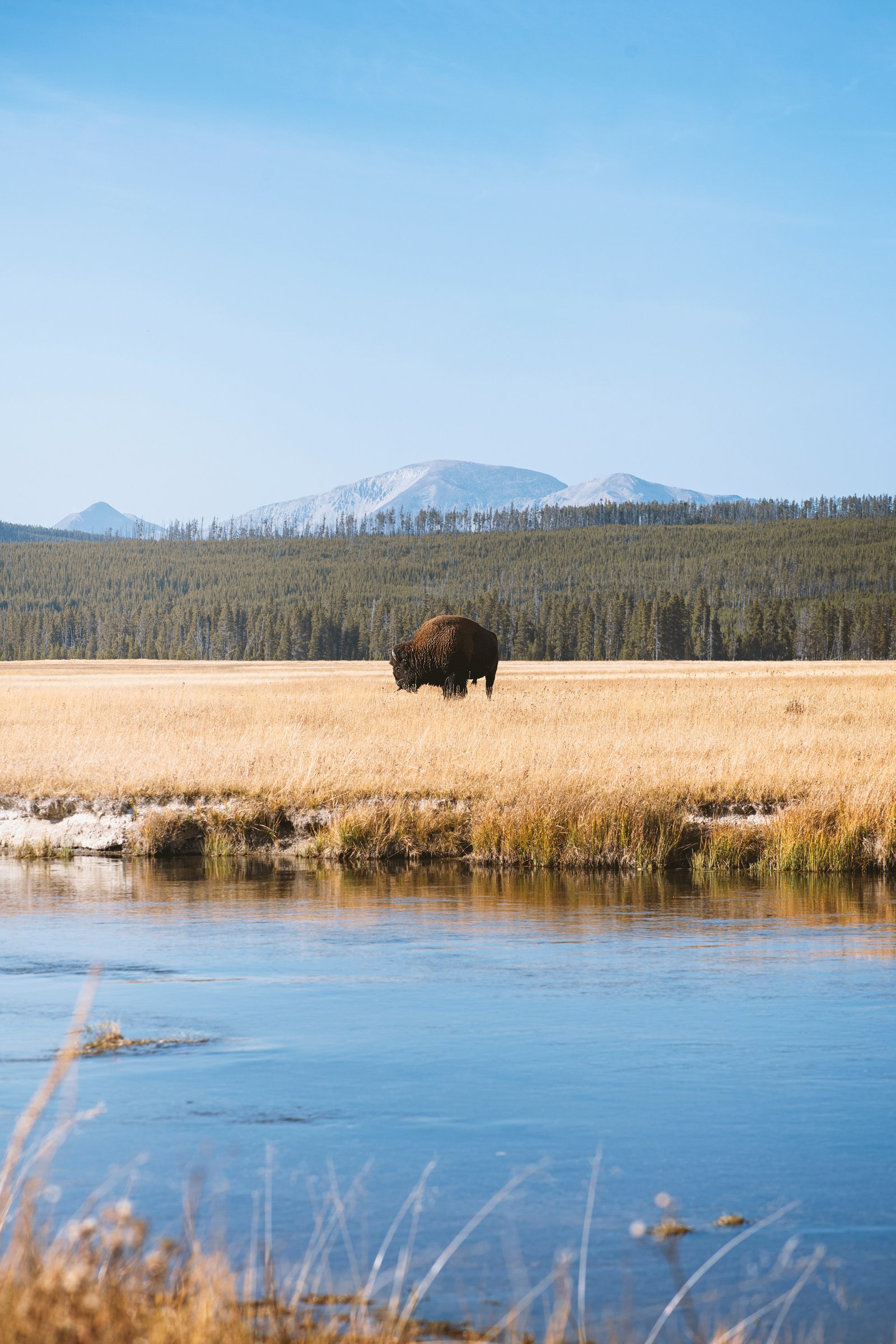
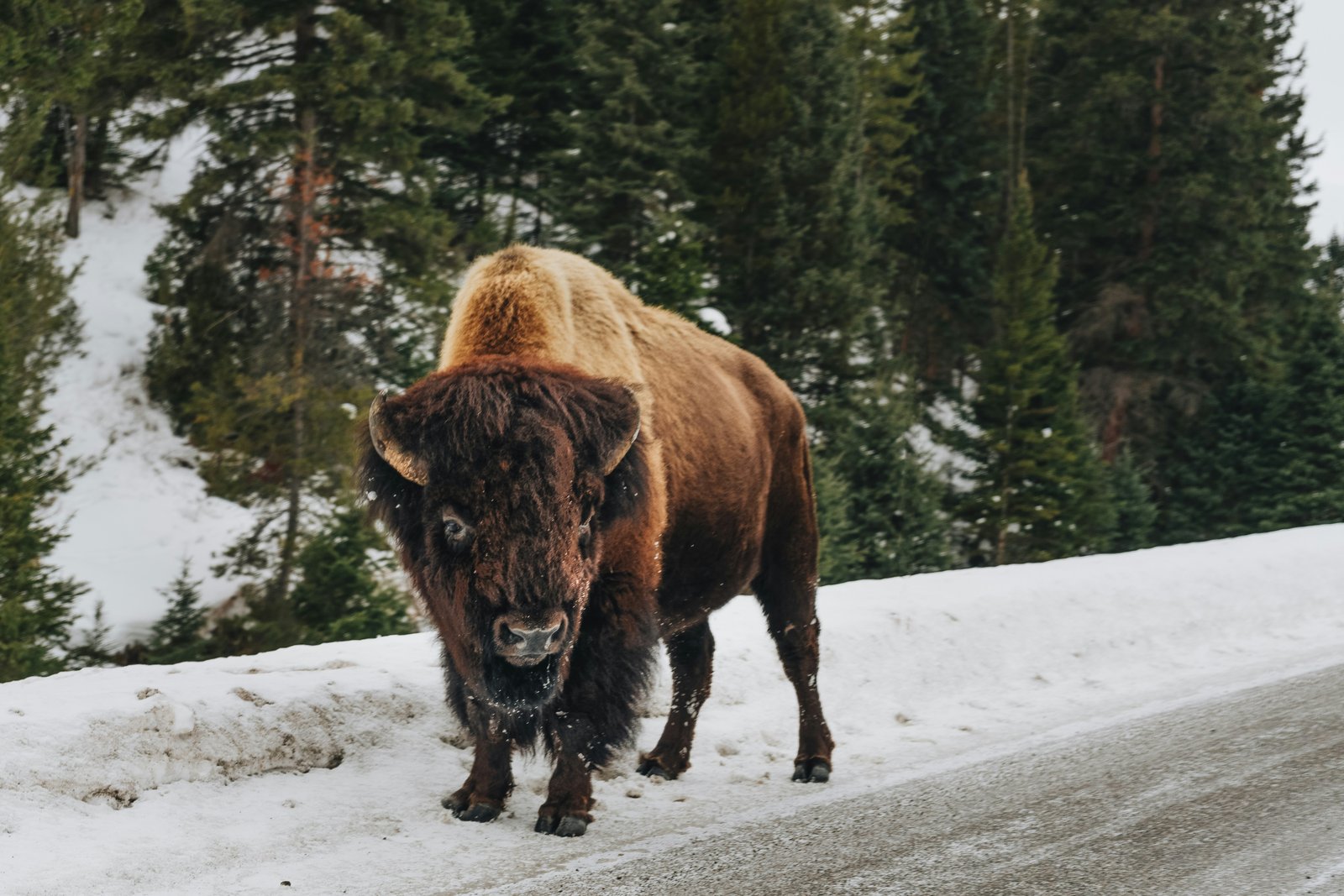
Bring a spotting scope (30 to 60x) or binoculars. The valley also holds the park's highest bison concentrations; herds of several hundred animals crossing the road at once in early morning is a common occurrence. Grizzly bears, pronghorn, and elk are also frequently sighted here.
Grand Canyon of Yellowstone
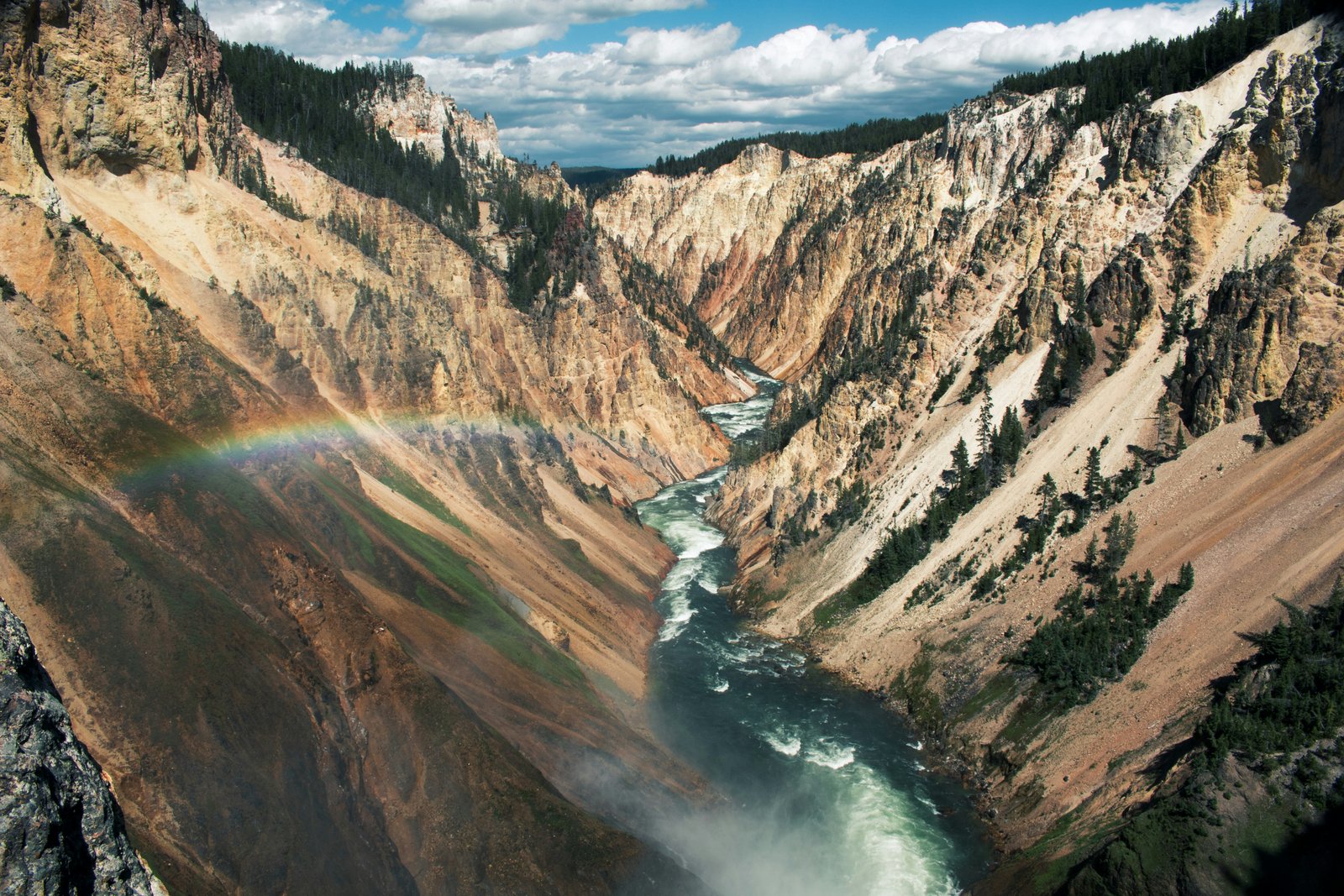
The Yellowstone River cuts a canyon 300m deep through yellow and orange rhyolite into a gorge that has nothing of the Grand Canyon's size but all of its drama. The Lower Fall (91m, nearly double the height of Niagara) is visible from Artist Point on the south rim, a 30-second walk from the carpark.
The canyon walls are vivid yellow, red, and orange from hydrothermal alteration of the volcanic rock. The North Rim has the dramatic Uncle Tom's Trail, 328 steel steps descending to a platform directly below the Upper Fall. The descent is straightforward; the climb back up is not.
Fairy Falls and Grand Prismatic Overlook
The Fairy Falls trail from the Midway Geyser Basin carpark passes the Grand Prismatic Overlook (1.1km in) before continuing to Fairy Falls, a 61m ribbon waterfall in a narrow rocky alcove.
The trail is flat and wide on an old fireroad for most of its length, then narrows to single track near the falls. Two relatively new geothermal vents near Fairy Falls have created small hot pools in the surrounding landscape. Bison regularly graze in the meadows along this trail; give them space.
Yellowstone National Park in Photos
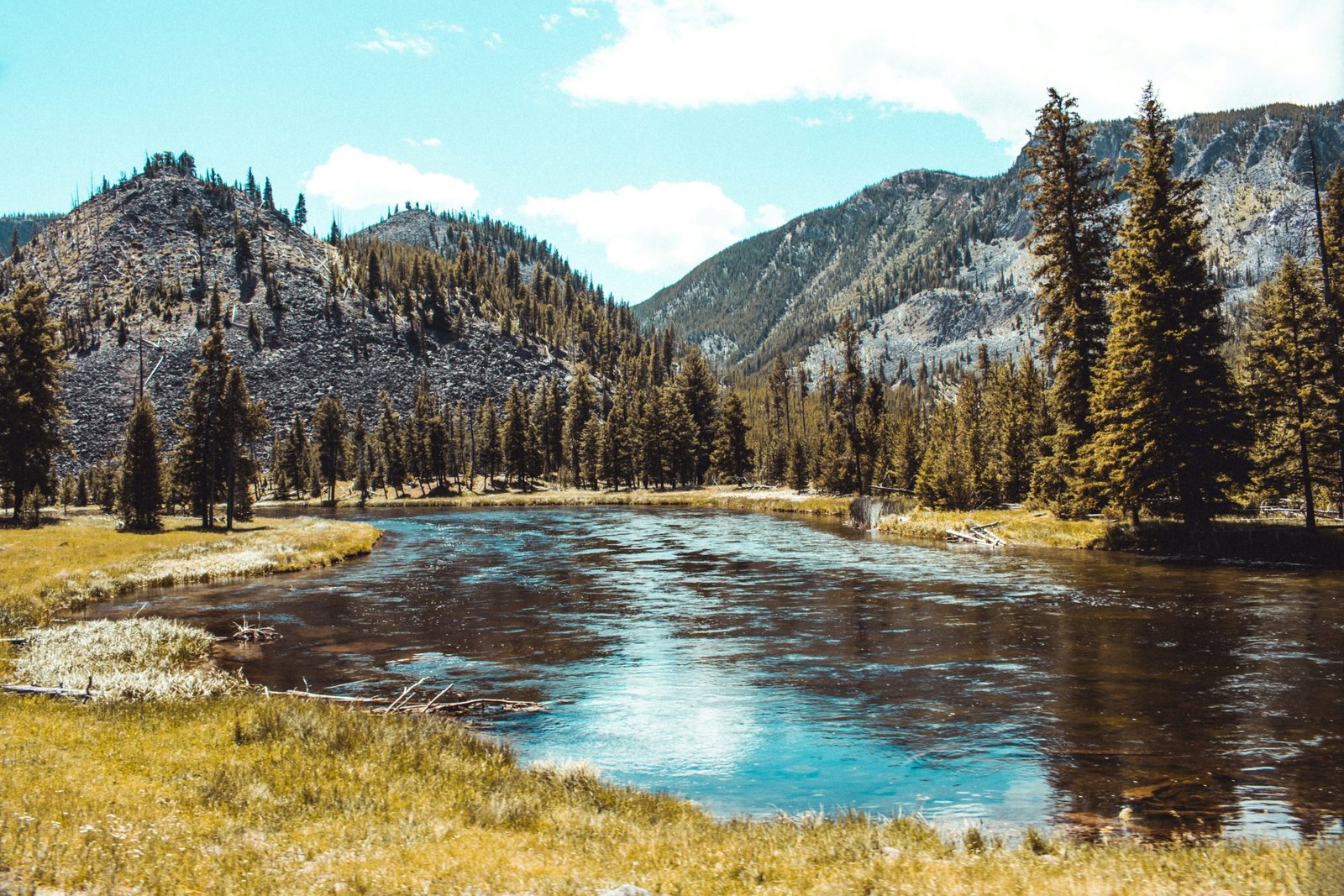
Old Faithful mid-eruption at dusk, bison moving through Lamar Valley fog, and the rainbow mineral rings of Grand Prismatic Spring.
Best time, daylight and what to pack
Guided Experiences in Yellowstone
Yellowstone is the world's largest collection of geothermal features. Guided wildlife safaris, snowcoach tours in winter, and fly-fishing on the Yellowstone River offer access to the park beyond the main boardwalks.
Wolf and wildlife safari
Early morning guided wildlife safari in the Lamar Valley, the most reliable wolf-watching location in the world outside of protected wilderness. Spotting scopes, naturalist guide, and transport from Gardiner.
Book wildlife safari →Fly-fishing on the Yellowstone River
Guided fly-fishing half-day on the Yellowstone River or Firehole River. All gear provided. Catch-and-release cutthroat and brown trout. Wading instruction included. No prior experience required.
Book fly-fishing →Geothermal photography walk
Guided photography walk at Grand Prismatic, Midway Geyser Basin, and Norris with a professional photographer at golden hour. Best light on the geothermal pools is sunrise: depart from Old Faithful.
Book photo tour →Links go to GetYourGuide for real-time availability. Check guide certifications and cancellation policy before booking.
Yellowstone sits over a supervolcano with a magma chamber 90km wide. The entire park is a geothermal system, and the effect on the landscape is total: steaming ground, rainbow bacteria mats, mud that boils, and water that erupts from the earth on a predictable schedule. Underneath all of that is some of the best wildlife watching anywhere in the lower 48 states.
Wildlife Safety
Yellowstone contains grizzly bears, black bears, bison, wolves, moose, and elk. Federal regulations require a minimum distance of 100 yards (91m) from bears and wolves, and 25 yards (23m) from bison, elk, and other large mammals.
Bison appear docile and cause more visitor injuries each year than any other animal in the park; they can sprint at 56km/h. Never approach a bison for a photograph. If an animal is changing its behavior because of your presence, you are too close. Carry bear spray in grizzly country (the Lamar Valley, backcountry areas) and know how to use it.
Thermal features and safety
Stay on the boardwalks at all thermal features. The ground adjacent to hot springs looks solid but can have a thin crust over scalding water. Multiple fatalities have occurred from people stepping off boardwalks at thermal areas.
The water temperature in Yellowstone hot springs reaches 93°C; contact causes severe burns in seconds. This is not a dramatic warning for dramatic effect. It is a real constraint that eliminates the temptation to get a better angle for a photograph.
When to go
May: elk calving, fresh green meadows, fewer crowds, some road sections still icy. June: full wildflower bloom, all roads open, high water in rivers. July and August: busiest months, accommodation books out months ahead, afternoon thunderstorms common.
September: best month, crowds drop significantly after Labor Day, elk rutting season (bulls bugling at dawn and dusk), turning aspen. October: most facilities close, first snowfalls possible, wolf and bison visibility remains excellent.
How to get there
Fly to Jackson Hole (JAC) for the South entrance (~1h drive), Bozeman (BZN) for the North entrance (~1.5h), or Cody (COD) for the East entrance (~1h). Direct seasonal flights from major US hubs to all three. No public transport enters the park.
The park's Grand Loop Road (530km total) connects all major features in a figure-eight. Plan at least 3 days to cover the main geothermal areas, the Lamar Valley, and the Grand Canyon of the Yellowstone without rushing. From Salt Lake City: ~5h north via I-15 and US-20.
$35 per vehicle, valid 7 days for both Yellowstone and Grand Teton. The North entrance at Mammoth Hot Springs is the only entrance open year-round. Most park facilities and roads close November through mid-April. In-park campground reservations open in January on recreation.gov.
Where to sleep
Canyon or Madison Campground
In-park campgrounds are the most atmospheric way to experience Yellowstone. Canyon Village has the most services; Madison puts you closest to the western geothermal areas. Reserve via recreation.gov months ahead for summer.
Canyon Lodge · inside the park
Modern lodge near the Grand Canyon of the Yellowstone, well-positioned for the Lamar Valley morning wildlife drives. Basic rooms but an unbeatable location. Books out months ahead for July and August.
Old Faithful Inn
The world's largest log-frame building, built in 1903 and with a direct view of Old Faithful from the dining room. A genuine piece of American architectural history in an extraordinary setting.
Common Questions
Three days is the realistic minimum to cover the key thermal areas (Upper Geyser Basin, Midway Geyser Basin), the Grand Canyon of Yellowstone, and the Lamar Valley wildlife drive. Four to five days allows you to add the Norris Geyser Basin (the hottest in the park), the Mammoth Hot Springs terraces, and a proper full-morning wildlife session in the Lamar. Seven days is a genuinely slow exploration that starts to feel complete.
Inside the park: Old Faithful Inn (the most famous), Lake Yellowstone Hotel, Canyon Lodge, and Mammoth Hot Springs Hotel. All book out 12 months in advance for peak summer. Outside the park: West Yellowstone (West Entrance, most accommodation options), Gardiner (North Entrance, closest to Lamar Valley), and Cooke City (Northeast Entrance, best for Lamar Valley access).
Jackson Hole is 90 minutes south from the South Entrance and has a much wider choice of accommodation at all price points.
Yes. The Lamar Valley is accessible by public road and wolf sightings are frequent from roadside pull-outs at dawn and dusk. A spotting scope dramatically improves your chances of seeing and identifying wolves at distance.
Yellowstone Expedition Services and several other companies offer guided early-morning wolf-watching tours from Gardiner with scopes already set up, which is an efficient option if you do not have your own equipment.
Cell service is extremely limited inside the park. Coverage exists near visitor centres and lodges (Old Faithful, Mammoth, Canyon Village) but disappears entirely in most of the park including the Lamar Valley, thermal basins, and backcountry. Download offline maps and save any information you need before entering. Satellite communicators (Garmin InReach, SPOT) are worth carrying for any backcountry travel.
Old Faithful erupts every 60 to 110 minutes, with longer intervals following longer eruptions. Rangers post the predicted next eruption time (within a 10-minute window) at the visitor centre, outside the Old Faithful Inn, and on the park app.
Do not simply arrive and wait for however long it takes; plan to arrive 15 minutes before the predicted time. The eruption lasts 1.5 to 5 minutes. The Grand Geyser (20 minutes walk up the basin) is more dramatic and has similar prediction windows.