The Loop, Stage by Stage
The Ha Giang Loop is a circuit, not a trail. These stages follow the standard counterclockwise direction, which gives you the most dramatic roads on days 2 and 3.
Stage 1: Ha Giang to Dong Van
The first day winds north through the Quan Ba valley, where the Twin Mountains (Nui Doi) rise sharply from the valley floor, then climbs to Heaven Gate (Cong Troi) for the first real panorama of the karst plateau. You pass through Yen Minh before descending into the high valley where Dong Van old quarter sits. The pace is gentle compared to what follows.
Stage 2: Dong Van to Meo Vac via Ma Pi Leng
The Ma Pi Leng Pass is the visual centerpiece of the Loop and one of the most dramatic roads in Vietnam. It traverses the edge of a 1,000m gorge cut by the Nho Que River, which runs a shocking shade of turquoise 800 metres below the road. The section between Dong Van and Meo Vac is short in distance but demanding in concentration: sheer cliff on one side, vertiginous drop on the other, and constant sharp corners.
Stage 3: Meo Vac to Du Gia
The longest and most physically demanding stage drops from the high karst plateau back toward lower valleys and river towns. Road quality varies: tarmac gives way to gravel on a few sections, particularly around Xin Man. The Lung Cu flagpole, at the northernmost point of Vietnam, is a detour worth taking on this day. Du Gia village, surrounded by rice paddies and steep forested hills, is a calmer base than Meo Vac.
Stage 4: Du Gia back to Ha Giang
The return leg follows the Lo River valley south through Bac Me, a quieter stretch that sees far fewer riders than the northern circuit. Rice terraces line the riverbanks, and Tay minority villages appear frequently along the road. This stage is a gentle landing after three days of intense riding and functions as a slow decompress back into Ha Giang town.
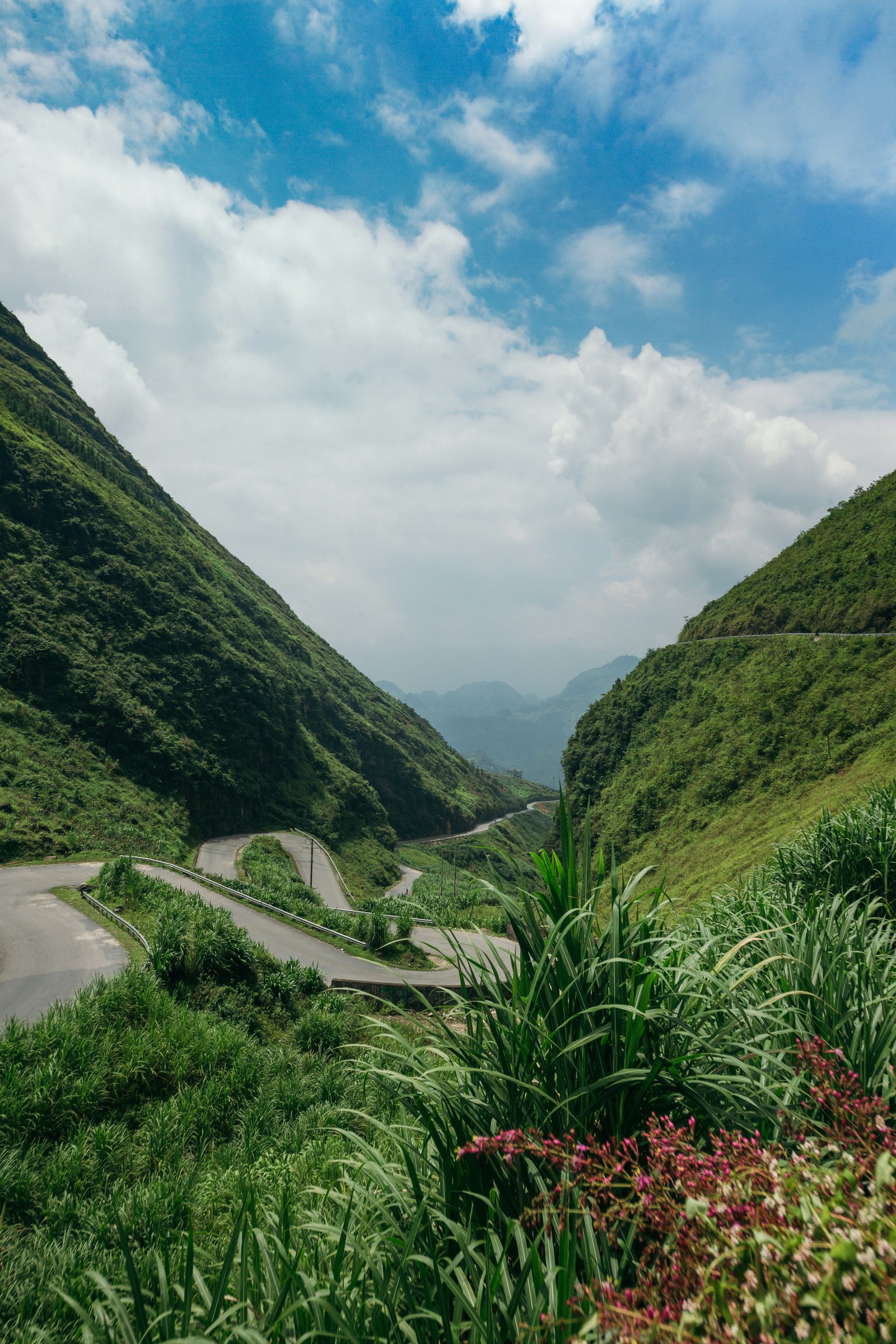
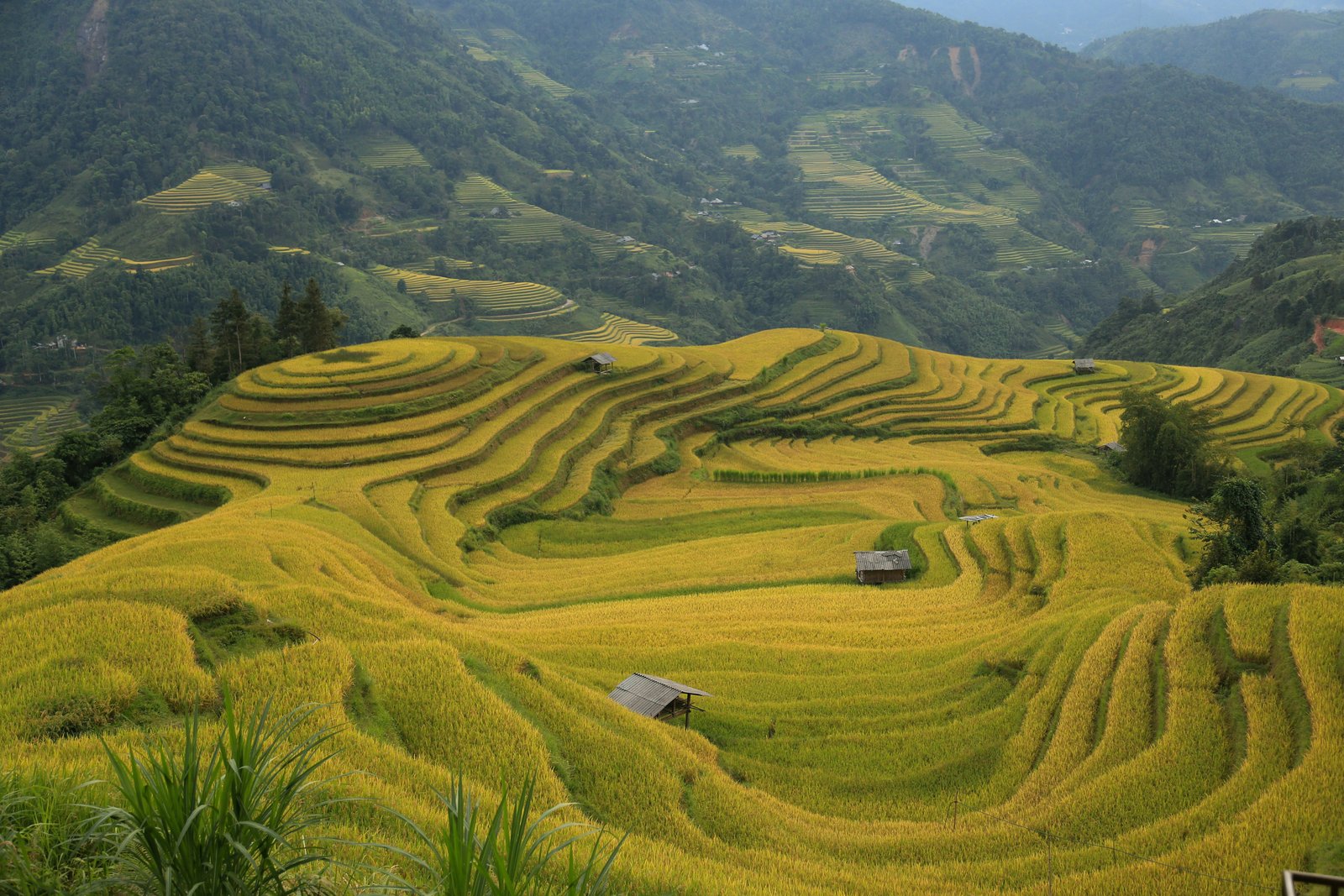
Ha Giang in Photos
The Ma Pi Leng gorge, buckwheat fields in bloom, highland markets on Sunday, and roads that seem to end at the edge of the world.


Best time, daylight and what to pack
Guided Experiences in Ha Giang
The Ha Giang loop is a 300km motorbike circuit through the Dong Van Karst Plateau UNESCO Global Geopark: limestone pinnacles, ethnic H'mong villages, and Ma Pi Leng Pass. Guided motorbike tours, local homestays, and trekking to remote villages are the main options.
4-day guided motorbike loop
Guided 4-day Ha Giang loop by motorbike or easy rider (passenger). Dong Van, Ma Pi Leng Pass, Meo Vac, Du Gia, and Lung Cu flag tower at the northern tip of Vietnam. Homestay nights with H'mong and Dao families.
Book motorbike loop →H'mong village trekking
Guided 1-2 day trek between H'mong villages in the karst plateau: connecting Dong Van, Lung Cam village, and the Pao family house from the film "Story of Pao." Guide speaks H'mong and Vietnamese.
Book village trek →Buckwheat flower season photography
Guided photography trip to Ha Giang during buckwheat flower season (October–November) when the karst valleys turn pink and white. Sunrise positions at Ma Pi Leng and Lung Cu hill with a professional guide.
Book flower season →Links go to GetYourGuide for real-time availability. Check guide certifications and cancellation policy before booking.
Ha Giang Province is Vietnam's northernmost territory, a region of limestone towers, Hmong highland villages, and roads that were cut into cliff faces by hand in the 1960s. Riding the Loop is how most travellers experience it, a four-day circuit on a semi-automatic motorbike through passes that drop 800 metres in a few kilometres and villages where the Sunday market is still the social center of the week.
The Easy Rider knows every stop on the loop. Not the tourist overlooks, the actual places. A family lunch, a market that runs one morning a week, a road that you won't find on any map. Worth every dollar over renting a bike alone.
The Route and the Road
The standard loop starts and ends in Ha Giang city, the provincial capital and the last town before the road enters the high plateau. The counterclockwise direction (Ha Giang, Quan Ba, Yen Minh, Dong Van, Ma Pi Leng, Meo Vac, Bac Me, Ha Giang) puts the most dramatic roads, particularly Ma Pi Leng Pass and the Dong Van Karst Plateau UNESCO Global Geopark, in the middle of the trip rather than at the beginning.
Road quality ranges from good tarmac on the main circuit to rough gravel on some secondary access roads.
A permit is required for the Ha Giang province. As of 2024, foreigners need a permit issued by the provincial immigration office or arranged through guesthouses and motorbike rental shops in Ha Giang city. It takes 30 minutes to arrange and costs around $3 USD. Without it you can be fined at checkpoints on the northern road.
Motorbike Options
Two main options: rent a semi-automatic motorbike yourself ($15 to $25 USD per day, typically a Honda Win or Honda Wave), or hire an "Easy Rider" driver-guide who carries you as a passenger ($50 to $80 USD per day). The self-ride option demands real motorbike competence, particularly on Ma Pi Leng where the road is narrow, the drop is fatal, and oncoming trucks do not yield.
If you have not ridden a motorbike on mountain roads before, hire a driver for at least the Dong Van to Meo Vac section. Ha Giang city has multiple rental shops on the main guesthouse strip near the Lo River.
The Hmong and the Karst Geopark
The Dong Van Karst Plateau covers 2,356 square kilometres and was recognized by UNESCO in 2010. The landscape is a densely folded limestone plateau formed 400 to 600 million years ago, now eroded into towers, valleys, and sinkholes.
The H'mong, Dao, Tay, and Lo Lo ethnic minority groups have lived on this plateau for centuries. The Sunday markets at Dong Van and Lung Phin are genuine community events, not tourist productions: farmers come from hours away to trade livestock, fabric, and produce. Arriving the night before and staying for the morning market adds real texture to the loop.
When to go
September through November is the prime window. The monsoon ends in August and the plateau clears to blue skies, the buckwheat flowers bloom purple across the karst, and temperatures are cool without being cold (15 to 25°C during the day).
October is peak season with the highest visitor numbers. April is a secondary best month with clear skies before the summer rains arrive. July and August should be avoided: heavy monsoon rain makes roads genuinely dangerous, with landslides common on the cliff sections.
How to get there
Hanoi Noi Bai Airport is the gateway: well-connected from Bangkok, Singapore, KL, and European hubs. From Hanoi, Ha Giang city is ~300km north (~5–6h) by overnight sleeper bus (from My Dinh bus station, ~100,000 VND) or by motorbike/car. Most travellers take the overnight bus and arrive ready to ride.
Rent a semi-automatic motorbike in Ha Giang city (~$7–12/day): most hostels have bikes or can point you to a rental. A Vietnamese driving licence is not required for foreigners on a motorbike under 175cc, but check current rules. The full 4-day loop covers ~350km: Ha Giang → Dong Van → Meo Vac → Yen Minh → Ha Giang. Most riders do it anticlockwise.
A Ha Giang Loop permit (free, obtained at the local police checkpoint on exit from Ha Giang city) is required for foreign visitors: your hostel handles this. The Ma Pi Leng Pass between Dong Van and Meo Vac is the highlight: 20km of cliff road with 1,500m drops. Do not attempt the loop in heavy rain: the cliff sections become genuinely dangerous. The Dong Van karst plateau is a UNESCO Geopark.
Where to sleep
Hostel · Ha Giang city
Ha Giang city has a small cluster of hostels catering to loop riders. Hmong Sapa Hostel and similar guesthouses offer dorm beds, motorbike rental, permit assistance, and a pre-loop briefing. The social atmosphere is good: you'll likely end up riding parts of the loop with people you met the night before.
Homestay · Dong Van or Meo Vac
Both Dong Van and Meo Vac have small guesthouses and homestays run by H'Mong and Tay families. Staying inside the loop villages rather than rushing back to Ha Giang each day is the correct way to experience the plateau: slower pace, better food, and the villages without day-trippers.
Auberge de Dong Van · Dong Van
A French-colonial style guesthouse in the historic Dong Van old quarter, the nicest individual property on the loop. Stone construction, mountain views from the terrace, good food, and comfortable private rooms in a town of otherwise basic guesthouses.
Common Questions
Yes, real experience. This is not a course for beginners. Ma Pi Leng and several other cliff-edge sections are narrow, steep, and frequently wet. You need to be comfortable with semi-automatic motorbikes on unpaved surfaces before you attempt this route solo. If you have limited experience, hire an Easy Rider driver for the entire loop or at minimum for the Dong Van to Meo Vac section.
The most popular option is a sleeper bus from Hanoi's My Dinh bus station, which takes 6 to 7 hours overnight and costs around $12 to $18 USD. Day buses run on the same route if you prefer to see the scenery en route. Several Hanoi-based companies offer motorbike rental packages that include bus transfer to Ha Giang city and onward motorbike hire at the destination.
Foreigners entering the border zone in Ha Giang province require a travel permit from the provincial police immigration office in Ha Giang city. Any guesthouse or motorbike rental shop will arrange it for you, typically in 30 minutes for around $3 USD. You need your passport. Checkpoints at Quan Ba and further north will check this permit. Without it you face fines and may be turned back.
Technically yes, but 3 days means long riding days on mountain roads and misses the point. The region's value lies in stopping: at markets, at viewpoints, at villages, for tea with a Hmong family. Doing it in 3 days compresses what should be slow travel into a road challenge. Five or six days is ideal if you have the time and want to explore any of the valleys beyond the main circuit.
Yes. Many solo women complete the loop every season without incident. The guesthouse network on the circuit is well-established, riders frequently travel in informal groups, and local communities are generally welcoming.
The main safety concerns are road conditions and riding competence rather than personal safety. Connecting with other riders at guesthouses in Ha Giang city before starting is easy and reduces solo riding exposure on the trickier road sections.
Small motorbike repair shops appear in almost every village on the circuit, even on the remote northern plateau. Basic repairs (flat tires, chain adjustments, minor mechanical issues) cost $2 to $10 USD and usually take under an hour.
Major breakdowns are rare on reputable hire bikes but do happen. Good rental shops provide a contact number for assistance. Carrying a basic tool kit and tire repair kit is wise on the more remote stages.