Three Ecosystems, Three Trails
Olympic is one of the few places on Earth where you can walk through a temperate rainforest in the morning, climb into alpine meadows at noon, and stand on a wild Pacific beach in the evening. Each trail here feels like a different park entirely.
Hoh Rainforest – Hall of Mosses
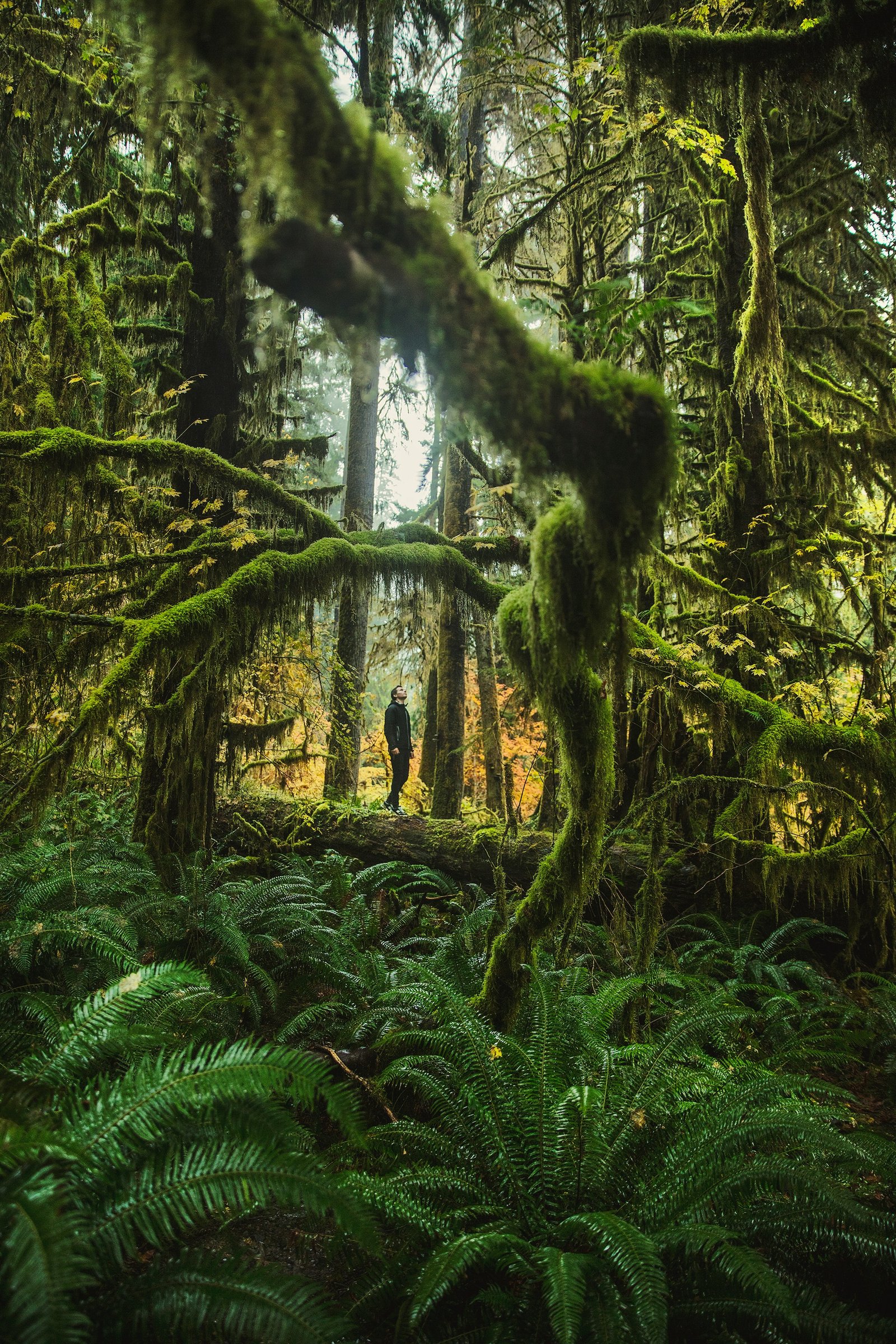
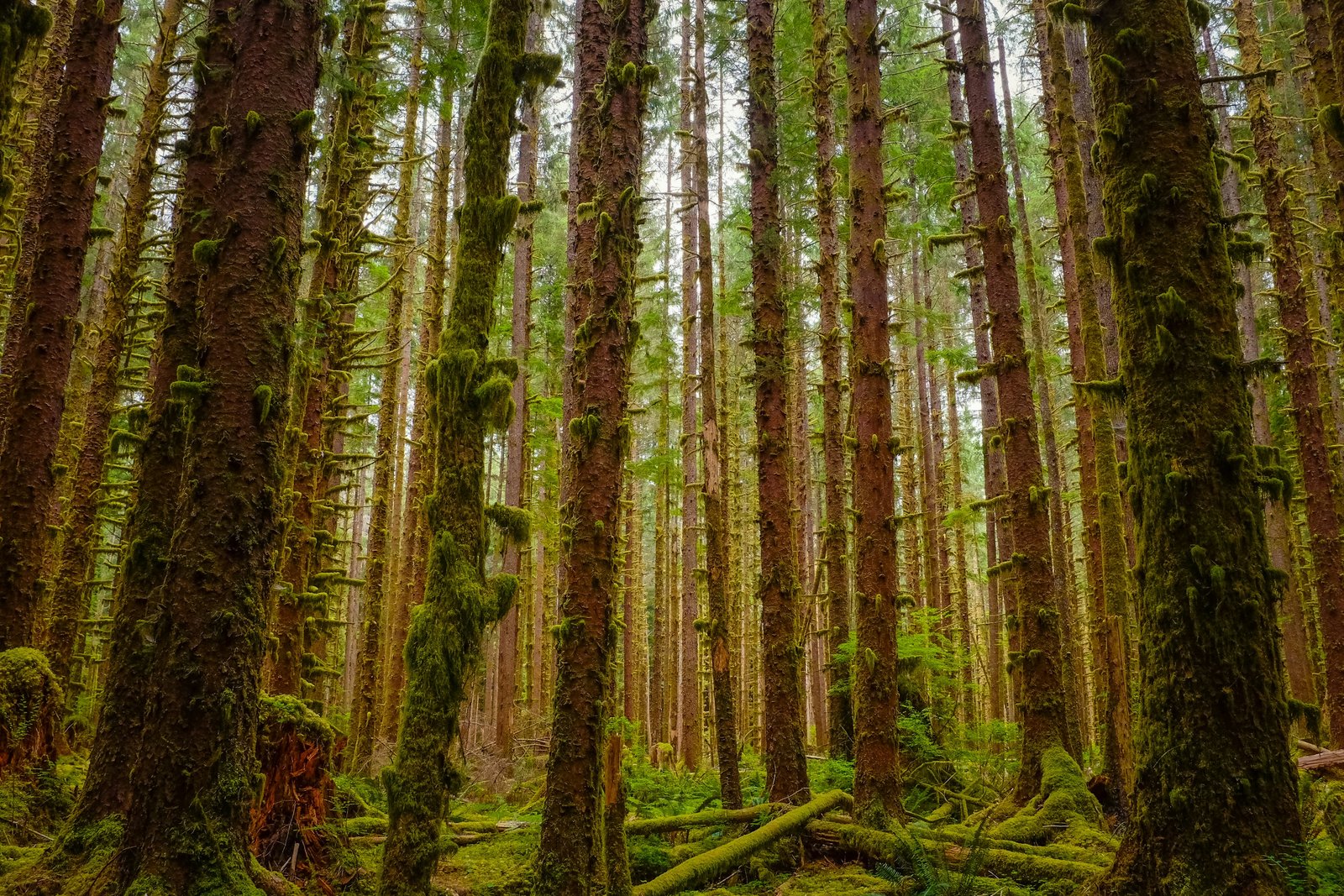
The Hall of Mosses loop is one of the most visually arresting short walks in North America. Ancient bigleaf maples — some over 500 years old — grow horizontally under the weight of thick moss curtains that hang from every branch.
The forest floor is carpeted in ferns, the light filters green through the canopy, and Roosevelt elk pass through quietly. This does not look like North America. It looks like somewhere ancient.
Tip: Visit on an overcast or drizzly day — the diffuse light makes the moss glow in a way that direct sun cannot produce. The Hoh Rainforest Visitor Center is worth 20 minutes before you start the loop.
Hurricane Ridge
Hurricane Ridge sits at 1,600 metres and delivers sweeping views of the Olympic Mountains across subalpine meadows filled with wildflowers in July and August. Several interconnecting trails radiate from the visitor center — the Meadow Loop and the Hurricane Hill trail (5 km return) are the most rewarding. On clear days you can see north across the Strait of Juan de Fuca all the way to Vancouver Island.
Tip: The road to Hurricane Ridge is the only paved access to the park’s high country. Reservations are required on weekends and holidays from May through October — book before you go at recreation.gov.
Rialto Beach & Hole-in-the-Wall
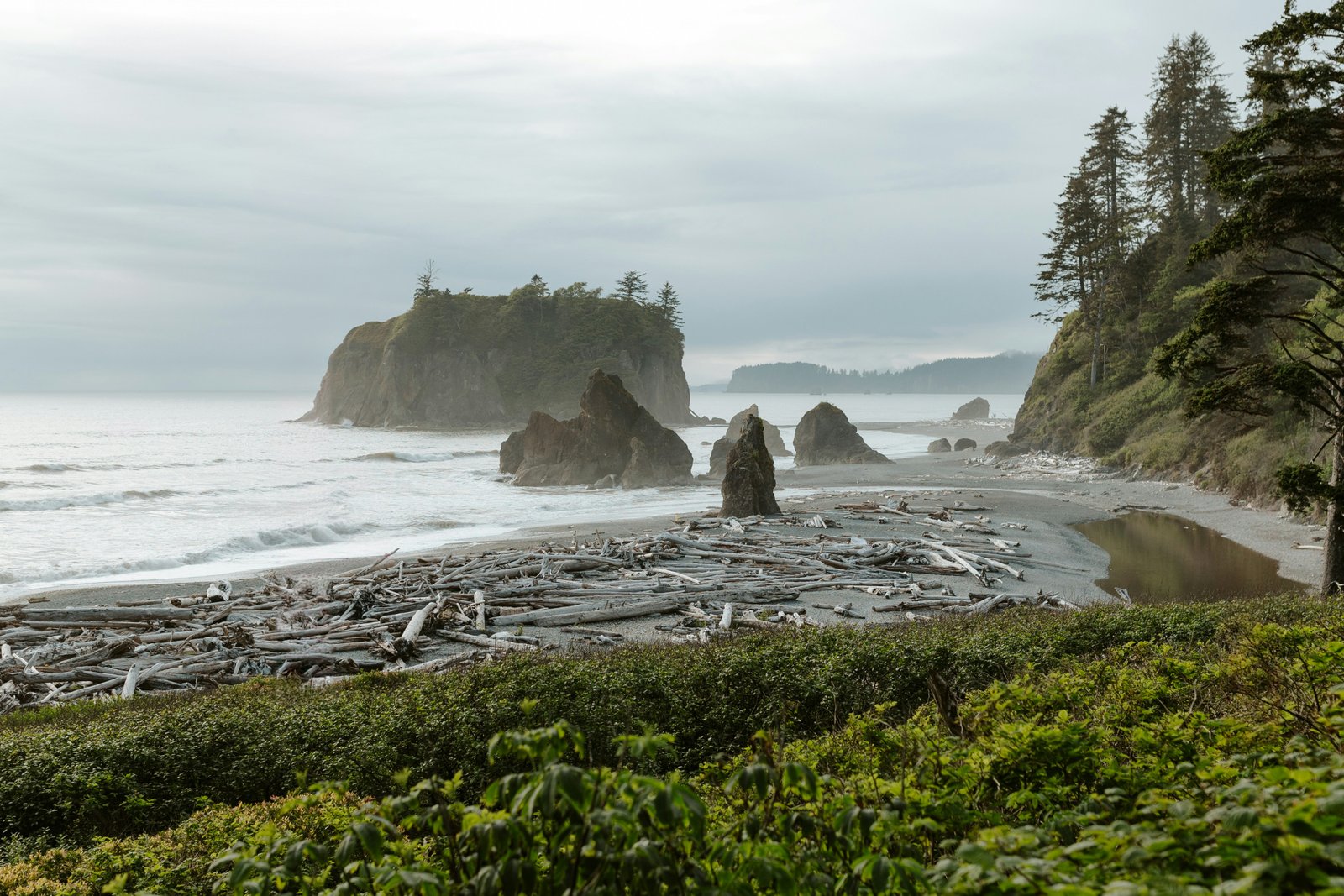
Walk north from Rialto Beach along the wild Pacific coast, scrambling over headlands and driftwood fields, past sea stacks rising from the surf, until the natural arch of Hole-in-the-Wall appears carved into a coastal headland.
The coast here is entirely undeveloped, the tidepools are rich with sea life, and the scale of the Pacific makes the Olympic Peninsula feel like the edge of the world. Check tide tables — some headlands are only passable at low tide.
Tip: Check the tide chart before you go — you need a low tide to pass the headlands safely. The La Push area nearby has additional beach access and is home to the Quileute Nation.
Olympic in Photos
Moss-draped maples in the Hoh Rainforest, Roosevelt elk wading through morning mist, the rugged Pacific coast, and Hurricane Ridge looking out over peaks in every direction.
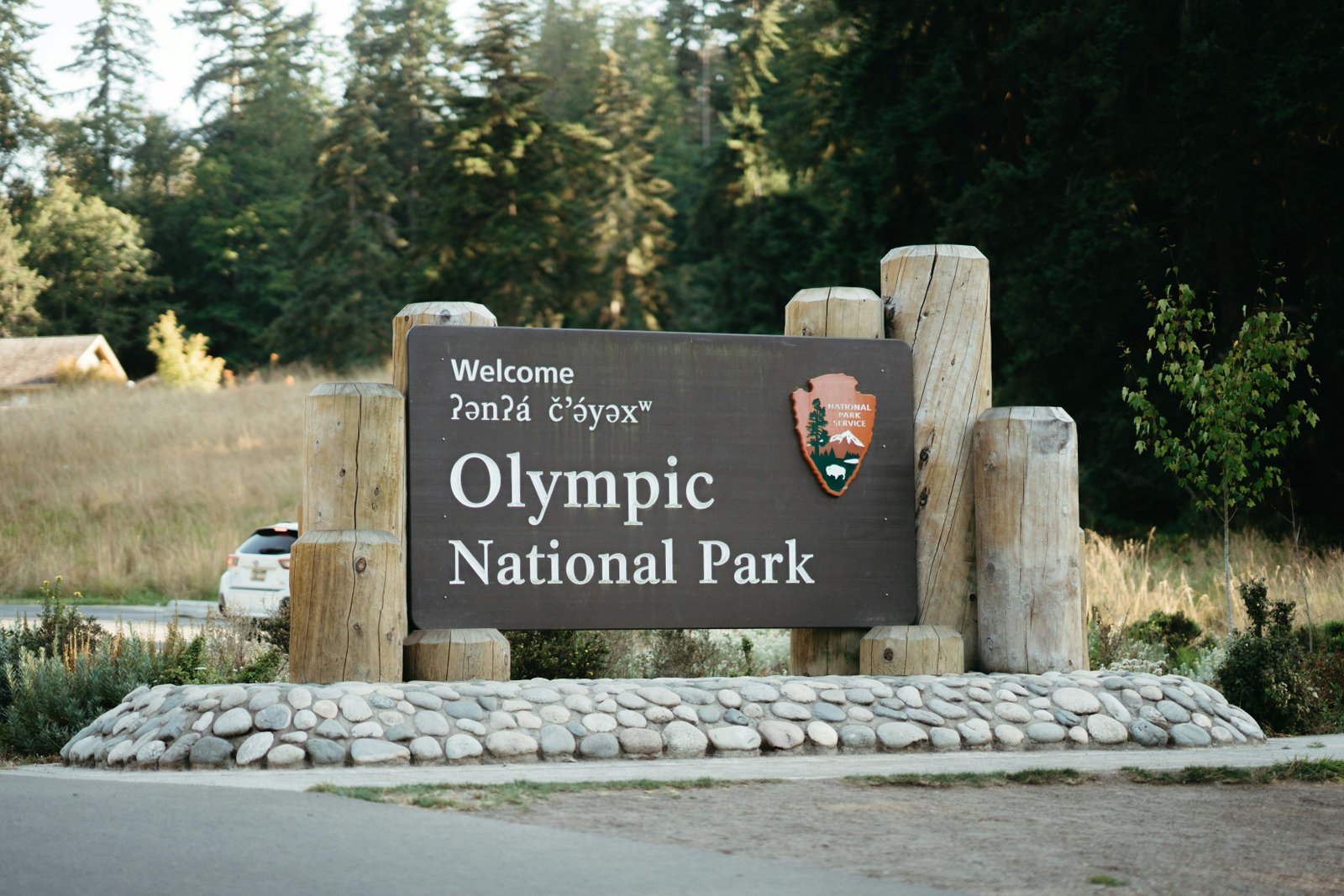
Guided Experiences in Olympic NP
Olympic contains one of the last temperate rainforests in the world, 73 miles of wild Pacific coastline, and glaciated peaks: all within an hour of each other. Guided options cover sea kayaking, rainforest walks, and coastal trekking.
Sea kayak on Lake Crescent
Guided sea kayak tour on glacially-carved Lake Crescent in the heart of Olympic NP. 2-hour guided paddle with a naturalist. The lake visibility can exceed 30m: one of the clearest lakes in the Pacific Northwest.
Book kayak →Hoh Rainforest interpretive walk
Guided interpretive walk through the Hoh Rainforest with a park naturalist. Hall of Mosses trail and the Hoh River corridor. Moss-draped big-leaf maples and old-growth Sitka spruce over 300 years old.
Book rainforest walk →Coastal wilderness backpack
Guided 3-day coastal backpack along the Olympic coast wilderness between La Push and Ozette, with tidal shelf access and bald eagle nesting habitat. Tidal schedule planning and permit handling included.
Book coastal backpack →Links go to GetYourGuide for real-time availability. Check guide certifications and cancellation policy before booking.
Olympic National Park covers nearly 3,700 square kilometres of the Olympic Peninsula in northwestern Washington and contains three completely different environments within a single park boundary. Nowhere else in the United States can you move between a temperate rainforest, a glaciated alpine zone, and 100 kilometres of wild Pacific coastline in the same day.
Why Olympic Is Genuinely Unique
The word “unique” is overused in travel writing, but Olympic earns it. The park contains the largest contiguous stretch of old-growth temperate rainforest remaining in the contiguous United States, and one of the largest remaining in the world.
It also holds the most extensive wild Pacific coastline in the lower 48 states — no roads, no development, no infrastructure for much of it. Add glaciated peaks reaching 2,400 metres and you have an ecological range that simply does not exist anywhere else in North America in such close proximity.
UNESCO recognised this in 1981 with a World Heritage designation, and the park is additionally a Biosphere Reserve. What makes it practically remarkable for hikers is the variety: you can radically change your environment simply by driving an hour in a different direction.
How to get there
Fly into Seattle-Tacoma (SEA): major hub with direct connections from most US cities and international routes. The Olympic Peninsula is a 2 to 3.5-hour drive from the airport depending on your route. No commercial airport exists on the Peninsula itself.
The best route from Seattle: Washington State Ferry from Coleman Dock (downtown) to Bainbridge Island (35 min, ~$15 USD), then drive north and west to Port Angeles (~2h total). More enjoyable than driving south via Tacoma, and the ferry crossing is part of the experience.
A car is essential. Highway 101 circles the peninsula and is the spine of all park access. The Hoh Rainforest, Hurricane Ridge, and the coast all require separate drives of 45 to 90 minutes from Port Angeles. Park entry is $30 per vehicle, valid 7 days.
Hoh Rainforest: 3.8 Metres of Rain Per Year
The Hoh Rainforest on the western slope of the Olympic Mountains receives between 3.5 and 4.3 metres of rainfall per year, driven by moist Pacific air hitting the mountains and releasing its moisture as precipitation. This makes it one of the wettest places in the contiguous United States.
The result is an ecosystem so lush it barely resembles anything else in North America: western red cedar trees 60 metres tall, Sitka spruce with bases wider than cars, and every horizontal surface coated in moss. The Hall of Mosses captures the most iconic version of this landscape, but the Hoh River Trail continues for 27 kilometres into the backcountry toward Mount Olympus, giving you the option to go as deep into old-growth wilderness as you want.
Roosevelt elk — the largest remaining native elk herd in the Olympic Peninsula — are a near-constant presence in the Hoh valley and are completely habituated to people. Keep a respectful distance and do not feed them.
When to Go
The answer to “when to go” at Olympic depends on which part of the park you prioritise. The Hoh Rainforest is excellent year-round — it rains there in every month, which is partly the point, and the green is most vivid on wet days.
Hurricane Ridge is best from July through September when the road is reliably open and wildflowers are at peak bloom. The coast is accessible year-round and dramatic in any weather, but summer is the most comfortable for extended beach walking. June through September is the overall best window if you want to experience all three ecosystems in a single trip.
Where to sleep
Hoh or Sol Duc Campground
Camping inside the park puts you in old-growth forest with Roosevelt elk as regular neighbours. Sol Duc Hot Springs campground has access to the natural hot spring pools. Reservations via recreation.gov.
Hotel · Port Angeles or Sequim
Port Angeles is the main gateway town with the best range of accommodation and the park's main Visitor Center. Sequim (15km east) is sunnier and has good mid-range options. Both give solid access to all park zones.
Lake Crescent Lodge · inside the park
A 1916 lodge on a deep glacial lake in the heart of the park, surrounded by old-growth forest and mountain reflections. Cottages and lodge rooms. The Roosevelt Cabin, where FDR stayed in 1937, is still available.
Common Questions
July through September is the overall peak window when all three ecosystems are accessible and the weather is at its most cooperative. Hurricane Ridge is reliably open, wildflowers peak in the alpine meadows in late July, and the coast sees its calmest conditions.
The Hoh Rainforest is worth visiting year-round — it is genuinely atmospheric on rainy winter days — but if you want everything in one trip, plan for summer. June can be cold and wet at higher elevations. October is beautiful with fall colours and reduced crowds, though some facilities begin to close for the season.
If you only have one day, go to the Hoh Rainforest — the Hall of Mosses is unlike anything else you will see in the US and it is only 2 kilometres long. If you have two days, add Hurricane Ridge for the mountain contrast.
If you have three, drive around to Rialto Beach and the coast. For first-time visitors, the rainforest tends to produce the strongest reaction — most people arrive expecting a forest and find something closer to a cathedral. The coast is outstanding but comparable to other wild Pacific coastlines; the rainforest is truly one-of-a-kind.
Washington State Ferries runs regular crossings from Seattle’s Colman Dock to Bainbridge Island (35 minutes, about $9 per adult foot passenger; more for a vehicle). From Bainbridge, drive north on Hwy 305, cross the Hood Canal Bridge, and continue west to Port Angeles — about 1.5 hours of driving.
Total journey from downtown Seattle is around 2 to 2.5 hours depending on ferry timing and traffic. Book ferry departures in advance on weekends. An alternative route goes via the Edmonds-Kingston ferry and then south, which suits travellers staying north of Seattle. Both options avoid the long drive around Olympia at the south end of Puget Sound.
Port Angeles is the most practical base for a general Olympic visit — it sits close to Hurricane Ridge, has the main Visitor Center, and has the widest range of accommodation on the peninsula. Forks, on the west side, is a better base if you are prioritising the Hoh Rainforest or the Pacific coast.
Lake Crescent Lodge inside the park is one of the most beautiful places to stay and books up months in advance for summer. Sequim, just east of Port Angeles, is sunny much of the time (it sits in the rain shadow of the mountains) and has excellent mid-range accommodation options.
Roosevelt elk are the park’s signature species — the largest herd remaining in the Pacific Northwest roams the Hoh valley and is frequently seen near the Visitor Center and along the river trail. Black bears are present throughout the park but tend to be shy.
The coast is where the diversity peaks: sea otters float offshore in kelp beds near Ruby Beach, harbour seals haul out on rocks, and bald eagles are a near-constant presence along the shoreline. Olympic has no grizzly bears, which makes backcountry travel more relaxed than in Yellowstone or Glacier country. Tide pooling at low tide reveals anemones, sea stars, and hermit crabs in the coastal rock pools.