Best Trails on the South Rim
The South Rim offers some of the most dramatic hiking in North America. Whether you stick to the paved edge or descend into the canyon itself, every step delivers views that photographs simply cannot capture.
Bright Angel Trail
The most popular inner-canyon route drops 1,300 m to Plateau Point, where the Colorado River roars 360 m below your feet. Rest houses at 1.5 and 3 miles provide water in summer. This is a day hike or overnight to Bright Angel Campground with a permit.
Tip: Start before sunrise to beat the heat. Turn back at the 3-mile resthouse if it is already getting warm.
South Kaibab Trail
Exposed ridgeline hiking to Skeleton Point rewards you with unobstructed 360-degree panoramas of the canyon layers. No shade, no water on trail. The views here arguably beat every other accessible South Rim vantage point.
Tip: No water sources on this trail at all — carry more than you think you need and pair it with Bright Angel on the way back for a memorable loop.
Rim Trail
The paved and wheelchair-accessible Rim Trail connects Hermits Rest to South Kaibab Trailhead along the canyon edge. Walk as much or as little as you like, hopping on and off the free shuttle buses at any stop along the way.
Tip: Mather Point at sunrise and Hopi Point at sunset are the two classic stops along this route — plan your direction accordingly.
Grand Canyon in Photos
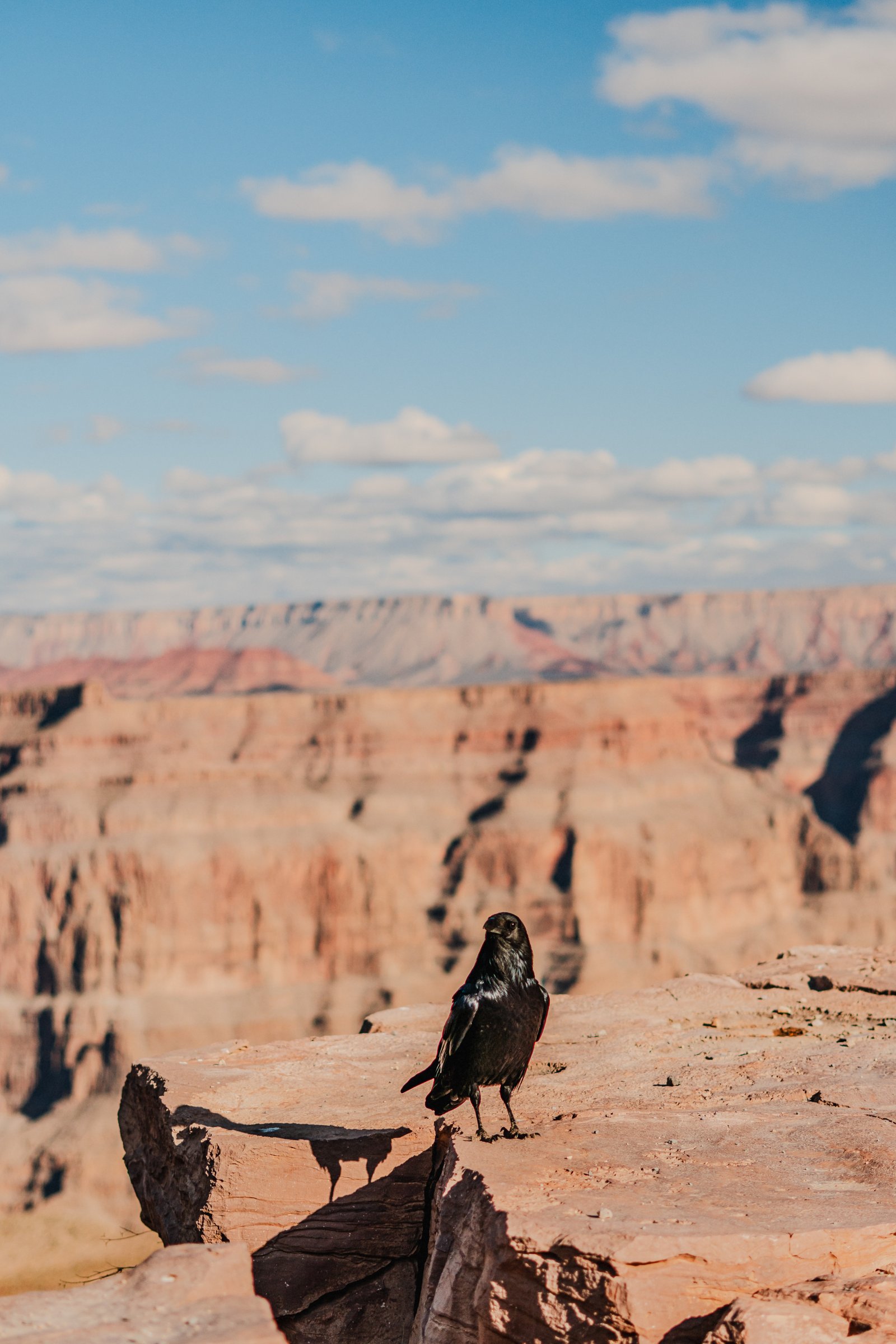
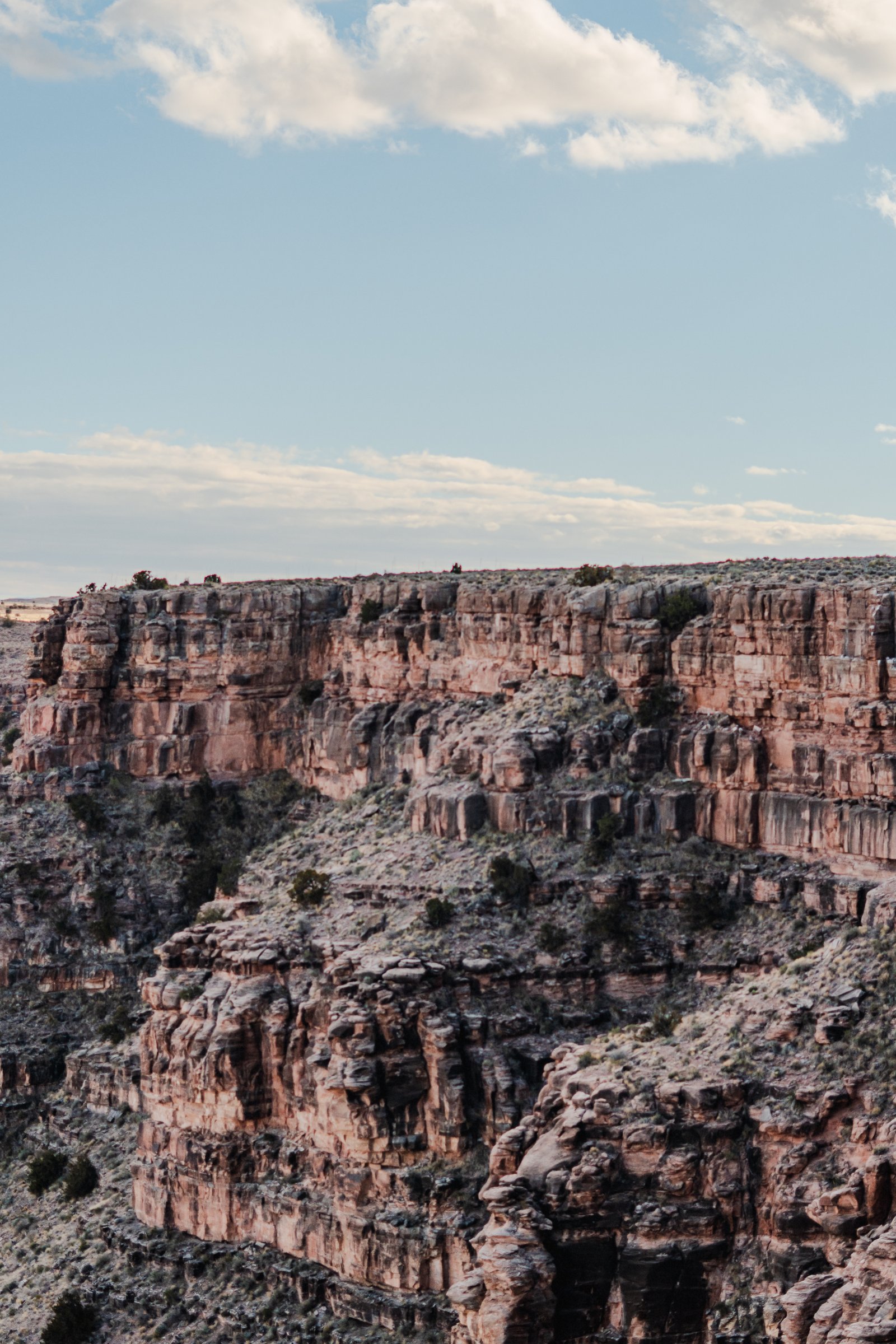
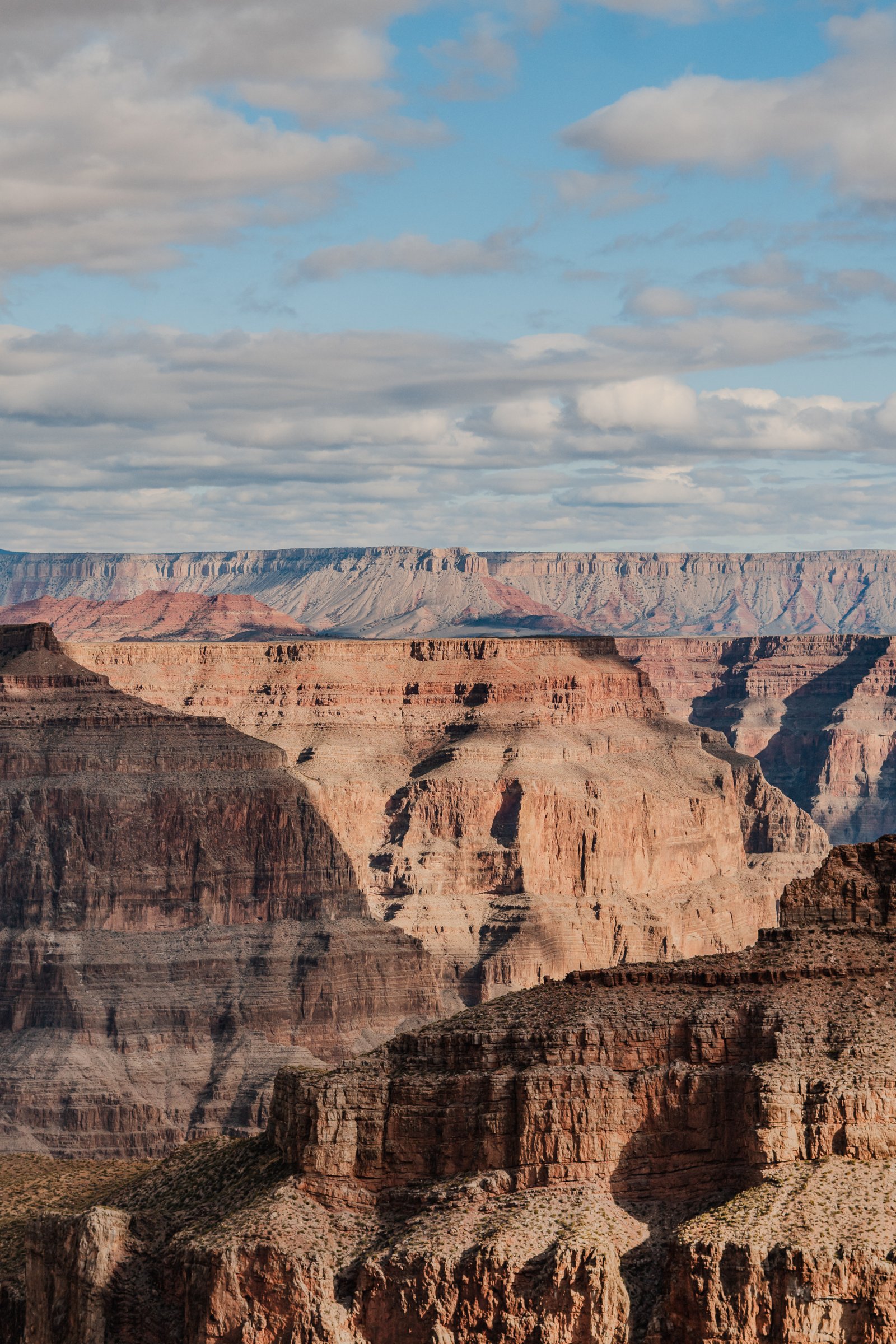
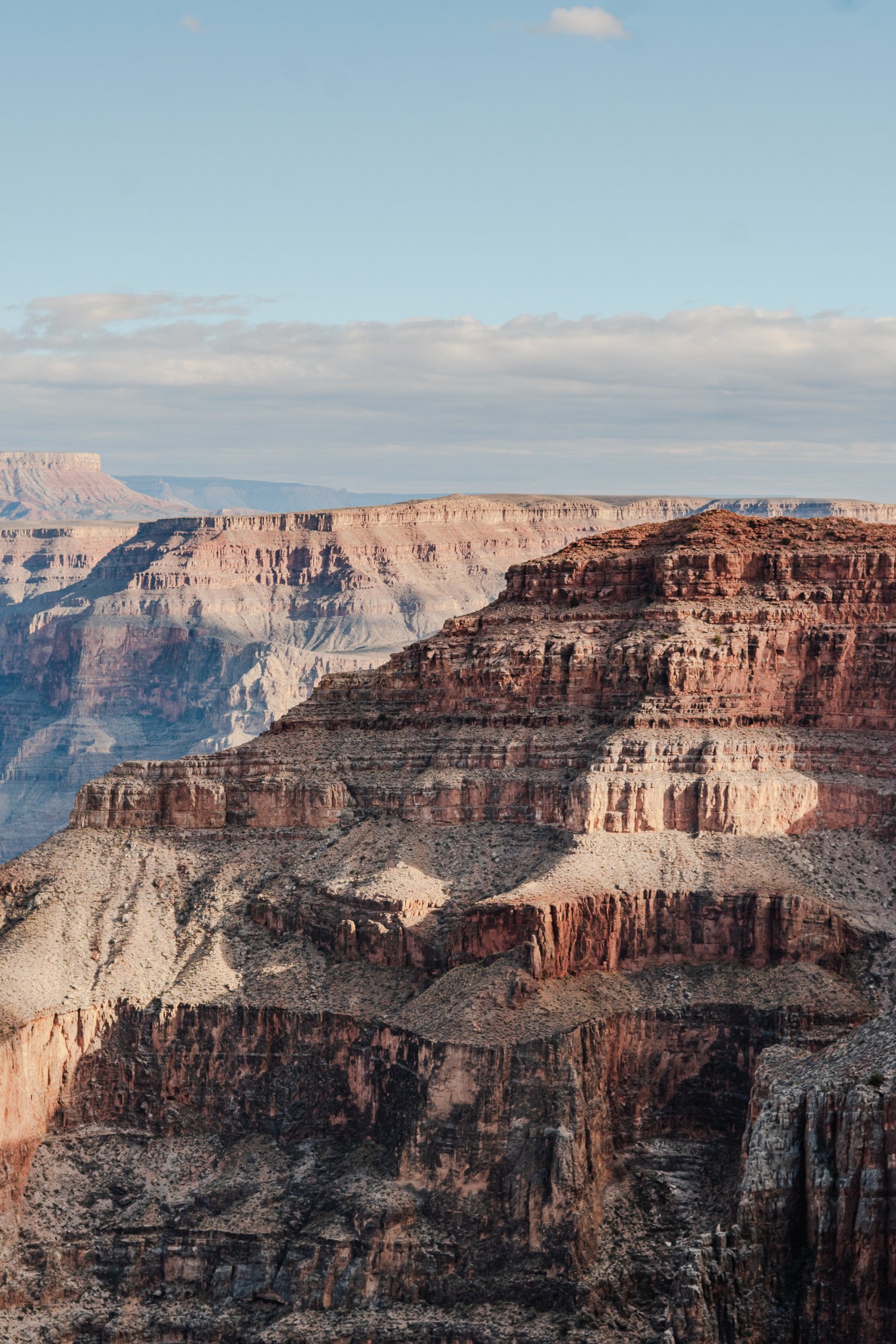
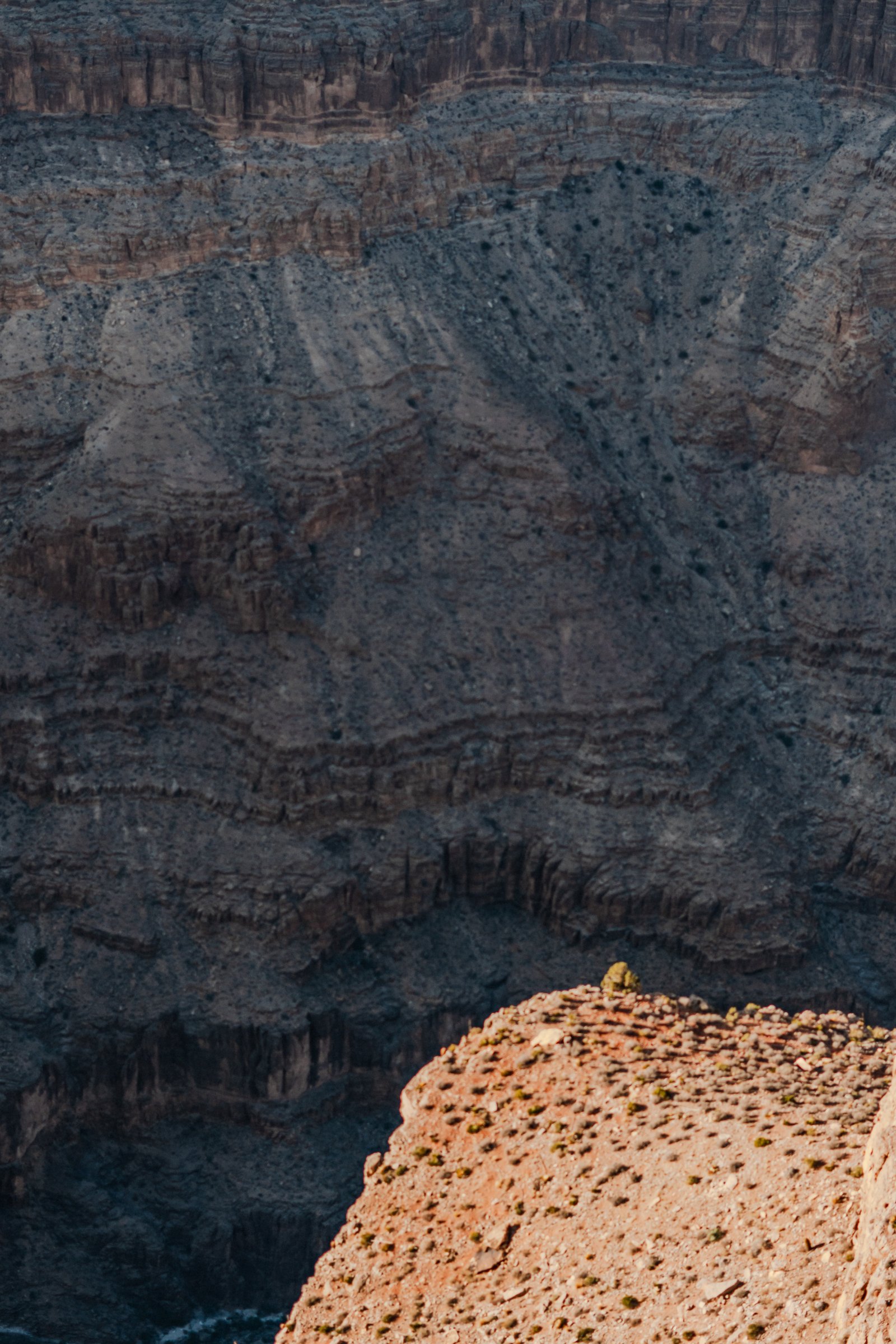
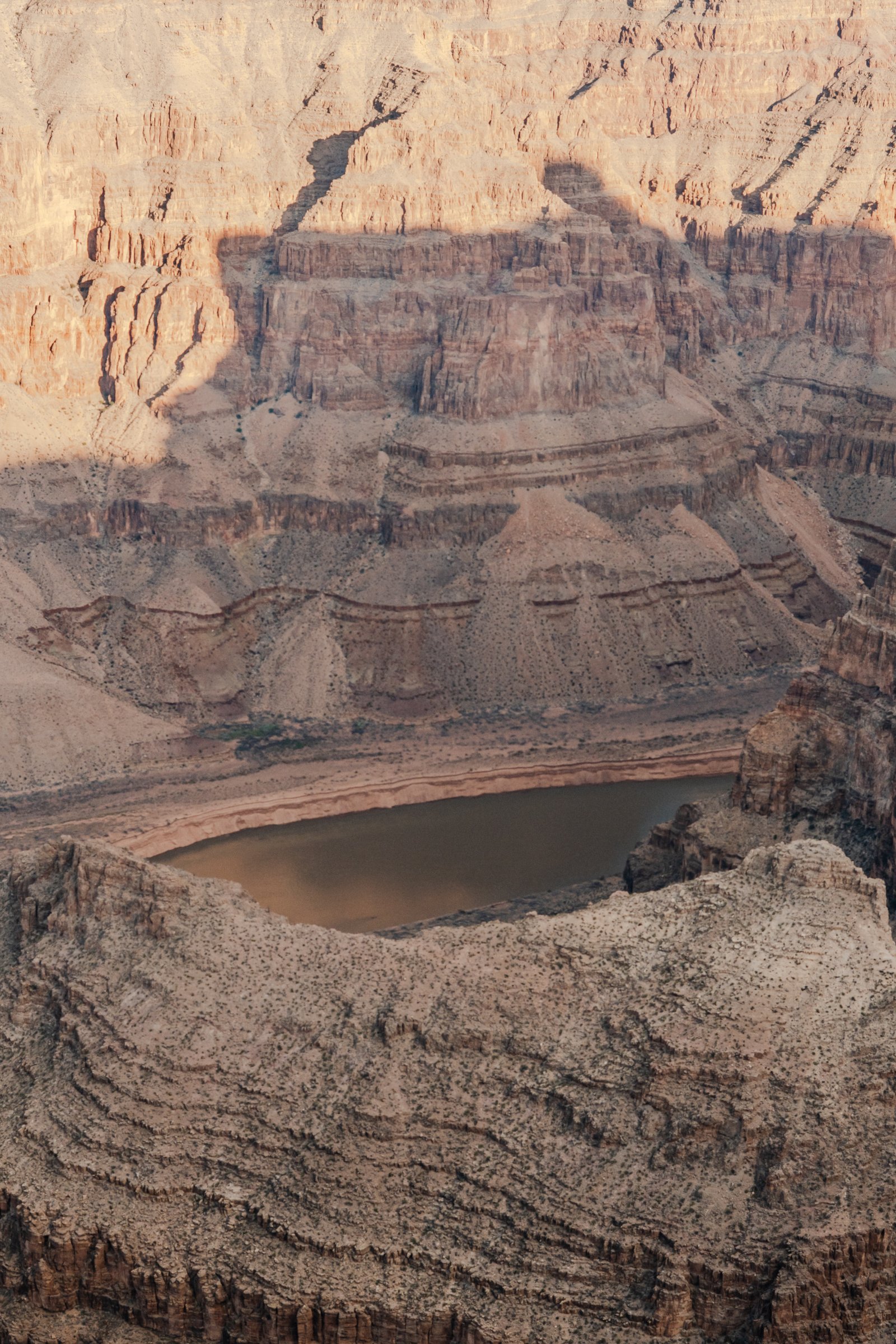
January at Grand Canyon West, on the Hualapai Reservation, a different stretch of the canyon from the South Rim covered in this guide. The ravens own the place in winter and the afternoon light on the canyon walls goes from orange to red to blue in about twenty minutes.
Guided Experiences in Grand Canyon
The canyon rewards those who go below the rim. Mule rides, white-water rafting on the Colorado, and helicopter flights offer perspectives the trail alone can't provide.
Mule ride to Phantom Ranch
Overnight mule ride from the South Rim to Phantom Ranch at the canyon floor, spending the night in historic stone cabins. Meals included. Books out 13 months in advance: plan early.
Book mule ride →Colorado River white-water rafting
3 to 14-day motorized or oar-powered raft trip through the canyon with licensed outfitters. Camp on the river banks. Class III–V rapids, swimming holes, and Havasu side canyon access.
Book rafting →Helicopter flight over the rim
25–45 minute helicopter flight from the South Rim over the canyon, down to the canyon floor level, and up to Plateau Point viewpoint. Multiple routes available. Sunrise and sunset departures.
Book helicopter →Links go to GetYourGuide for real-time availability. Check guide certifications and cancellation policy before booking.
Standing at the South Rim for the first time, your brain genuinely struggles to process the scale. The Grand Canyon is not just a big hole — it is 1.8 billion years of Earth history carved open by the Colorado River, and every descent into it feels like travelling back through time.
Inner Canyon Heat: The Canyon Kills
The National Park Service is not being dramatic when it posts warning signs at every trailhead. The inner canyon regularly hits 49°C (120°F) in summer, and the hike back to the rim is entirely uphill. Every year, hundreds of hikers require rescue — most of them started in the morning feeling fine, went too far, and ran out of water.
The rule is simple: do not hike below the rim between 10 am and 4 pm from May through September. If you are planning an inner-canyon overnight, permit reservation windows open four months in advance on recreation.gov and fill within minutes of opening. The two maintained campgrounds — Bright Angel and Cottonwood — each have water and toilets, but you earn every comfort with the climb back out.
Rim-to-Rim: The Grand Ambition
Hiking from the South Rim to the North Rim (or vice versa) across 34 km of canyon is the defining Grand Canyon objective. It requires at least two days with a Phantom Ranch reservation or campsite permits, and most hikers allow three to four days to enjoy the experience.
The North Rim sits 365 m higher than the South Rim and is only open May through October, so logistics matter. Shuttle services run between rims in season, making point-to-point practical. If you are fit and the season is right, this is one of the great walks of the American West.
Mule vs. Hiking
Mule trips into the canyon have operated since the 1890s and remain a legitimate way to experience the inner canyon without the physical demand of the hike. Day trips to Plateau Point and overnight trips to Phantom Ranch sell out months in advance.
If your group has varying fitness levels, the mule option lets everyone share the experience. That said, nothing matches descending under your own power — you set the pace, you choose the stops, and the satisfaction at the top of the return climb belongs entirely to you.
When to Go
May and September through October are the sweet spots: inner-canyon temperatures are manageable, crowds are lighter than midsummer, and the light is stunning. June through August brings extreme danger at lower elevations — rim walking is fine but descending into the canyon is genuinely risky.
December through February keeps the South Rim open and often snow-dusted, which creates extraordinary photography conditions, though inner-canyon trails can be icy.
How to get there
Fly to Las Vegas (LAS) for the shortest drive to the South Rim (~4.5h via US-93 and AZ-64). Alternatively fly to Phoenix (PHX) (~3.5h north on I-17 to AZ-64) or to Flagstaff (FLG), just 80 miles from the rim.
The Grand Canyon Railway runs from Williams, AZ to the South Rim depot daily (2.5h, ~$75 USD round trip). A scenic and practical alternative to driving. Williams is 35 miles south of I-40 and easy to reach from Flagstaff or Las Vegas.
$35 per vehicle, valid 7 days, covers multiple rim visits. The America the Beautiful Annual Pass ($80) covers entry to all US national parks for 12 months and pays for itself at two parks. Inner-canyon overnight permits require separate booking on recreation.gov.
Where to sleep
Mather Campground · South Rim
The main campground inside the park, open year-round, walking distance to the rim and the trailheads. Reserve up to 6 months ahead via recreation.gov for summer visits.
Yavapai Lodge · Grand Canyon Village
Modern lodge inside the park with easy rim access, free shuttle service, and canyon views from some rooms. Managed by Xanterra. Book 6 months ahead for peak season.
El Tovar Hotel · rim edge
Built in 1905, El Tovar sits directly on the canyon rim. The dining room has canyon views. This is the most storied building on the South Rim and worth the premium for the location alone.
Common Questions
Technically yes, but it is not recommended. The full Rim-to-Rim crossing is 34 km with over 2,000 m of cumulative elevation change. Very experienced hikers complete it in a single long day, but the NPS strongly advises against it in warm months due to heat exhaustion risk.
Most people split it across two to three days using a combination of Bright Angel Campground and Cottonwood Campground, each requiring advance permits from recreation.gov.
Genuinely dangerous. Inner-canyon temperatures exceed 49°C (120°F) in July and August. The hike down feels easy because gravity helps, but the return climb is entirely uphill in full sun.
Dozens of hikers are evacuated every summer, and fatalities occur. If you visit June through August, stick to the rim or hike inner trails only in the very early hours before sunrise. The canyon is worth experiencing in any season — there is no shame in visiting in October when it is actually enjoyable.
Overnight camping below the rim requires a backcountry permit from the Grand Canyon Backcountry Information Center. Permits go on sale on the first day of each month, four months in advance, and popular dates sell out almost immediately.
You can also join a waitlist at the trailhead the morning of your hike, though availability is not guaranteed. Phantom Ranch mule trips and lodge bunks are booked through a separate system and also sell out far in advance.
Mather Point near the Visitor Center is the most accessible and offers a classic view, but Hopi Point on the Hermit Road is widely considered the best sunset vantage. Desert View at the eastern end of the park provides a different perspective and is often less crowded. For the most dramatic canyon immersion, Plateau Point at the end of a Bright Angel descent puts you above the Colorado River with walls rising on every side.
September and October are the sweet spot. Inner-canyon heat has eased, summer crowds have thinned, and the canyon light takes on a warm golden quality that photographers love. May is also excellent if you want spring conditions.
March and April are increasingly popular for milder temperatures but trails can still have some icy sections early in the day. Winter visits (December through February) are beautiful for photography — occasional snow on the rim is stunning — but inner-canyon trails can be hazardous with ice.